By Staff Reporter
ISLAMABAD: Iran and the United States made ‘positive progress’ in two days of indirect talks in Doha this week aimed at shoring up a fragile ceasefire, mediators Qatar and Pakistan said on Thursday, though officials on both sides gave no indication the broader dispute over Tehran’s nuclear program had moved closer to resolution.
The talks, held through Qatari and Pakistani intermediaries rather than face-to-face, focused on two of the thorniest items in an interim agreement reached last month: restoring reliable shipping traffic through the Strait of Hormuz and releasing a portion of Iran’s frozen financial assets. Nuclear negotiations, the issue that triggered the war in the first place, were not on the agenda, according to two sources familiar with the discussions.
The next round of talks will be scheduled once mourning ceremonies conclude for Iran’s late Supreme Leader, Ayatollah Ali Khamenei, who is due to be buried on July 9, Qatar’s foreign ministry said.
“Qatar and Pakistan’s mediators concluded separate meetings with the U.S. and Iranian negotiators in Doha today, with positive progress made on issues related to the Islamabad Memorandum of Understanding, building on the outcomes of the Lake Lucerne Summit,” ministry spokesperson Majed Al Ansari said in a post on X.
“The parties agreed to continue discussions over the coming period, with the next meeting to be scheduled at the earliest possible time following the funeral processions of the former Iranian Supreme Leader.”
Pakistan’s foreign ministry issued a near-identical statement on X confirming the outcome.
President Donald Trump struck an upbeat tone on the state of the talks, though he offered few specifics. “As far as things are going, the denuclearization of Iran is moving along well,” he told reporters before boarding Air Force One. “They’ve had very good meetings, and we’ll see.” He added: “We hit them very hard, but we’re getting along very well.”
Trump’s comments came even as two sources said the nuclear file did not come up in the Doha sessions, which they described as technical in nature. Vice President JD Vance told reporters the nuclear question would be addressed separately. “Obviously, we’re worried about the nuclear issue, we’re going to start talking about that,” he said.
Iran’s Deputy Foreign Minister Kazem Gharibabadi, who led Tehran’s delegation, said the talks had concluded with an agreement to establish a communication channel by Thursday to report and record alleged violations of the memorandum. He gave no detail on what the channel would look like or how disputes would be adjudicated.
Neither side said whether they had bridged any of their underlying differences.
STRAIT OF HORMUZ STATUS UNRESOLVED
The interim agreement, known as the Islamabad Memorandum of Understanding and mediated by Qatar and Pakistan, was signed on June 18 and included a 60-day ceasefire, the reopening of the Strait of Hormuz, a timetable for a final settlement, and an immediate allowance for Iran to resume selling its oil freely, a significant concession from Washington. It followed the Lake Lucerne Summit in Switzerland, where senior representatives of the United States, Iran, Qatar and Pakistan first advanced the framework.
The waterway, which carried roughly one-fifth of the world’s seaborne oil and liquefied natural gas trade before the war, has only partially reopened. Two senior Iranian sources said Tehran remains determined to win international recognition of its control over the strait, even by force if necessary, and has repeatedly said it intends to begin charging tolls on shipping from mid-August, once a toll-free window set out in the initial agreement expires.
The status of the strait was thrown into sharper doubt last weekend, when the two sides exchanged strikes after Iran attacked a cargo ship it said had strayed outside its designated transit corridor. U.S. Central Command said it responded by striking ten Iranian military targets. Iran then struck U.S. bases in Kuwait and Bahrain, drawing condemnation from both Gulf states.
Iran’s state media said on Wednesday that a foreign-flagged container ship had run aground in shallow waters outside the shipping route designated by Iranian authorities.
CENTCOM said Wednesday it had led a regional security dialogue in Bahrain with defense leaders from 12 nations, mostly from the Gulf. “Leaders underscored their shared commitment to the free flow of commerce through the Strait of Hormuz,” it said on X.
Gharibabadi rejected that framing on Thursday. “The strait is defined under Iran’s command, not CENTCOM,” he said. “A military summit in Bahrain cannot establish legal order and security for the Persian Gulf.” He added that regional security would come “through the end of interventions and the U.S. withdrawal from the area, respect for countries’ sovereignty, and acceptance of new geopolitical realities — not under the military umbrella of America.”
Despite the rhetoric, the exchanges of fire had eased in the days before the Doha talks, and oil prices fell as markets took the continued engagement as an encouraging sign.
Iran’s chief negotiator, Mohammad Bagher Ghalibaf, said on Tuesday that difficulties were to be expected at this stage. “When a war of this magnitude comes to an end, it is inevitable that there will be implementation challenges, incidents and differences of opinion, especially where parties such as the Israeli regime are concerned,” he said, adding that Iran’s delegation in Doha would focus on implementing the clauses tied to Hormuz and to the fighting in Lebanon.
FROZEN ASSETS, SIDELINED ENVOYS
Gharibabadi said the Doha talks also touched on the roughly $6 billion in Iranian assets whose release Tehran has demanded as part of any settlement. “During the meetings with Qatari officials, including the central bank, a number of issues related to the expenditure of part of the initial $6 billion were reviewed,” he said, according to Iran’s state news agency IRNA. “It was agreed that, based on the needs communicated by our country, the required goods would be purchased and made available to Iran.”
Trump has previously said the funds would be used by Iran to buy only U.S. products. Iranian foreign ministry spokesman Esmaeil Baghaei said last month that Tehran alone would decide how to use the released assets, “in whatever way is most beneficial and favorable to the country.”
Jared Kushner, Trump’s son-in-law, and U.S. envoy Steve Witkoff, dispatched to the region for talks the White House had billed as “high-level,” did not take part in the technical sessions, a diplomat told reporters, speaking on condition of anonymity. The two had met Qatar’s Prime Minister, Sheikh Mohammed bin Abdulrahman Al Thani, on Tuesday, and the office of Qatar’s emir said they also met with the ruler, Sheikh Tamim bin Hamad Al Thani, on Wednesday.
Iran had rejected an earlier suggestion from Trump that the Doha talks would be direct. Foreign ministry spokesman Esmaeil Baqaei said Iran had “no plans for negotiations with the American side at any level over the coming days.”
Anna Jacobs, a non-resident fellow at the Arab Gulf States Institute, said the process remained fragile. “It’s very early in the negotiation process and battles are being fought privately and publicly,” she said. “The overall positive message is that they are continuing to engage after the clashes last week.”
OIL PRICES EXTEND DECLINE
Oil prices fell for a third consecutive session on Thursday. Brent crude futures lost 77 cents, or 1.1%, to $70.80 a barrel by 0256 GMT, while U.S. West Texas Intermediate crude fell 84 cents, or 1.2%, to $67.74 a barrel. Both benchmarks had already fallen more than 1% in the previous session, touching their lowest levels in four months.
“As the strait stays open and crude oil flows out, there are growing expectations of oversupply and competition for market share is pushing prices down,” Haitong Futures said in a note.
OPEC+ producers are expected to agree to a further increase in output targets from August when they meet on Sunday, sources said Wednesday.
UBS cut its Brent price forecasts on Thursday, citing the memorandum and the resulting pickup in shipping through the strait. The bank lowered its average third-quarter Brent forecast by $25 and its fourth-quarter forecast by $10, and now expects the benchmark to average $80 a barrel in the second half of the year and $75 in 2027. “Despite this, we believe it is premature to assume a full normalization, and see price risk skewed to the upside, noting that inbound tankers to the Persian Gulf have lagged outbound tankers,” the bank said.
Vandana Hari, founder of oil market analysis firm Vanda Insights, said the picture at the strait remained mixed. “Hormuz continues to reopen but it’s patchy, unpredictable, and not fully transparent,” she said.
Several European countries have offered to help clear mines from the strait, though German Defense Minister Boris Pistorius said he did not expect Germany to take part, citing Iran’s unwillingness to cooperate with other nations on the effort.
KHAMENEI FUNERAL LOOMS OVER NEXT ROUND
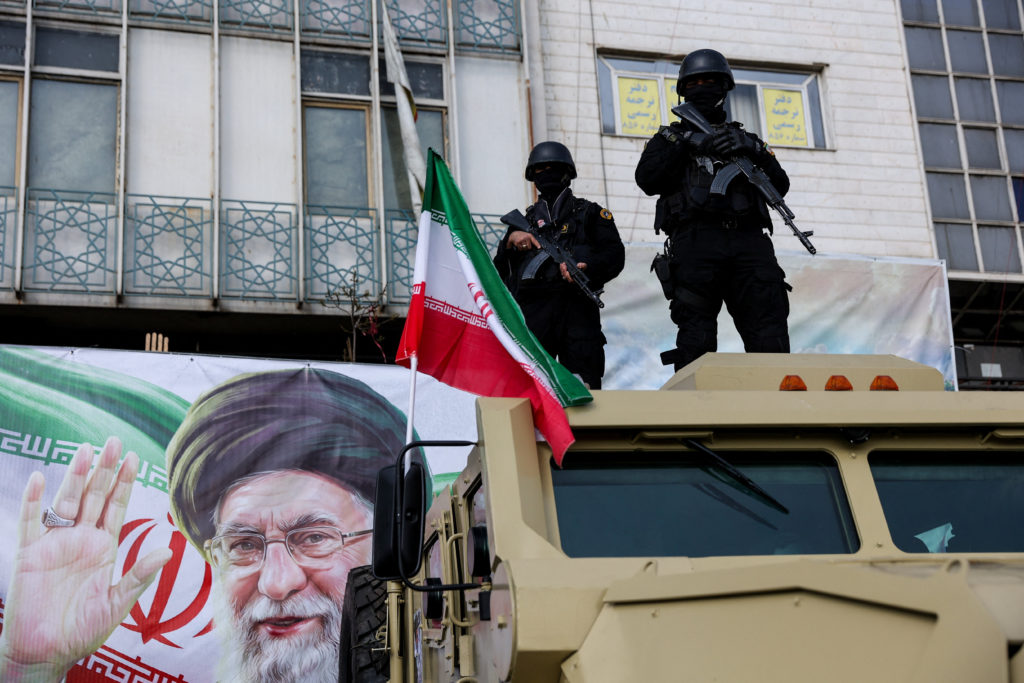
Khamenei, 86, was killed at his compound in central Tehran on February 28, the first day of the war, and power passed swiftly to his son, Mojtaba. Public funeral ceremonies begin Saturday, with his body lying in state at the complex in central Tehran that normally hosts Friday prayers and major religious gatherings, before burial on July 9 at the shrine of Imam Reza in Mashhad, his birthplace.
On the Lebanon front, fighting between Israel and Hezbollah has also been relatively quiet in recent weeks. Iran-backed Hezbollah drew Lebanon into the wider war in March with rocket fire on Israel, prompting Israeli airstrikes and a ground invasion. Tehran has said any final settlement must include an end to the Lebanon conflict and a withdrawal of Israeli troops from the south of the country, part of which they occupy.
Copyright © 2021 Independent Pakistan | All rights reserved