By Staff Reporter
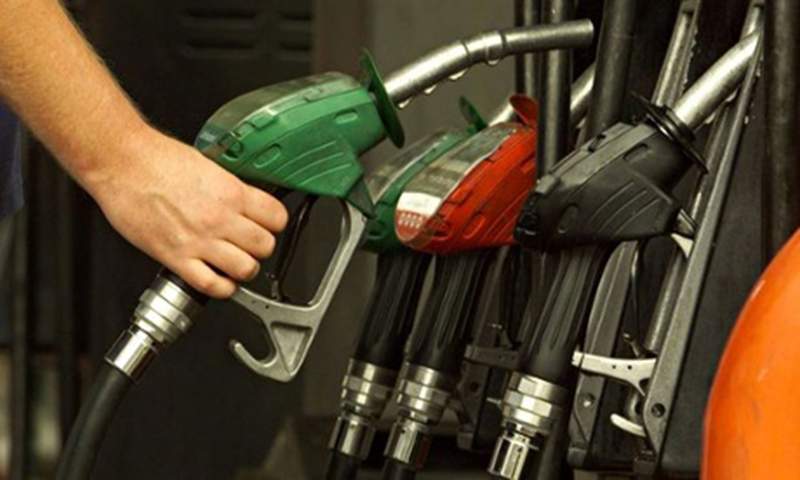
ISLAMABAD: The government has doubled a climate-related levy on petrol and diesel while cutting a separate petroleum levy by the same amount, a revenue manoeuvre that leaves retail fuel prices unchanged even as the tax structure underpinning them shifts.
The Petroleum Division said in a notification issued late on Wednesday that the Climate Support Levy on both petrol and high-speed diesel would rise to 5 rupees a litre from 2.50 rupees, effective July 2. The increase was mirrored by a 2.50-rupee cut in the Petroleum Levy, which fell to 64.14 rupees a litre on petrol from 66.64 rupees, and to 77.04 rupees a litre on diesel from 79.54 rupees. The same adjustment was applied to high-octane blending component, a premium fuel additive.
The notification supersedes one issued on June 26 and remains in force until further orders, the division said, without specifying an end date. It was issued under the Petroleum Products (Petroleum Levy and Climate Support Levy) Ordinance, 1961, and forms part of a broader revision to the fuel levy framework that took effect from July 1.
Because the two changes offset each other exactly, the ex-depot prices consumers pay at the pump are unaffected. Petrol remains at 299.50 rupees a litre and diesel at 311.47 rupees, levels the government held steady last week following its most recent fortnightly price review.
Officials familiar with the decision said the increase in the climate levy was carried out in line with a condition attached to Pakistan’s International Monetary Fund programme, though the Petroleum Division’s public notification did not state a rationale. Reuters could not immediately reach the Petroleum Division for comment.
The levy swap is the latest in a series of adjustments Pakistan has made to its fuel taxation structure since a sharp cut in pump prices in mid-June. On June 19, Prime Minister Shehbaz Sharif announced petrol would fall by 74 rupees a litre and diesel by 67 rupees, passing on savings from a decline in international crude prices. Kerosene fell by 48.29 rupees to 233.90 rupees a litre in the same round of cuts.
That reduction followed a period of acute volatility in global energy markets tied to the conflict between Israel and Iran. A US-brokered peace agreement between the United States and Iran, in which Pakistan said it played a diplomatic role, was followed by the reopening of the Strait of Hormuz, the narrow waterway through which a significant share of the world’s seaborne oil trade passes. The strait’s reopening eased fears of a prolonged supply disruption and contributed to the drop in crude prices that Islamabad cited in cutting pump prices.
Since then, however, Pakistan has steadily raised the Petroleum Levy even as retail prices held steady, a pattern that has allowed the government to capture a larger share of the benefit from lower global crude costs. The levy on diesel climbed to 79.54 rupees a litre from 72.97 rupees, while the levy on petrol edged up to 66.64 rupees from 66.25 rupees, before Wednesday’s cuts. The levy on kerosene has remained unchanged at 20.36 rupees a litre throughout this period.
The Petroleum Levy is a non-tax federal revenue source that, unlike general sales tax receipts, is not shared with Pakistan’s provinces under the National Finance Commission Award, making it a comparatively unconstrained tool for the federal government to raise money. The Climate Support Levy was introduced under the Finance Bill for the 2025-26 fiscal year and has been positioned by officials as a mechanism to fund climate adaptation and mitigation programmes.
Pakistan has relied heavily on fuel levies to meet revenue targets under its IMF-backed fiscal adjustment programme, with officials periodically adjusting rates on petrol, diesel and related products even when retail prices are held flat or cut. The Federal Board of Revenue has separately been designated to collect both levies on behalf of the Ministry of Petroleum through the sales tax return system.
The government reviews petrol and diesel prices every two weeks based on changes in international oil benchmarks and the rupee’s exchange rate, adjusting the retail price, the levy components, or both. Wednesday’s notification affects only the levy composition, leaving the next scheduled price review to determine whether pump prices themselves change.
Copyright © 2021 Independent Pakistan | All rights reserved