By Staff Reporter
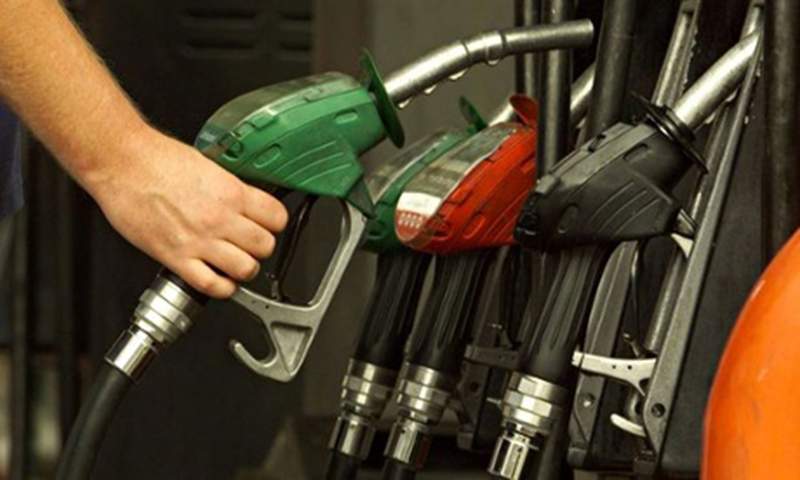
KARACHI: The government lowered gasoline and diesel prices for the first time in roughly three weeks, passing on part of the recent decline in global crude costs to motorists while a simultaneous tax increase curbed the size of the relief.
The Petroleum Division cut the ex-depot price of petrol to 297.53 rupees a liter from 299.50 rupees, and reduced high-speed diesel to 309.50 rupees from 311.47 rupees, according to a notification issued late on Friday. Both reductions amount to 1.97 rupees a liter and take effect immediately, covering the week through July 10.
The adjustment would have been considerably larger had the government not raised the petroleum levy on both fuels at the same time. Officials said petrol prices would have fallen by roughly 11 rupees a liter and diesel by about 4 rupees had the levy been left unchanged — meaning consumers captured less than a fifth of the available relief on gasoline.
The levy shift is tied to a commitment Pakistan made under its International Monetary Fund program. Effective July 1, the government doubled the Climate Support Levy on both fuels to 5 rupees a liter from 2.50 rupees, while trimming the petroleum levy by a corresponding amount — a manoeuvre intended to leave pump prices largely unchanged even as the composition of the tax burden shifted. That reshuffling took the petroleum levy on retail petrol to 70.36 rupees a liter from 64.14 rupees, and lowered the levy on diesel to 70.82 rupees from 77.04 rupees, according to the Petroleum Division. The levy on kerosene held steady at 20.36 rupees a liter.
All told, the government now collects about 101 rupees a liter in taxes and charges on diesel — a combination of petroleum levy, the climate levy, a 16-rupee customs duty and the inland freight equalisation margin. Petrol carries a comparable burden of roughly 95 rupees a liter, including a 20-rupee customs duty. Kerosene draws a petroleum levy of about 21 rupees a liter, and light diesel oil about 16 rupees.
Friday’s move was the first change to retail fuel prices since June 19, when the government delivered one of its steepest cuts in years — 74 rupees a liter off petrol and 67 rupees off diesel — after crude prices tumbled in the wake of a US-Iran peace agreement and the reopening of the Strait of Hormuz, the shipping corridor whose closure had earlier threatened to choke off global energy supplies. Prime Minister Shehbaz Sharif announced that reduction personally. Prices then held flat through two subsequent weekly reviews even as the government reworked the underlying levy structure, a freeze that had already drawn criticism from consumers hoping for further relief as global prices continued to soften.
The latest cut leaves both fuels well below the peaks reached during the spring’s price shock. Diesel, which traded at 281 rupees a liter before the US-Iran conflict erupted on February 28, surged to a record 520.35 rupees by April 3 before beginning its retreat. Petrol followed a similar arc, climbing from 266 rupees in early March to a high of 458.41 rupees on April 3; the roughly 109-rupee cumulative decline since then reflects a string of successive downward revisions.
In a related move, the Oil and Gas Regulatory Authority raised the price of kerosene by 4.09 rupees a liter, to 231.14 rupees from 227.05 rupees, effective the same day — a divergence from the direction of the petrol and diesel adjustments that underscores how differently the government treats the smaller-volume fuel.
The stakes attached to even modest price movements reflect the outsized role petrol and diesel play in both government revenue and household budgets. The two fuels post combined monthly sales of 700,000 to 800,000 tonnes, dwarfing kerosene’s demand of roughly 10,000 tonnes a month, and account for the bulk of petroleum-related tax collection. Petrol is the dominant fuel for motorcycles, rickshaws and smaller vehicles, putting its price closest to the daily budgets of middle- and lower-income commuters. Diesel carries even greater weight in the inflation outlook given its use across freight trucking, buses, tube wells, tractors and threshers — a reach that means small changes in the diesel price tend to filter through to transport and farming costs with a lag.
Copyright © 2021 Independent Pakistan | All rights reserved