By Staff Reporter
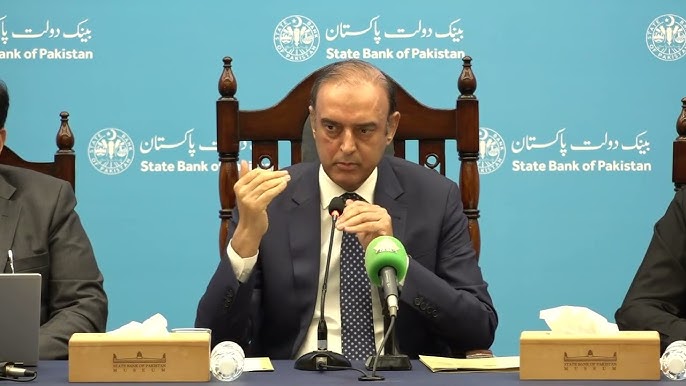
KARACHI: Pakistan’s economy is poised to grow faster than the government’s own estimate for the past fiscal year, the central bank governor said, pointing to a buildup in foreign-currency reserves and a jump in remittances that have helped stabilise the country’s finances after years of crisis.
State Bank of Pakistan Governor Jameel Ahmad told reporters in Karachi on Friday that gross domestic product likely expanded faster than the 3.7% provisional figure published by the Pakistan Bureau of Statistics for the year through June, with the central bank’s own range running from 3.75% to 4.75%. He said an initial target of more than 4% growth was undercut by the conflict in the Middle East and a weaker-than-expected harvest.
“Our focus is on strengthening the economic fundamentals rather than achieving cosmetic improvements,” Ahmad said, adding that durable growth “can only come through strong macroeconomic fundamentals.”
The remarks underscore how far Pakistan has travelled since 2022 and 2023, when a balance-of-payments crunch forced the central bank to impose strict import controls and pushed foreign reserves to the brink of depletion. Ahmad said conditions have improved in each year since, with large-scale manufacturing output climbing about 6% over the past fiscal year and touching almost 10% in some months.
Reserves held by the State Bank climbed to $18.4 billion by the end of the fiscal year in June, up from $13 billion a year earlier, even after the country repaid $8 billion of external debt in June alone, Ahmad said. He said he expects the buffer to reach $20 billion by December.
The central bank’s outstanding forward foreign-exchange liabilities — effectively future obligations to deliver dollars — shrank to about $950 million by the end of the fiscal year from $5.6 billion at its start, Ahmad said, a reduction he cast as evidence that the reserve gains reflect genuine accumulation rather than fresh borrowing. Pakistan’s total external debt has held broadly steady at around $100 billion since 2022, he said, even as reserves increased roughly six-fold over the same period.
“The country’s total external debt has remained broadly unchanged at around $100 billion, while bilateral deposits and Chinese loans were already part of reserves during previous years when foreign exchange reserves had fallen below $3 billion,” Ahmad said, pushing back on suggestions that the improvement was simply a function of new borrowing.
Consumer prices rose 11% in June from a year earlier, driven by higher energy costs tied to the Middle East conflict, Ahmad said. Average inflation for the fiscal year came in at 7.05%, near the upper end of the central bank’s 5%-to-7% target band. He said price pressures should ease in coming months, with updated projections due alongside the next monetary policy statement.
Pakistan’s current account — a broad measure of trade and investment flows with the rest of the world — has swung from a deficit of $17 billion in the 2022 fiscal year to a surplus in 2025, and remained in surplus through the first 11 months of the just-ended fiscal year, Ahmad said. He expects the full-year figure to land within the central bank’s target of zero to 1% of gross domestic product. June data has yet to be published.
Workers’ remittances, a critical source of foreign currency for Pakistan, rose to $38 billion in the 2025 fiscal year and are on track to reach $41.5 billion for the year just ended, according to Ahmad. He projected a further increase to $44 billion in the current fiscal year, which began this month.
Ahmad attributed the rise partly to a crackdown on smuggling and the informal hawala and hundi networks long used to move money outside the banking system, alongside a consolidation of the country’s foreign-exchange dealers. The number of licensed exchange companies has been reduced to 18 from 166 through mergers, he said, while roughly 13 new companies backed by commercial banks have been established to improve oversight of the market. The changes, combined with a narrower gap between official and open-market exchange rates, have encouraged more remittances through formal banking channels, he said.
The central bank is phasing out state-funded incentive programs for remittances, including the Sohni Dharti Remittance Program and a scheme covering telegraphic-transfer fees, Ahmad said. He said the shift would not cost senders or recipients, since commercial banks will absorb the expense, and that a replacement program developed jointly with banks is expected in the first quarter of the fiscal year. Inflows through the Roshan Digital Account program, which allows overseas Pakistanis to open local bank accounts remotely, are averaging about $300 million a month, he said.
Ahmad said Pakistan is close to finalizing agreements with banks and exchange houses in the Middle East intended to speed up remittance transfers, a process delayed by technical issues that he now expects to conclude by December.
Export earnings fell short in the past fiscal year as international rice prices declined, Ahmad said, though he expects a rebound helped by incentives included in the government’s latest budget. Growth in information-technology and other services exports has also bolstered the country’s external position, he said. Pakistan’s sovereign bonds have performed better in international markets as the improved external accounts have lifted investor confidence, he added.
The government’s external borrowing has also shifted toward longer maturities, Ahmad said, with a move away from short-term commercial debt toward multilateral loans carrying terms of 20 to 25 years. Pakistan made about $26 billion in external debt payments, including rollovers, during the fiscal year, he said, and may face a larger bill in the current one.
The State Bank will keep building reserves until they cover at least three months of imports, the internationally accepted benchmark, Ahmad said.
Copyright © 2021 Independent Pakistan | All rights reserved