By Staff Reporter
ISLAMABAD: Pakistan let a July 1 deadline to raise natural gas tariffs slip past, missing a commitment made to the International Monetary Fund just three months ago and adding a fresh complication to a $7 billion loan program already strained by more than 3.44 trillion rupees in unpaid gas-sector bills, Dawn newspaper reported on Tuesday.
The delay traces to a standoff at the top of the Oil and Gas Regulatory Authority, where the government’s own appointee is refusing to bless the industry’s standard method of accounting for lost gas until utilities agree to far more granular reporting, according to senior government officials who asked not to be identified discussing internal deliberations.
Islamabad had pledged to notify revised consumer tariffs twice a year — on July 1 and again on Feb. 15, 2027 — as part of 11 new structural benchmarks the IMF attached to the successful third review of the Extended Fund Facility in April. The gas commitment sits alongside pledges on tax administration, procurement rules and foreign-exchange liberalisation in a program that now runs to 75 conditions in total.
Missing the deadline does not by itself derail the loan. Officials characterised it as a technical breach that will be absorbed later through revenue adjustments once the tariff is finally set. But it underscores how a program built to wall off energy pricing from politics keeps colliding with Pakistan’s oldest problem in the sector: gas that disappears somewhere between the wellhead and the customer’s meter, with nobody quite agreeing on why.
A chairman who won’t just sign
The immediate obstacle is Nabeel Ahmad Awan, the Establishment Secretary handed additional charge of Ogra on April 8 on a three-month, acting basis — the latest in a string of ad hoc appointments to a post that had already sat vacant for roughly a year and a half. His appointment was almost immediately challenged in the Islamabad High Court, a legal cloud that has hung over the regulator’s work ever since and, officials said, added to delays in scheduling the public hearings gas utilities need before any tariff can be set.
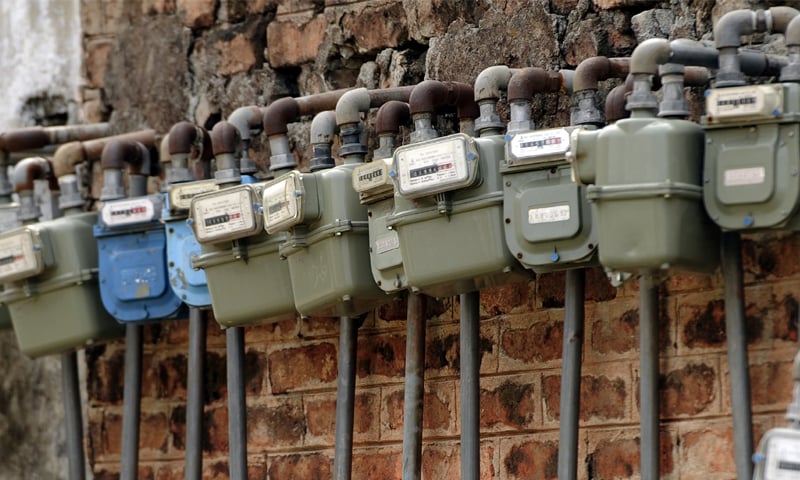
Those hearings eventually went ahead. So did the rest of the process: working out how much revenue Sui Northern Gas Pipelines Ltd. and Sui Southern Gas Company Ltd. need to recover their costs, and folding in an allowance for unaccounted-for gas, the industry term for the gap between gas purchased and gas billed.
It is that last piece where Awan has balked. “The gas tariff determination is ready and can be issued today,” one official said. What he won’t do, they said, is accept the loss allowances on the companies’ usual terms — a single, opaque percentage applied across an entire network — without utilities first committing to a documented reduction strategy for every custody transfer station, the metering points where gas changes hands between transmission and distribution systems, across both the Sui Northern and Sui Southern networks.
It is a demand with a track record behind it. SNGPL and SSGC have signed up to annual loss-reduction targets before; officials said those commitments were routinely missed, partly met, or quietly reversed, with unaccounted-for gas oscillating between roughly 9% and 14% of throughput over the years without ever durably improving. On a business-as-usual timeline, officials said, the determination could have been wrapped up by the second week of June. Instead, Awan is pushing the utilities to specify, station by station, both what they can cut and how — and the companies have asked for a month to work out figures precise enough to meet that bar.
Costly gas, expensive politics
Global energy prices did not make Awan’s job any easier. Gas tariffs are built in part around the cost of imported liquefied natural gas, and volatile prices through the review period complicated the arithmetic Ogra needed to finalize before it could even open hearings — layering a pricing problem on top of the legal one.
Once Ogra does issue its determination, the clock resets: Pakistani law gives the government 40 days from that point to work out final consumer-facing rates for each category of customer, from households to industry to power generators, before publishing them in the official gazette. Officials said that timetable will not be honored to the letter this time. “It is a technical breach of the SB, as it would be subsequently covered through revenue adjustments,” one official said, adding that the government intends to move on consumer tariffs as soon as Ogra’s determination lands rather than waiting out the full 40 days.
Why the IMF keeps circling back to gas
The gas benchmark is not a stand-alone irritant; it is central to the case the IMF and Pakistan have built for why the loan program can hold together at all. Sustained energy-sector losses have a way of resurfacing as fiscal liabilities, and both sides have treated cost-recovery pricing as a precondition for the broader macroeconomic stability the program is meant to secure.
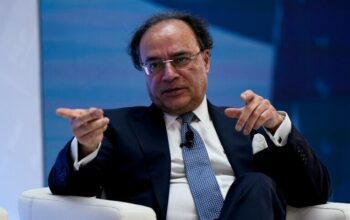
Finance Minister Muhammad Aurangzeb put that commitment in writing to the Fund: “We commit to continuing to do so through timely tariff increases that recover costs and prevent a recurrence of circular debt.”
Beyond the tariff mechanics, the government has set up an integrated energy planning framework and a Cabinet Committee on Energy to improve coordination and data-sharing with the electricity side of the sector, where a parallel set of tariff commitments is running on its own clock. It has also built a dashboard tracking the components and drivers feeding circular debt — which stood at 3.442 trillion rupees at the end of December 2025 — and begun publishing the gas-sector debt flow on a quarterly basis. A dedicated Circular Debt Management Plan for gas is due to follow later this fiscal year, pending the necessary approvals.
None of that resolves the more immediate question hanging over Ogra: whether a regulator installed on a caretaker basis, its own legitimacy under challenge in court, can hold the line against two state-linked utilities on the industry’s most persistent and least-solved problem — or whether, as it has so often before, the loss target ends up as more of a formality than a fix.
Copyright © 2021 Independent Pakistan | All rights reserved