By Staff Reporter
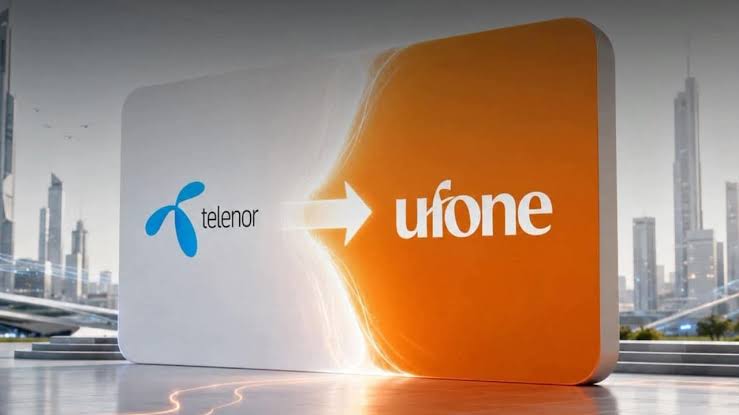
ISLAMABAD: Pakistan’s telecommunications regulator has stopped the country’s newly combined Ufone-Telenor business from adopting the e& brand of its Abu Dhabi-based parent, adding a regulatory snag to a merger that created the nation’s second-largest mobile carrier by subscribers.
The Pakistan Telecommunication Authority told Pak Telecom Mobile Ltd., the legal entity operating Ufone, in a letter dated July 2 that no new brand could be launched or advertised until the Securities and Exchange Commission of Pakistan formally notifies the regulator of any changes to the merged company’s board of directors. The directive effectively freezes plans to retire both the Ufone and Telenor names after nearly two decades in the market for one of Pakistan’s most consequential telecom industry consolidations.
The rebranding push follows an Islamabad High Court order on June 24 that granted final approval for Telenor Pakistan’s amalgamation into PTML, ending the Norwegian-owned carrier’s existence as a standalone legal entity. Justice Khadim Hussain Soomro sanctioned the scheme of amalgamation under the Companies Act 2017, ruling the merger was fair to shareholders and creditors and not contrary to the public interest.
PTCL had already petitioned the PTA to approve a new brand identity for the combined operator, prompting the same response: any notification affecting the merged company’s board makeup must first come from the SECP. PTML received an identical instruction when it separately sought registration of the proposed brand.
A Familiar Name, Unfamiliar Territory
Sources at Pakistan Telecommunication Co., known as PTCL, said the intended name for the merged carrier is e&, the global identity adopted by Emirates Telecommunications Group in 2022. Etisalat, as the UAE state-controlled operator was long known, holds a 26% stake in PTCL along with management control, making the rebrand a natural extension of a strategy the group has already applied to acquisitions across the Middle East and Africa, where it now operates in more than 35 markets.
A Ministry of Information Technology and Telecommunications official said the potential change in PTML’s board composition, a byproduct of folding Telenor Pakistan into the surviving entity, is precisely what triggered the SECP notification requirement. Until that paperwork clears, the PTA has told PTML it cannot proceed with any launch or advertising campaign tied to the new identity.
The bifurcation of PTCL’s operations traces back to a Competition Commission of Pakistan ruling on the merger, which separated PTCL’s fixed-line and enterprise businesses from the mobile operations now housed under PTML. The government retains roughly 62% of PTCL, with 26% held by Etisalat and the remaining 12% traded on the Pakistan Stock Exchange among private investors.
Legal Exposure Looms
A senior IT ministry official raised a separate concern: PTML remains a subsidiary of PTCL, a state-owned enterprise, not of Etisalat directly, and using the e& name without resolving that structural distinction could expose the merged company to intellectual-property claims. The official said the arrangement might require the Pakistani entity to pay a royalty to use the internationally trademarked brand, adding that PTCL has continued remitting profits to the UAE company even as the broader PTCL group has posted losses in recent years.
That tension has been compounded by roughly $800 million in disputed dues tied to PTCL’s original privatization, a matter that has lingered for years and remains unresolved even as the company returned to profitability. PTCL Group President and Chief Executive Officer Hatem Bamatraf has said the issue is moving toward resolution without offering a timeline. Bamatraf now serves as CEO of PTML following the merger, while Nadeem Khan, formerly PTCL’s chief financial officer, has taken over as CEO of PTCL itself. The two companies will continue operating with separate boards and management teams despite falling under common ownership.
PTML Director of Corporate Communications Saad Warraich, asked about the company’s branding plans, said the priority remains uninterrupted connectivity and a seamless customer experience, and that the company is finalizing its commercial and brand strategy and will share details in due course.
Scale of the Deal
The combined operator, still awaiting a final name, brings together roughly 70 million subscribers, positioning it behind only Jazz, the market leader formed through the 2016 merger of Mobilink and Warid — the closest precedent for the scale of rebranding now under discussion. Ufone has operated in Pakistan since 2001; Telenor entered the market in 2005 and grew into the country’s third-largest carrier by subscriber count before the deal.
PTCL Group has also secured regulatory clearance to integrate Ufone and Telenor’s tower infrastructure, one of the more technically demanding elements of the post-merger consolidation. Executives have indicated that both networks will likely continue operating separately through the remainder of 2026, with existing SIM cards, contracts and pricing plans remaining intact for now. Brand transitions of this kind, based on e&’s experience integrating acquired carriers elsewhere in Africa and the Middle East, have typically unfolded over 12 to 24 months, with sustained marketing investment preceding the retirement of legacy names.
For now, the PTA’s position leaves the rebrand in limbo. Until the SECP issues its notification on the merged entity’s board, e& — a name still largely unknown to Pakistani consumers — cannot appear on a single billboard, storefront or advertisement in the market it is meant to unify.
Copyright © 2021 Independent Pakistan | All rights reserved