By Staff Reporter
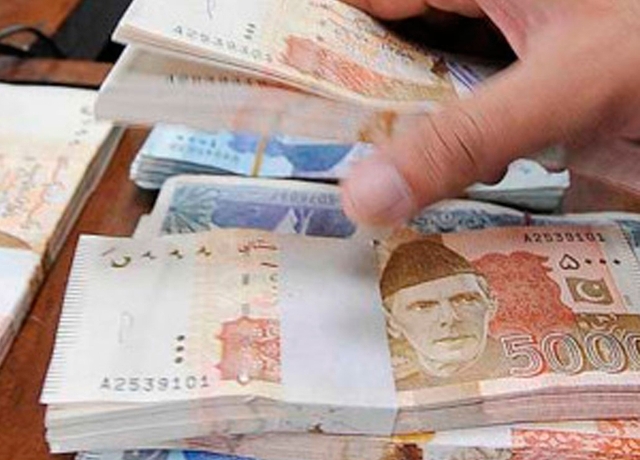
KARACHI: Pakistan’s total public debt climbed to Rs81.949 trillion by the end of May, according to central bank data released on Monday, as the government leaned harder on domestic banks to plug a widening gap between tax revenue and spending.
The State Bank of Pakistan said the debt stock rose 5% during the first eleven months of the fiscal year, an increase of Rs4.061 trillion from Rs77.888 trillion in June 2025. The pace of accumulation — roughly Rs16 billion added to the country’s obligations every day — underscores how far government borrowing has outrun its ability to collect enough in taxes to cover its own spending.
Domestic debt did most of the work. It rose 6.6%, or Rs3.6 trillion, to reach Rs58.107 trillion, up from Rs54.472 trillion a year earlier. Both long-term and short-term instruments contributed, though the short end of the market saw the sharpest proportional move: short-term domestic debt jumped roughly 32% even as interest rates were falling, a sign that the government has increasingly turned to quicker, more expensive-to-roll-over instruments to meet its cash needs.
External debt grew more slowly, adding Rs425 billion, or 1.8%, to reach Rs23.842 trillion. A steadier rupee helped contain that side of the ledger — the currency firmed to about 278.4 to the dollar over the year, softening the local-currency value of foreign obligations that would otherwise have pushed the external figure higher.
The borrowing binge is happening against a backdrop of institutional drift at the very office meant to manage it. Pakistan’s Debt Management Office has operated without a permanent director general since January, run instead on an ad hoc basis for six months and counting. Of three sanctioned director-level posts at the office, only one is currently filled on a permanent basis; the other two have been handed as additional charges to a domestic-debt consultant and a risk-assessment specialist, according to finance ministry arrangements described to lawmakers.
The vacancy drew scrutiny from the Senate Standing Committee on Finance in May. An adviser representing the debt office, Omar Khan, told the committee the government was in the process of shortlisting candidates but could not commit to a timeline for the appointment. The Prime Minister’s Office subsequently sought an update on the position after the matter drew press attention.
The Auditor General of Pakistan added to the pressure last week, flagging what it called irrational budgeting practices at the finance ministry that led to Rs1.83 trillion in what the audit report described as unnecessary excess expenditure. The AGP’s review of fiscal 2024-25 appropriation accounts found the government had initially set aside Rs24 trillion for principal loan repayments, added a further Rs2.64 trillion through a supplementary grant, then surrendered Rs2.8 trillion — only for actual spending to still land at Rs25.8 trillion, above the ministry’s own revised allocation.
“The controls and checks within the Ministry of Finance require strengthening to ensure accurate assessment of the actual requirements under repayment of debt,” the auditors wrote. The report also found the ministry had failed to prepare monthly Debt and Losses reports as required under the Financial Reporting Manual — a lapse the AGP said leaves the government’s monthly debt position without the scrutiny the rules demand.
The government has set a primary balance surplus target of 2% of GDP for the coming fiscal year, according to the central bank, a goal it has tied to continued fiscal consolidation and structural changes including a broader tax base and reform of state enterprises. Revenue collection has shown some improvement: the Federal Board of Revenue’s collections rose 11% to Rs13 trillion in the fiscal year just ended, up from Rs11.745 trillion the year before — progress that nonetheless still trails the pace at which the government’s debt has grown.
The rising debt load has also pushed the government’s annual interest bill past Rs8 trillion, a cost that competes directly with spending on development and public services and adds urgency to calls — including from the IMF and World Bank — for Pakistan to strengthen the institutional capacity of the very office meant to manage the debt building up on its balance sheet.
Copyright © 2021 Independent Pakistan | All rights reserved