By Staff Reporter
ISLAMABAD: Pakistan risks a fresh squeeze on remittances from the Gulf and a rebound in its energy import bill if the fragile truce between the US and Iran collapses, a senior Pakistani official told lawmakers, as President Donald Trump threatened new strikes following Iranian attacks on American bases in the region.
Muhammad Humair Karim, secretary of Pakistan’s Ministry of Economic Affairs, told a parliamentary committee on Wednesday that renewed hostilities would strike at two of the pillars supporting Pakistan’s balance of payments: money sent home by workers in the Gulf and the cost of the oil that powers the South Asian economy.
The warning came hours after Trump said Washington’s interim agreement to end the Iran war was “over,” and that the US was likely to strike Wednesday night in response to Iranian attacks on American bases in the Gulf. The exchange threatens to reopen a conflict that has already cost Pakistan dearly since it erupted in February.
“If the crisis is prolonged, disruptions in the Gulf economies could weaken remittance inflows to Pakistan,” Karim said, speaking after his briefing to the committee. “While at the same time, it can increase our import bill through higher energy prices.”
A Dependence Built Over Decades
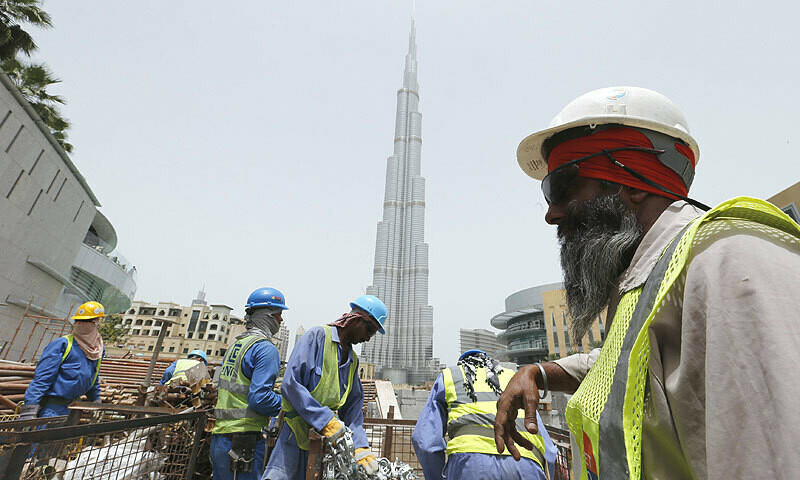
The Gulf Cooperation Council accounts for 55% of Pakistan’s total remittances, equivalent to roughly 4.7% of gross domestic product, Karim told the committee. Millions of Pakistani citizens work across Saudi Arabia, the United Arab Emirates, Bahrain, Kuwait, Oman and Qatar, sending billions of dollars home each month in flows that have become a critical buffer for the country’s external accounts.
Any slowdown in economic activity across the GCC could curb employment opportunities for those workers, Karim said, directly threatening the remittance channel that Islamabad has come to rely on to steady its currency and shore up foreign-exchange reserves. He added that the conflict could also disrupt trade routed through Gulf logistics hubs, softening demand for Pakistani exports to the region.
“Pakistan, with limited fiscal space, high external financing needs and dependence on imported energy, is among the countries most vulnerable to a prolonged regional shock,” Karim said.
Strait of Hormuz Remains the Fault Line
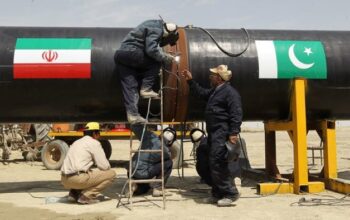
The bigger near-term risk may be on the import side. Pakistan sources more than 80% of its oil from Saudi Arabia, the UAE and Kuwait, according to Karim’s presentation, leaving the country’s energy security tied to the free flow of tankers through the Strait of Hormuz.
Iran has largely closed the strait since February, permitting only limited commercial traffic through a passage that carried close to a fifth of the world’s oil and gas supplies before the war began. The disruption has already shown up sharply in Pakistan’s import data.
“The impact was evident during the recent regional tensions, when Pakistan’s weekly oil import bill surged by 167 percent, rising from around $300 million before the conflict to nearly $800 million by the last week of April 2026,” Karim told the committee.
Petroleum imports totaled $7.98 billion in the first half of the current fiscal year, close to a fifth of Pakistan’s total import bill, he said. The higher fuel costs have fed through into broader inflation and pushed up transportation and business costs across the economy.
A ceasefire reached in June had allowed commercial shipping to resume through the strait and pulled Brent crude back toward $70 to $73 a barrel, Karim said. But he cautioned that the near-term outlook remains uncertain, and that renewed hostilities could push 4.3 million people into poverty.
Karim said, without naming specific countries or institutions, that some of Pakistan’s development partners have offered emergency financing. Government departments have so far indicated they do not need to draw on that support.
Economic Affairs Division Flags Broader Risks
The Economic Affairs Division told the same parliamentary panel that any renewed escalation between Washington and Tehran could hit Pakistan’s economy through higher energy costs, faster inflation, greater external financing needs and slower growth.
A team from the division, including parliamentary secretary Zeb Jaffar and Karim, told the National Assembly Standing Committee on Economic Affairs Division that Pakistan entered 2026 with improving macroeconomic fundamentals, only for the Middle East conflict and the temporary closure of the Strait of Hormuz to disrupt global energy markets and trigger supply-chain strain.
Oil prices moderated and maritime trade largely resumed following the ceasefire and the Islamabad Memorandum of Understanding, the division reported. Even so, it warned that regional uncertainties persist and that a fresh escalation could once again weigh on the economy.
Lawmakers Push Back on Freight Corridor Financing
The committee, chaired by Mirza Ikhtiar Baig, used Wednesday’s session to press the government on two large domestic infrastructure projects unrelated to the Middle East crisis but tied to Pakistan’s broader fiscal constraints.
Members raised concerns over the financing structure proposed for the Lyari Elevated Freight Corridor, a multi-billion-rupee project, under a loan arrangement with the Korean Exim Bank. The committee noted that the financing would produce a project cost nearly double the estimate prepared by the National Highway Authority, and pressed the government to identify a more cost-effective option before agreeing to the loan’s conditions.
Following deliberations, the committee recommended that the Economic Affairs Division secretary convene consultations with the National Highway Authority, the Ministry of Planning, Development and Special Initiatives, and the Karachi Port Trust to develop a financing model that is both mutually agreed and fiscally prudent.
Karachi Water Project Faces Funding Gap
The committee also flagged slow progress on the Karachi Greater Water Supply Project, known as K-IV, noting that only 10 billion rupees had been allocated against an estimated requirement of 78 billion rupees. Members said the shortfall could delay completion of the project and, with it, the delivery of an adequate water supply to Karachi.
The panel asked the Ministry of Water Resources and the K-IV project director to deliver a comprehensive briefing at its next meeting covering the project’s status, financing needs, timeline and the steps being taken to close the funding gap.
Separately, the committee was briefed on progress under Tranche-III of the Central Asia Regional Economic Cooperation program, with the National Highway Authority confirming it has awarded the relevant contract and is targeting completion by December 2027.
Copyright © 2021 Independent Pakistan | All rights reserved