By Staff Reporter
LAHORE: Pakistan’s liquefied petroleum gas industry escalated a monthslong dispute with federal regulators this weekend, with importers warning of an imminent nationwide shortage and more than 1,000 industry representatives threatening to shut down operations entirely if their demands are not met within three days.
The warnings came from two directions Sunday. In a letter to Petroleum Minister Ali Pervaiz Malik, the LPG Importers Association of Pakistan said the country could face a “serious” supply shortfall within two to three days unless the government intervened immediately. Separately, at a conference in Lahore, industry leaders representing importers, distributors, transporters and plant owners from across the country delivered a blunter ultimatum: meet their demands within three days, or the entire sector goes on strike.
Both actions center on the same grievance — that the price the Oil and Gas Regulatory Authority has set for LPG does not reflect what it actually costs to bring the fuel into the country.
In his letter, LPGIAP Chairman Sheikh Mukarram Waheed wrote that the price Ogra notified on June 30 “does not accurately reflect the actual landed cost of imported LPG.” He said international prices, freight charges, currency fluctuations, port fees, inland transportation, financing costs and other expenses have pushed import costs well above what the government allows importers to charge, forcing them to absorb losses on every shipment. Several importers and storage operators, he wrote, have already scaled back or suspended operations as a result, and warned that more import terminals and LPG facilities could shut down if the pricing formula is not revised.
Waheed called on the government to treat the matter as a national priority, convene an emergency meeting with stakeholders, and develop what he described as a “transparent, practical and sustainable” pricing framework. Without prompt action, he wrote, the country’s energy security, market stability, and millions of households and businesses that rely on LPG as a primary fuel source could be at risk.
The dispute comes weeks after Ogra cut the official consumer price of LPG by Rs67.33 per kilogram for July, setting the rate at Rs241.43 per kilogram effective July 1. The price of an 11.8-kilogram domestic cylinder dropped by Rs794.05, to Rs2,848.91, following a decline in international LPG prices.
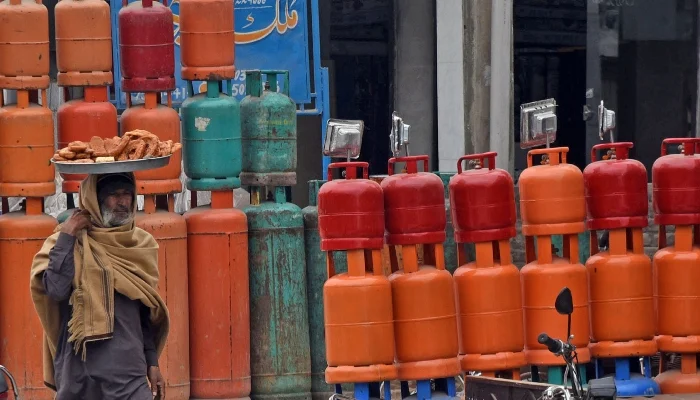
But that reduction has not reached consumers, according to retailers in Lahore, Multan and Muzaffargarh, who say LPG is still selling for between Rs480 and Rs550 per kilogram — close to the Rs480 peak the fuel reached during a prior spike, and roughly double the Rs260 to Rs280 range it traded in before the Middle East crisis.
Industry leaders blame regulator, threaten shutdown
The pricing dispute was the central issue at the All Pakistan LPG Industry Conference in Lahore, where more than 1,000 representatives from across the sector gathered Sunday. The conference was organized and chaired by Haji Nouman Ahmed, an industry leader who brought together importers, marketing companies, distributors, transporters and plant owners under one roof.
Speaking to reporters afterward, Ahmed said LPG has become a basic household necessity, but that Ogra has repeatedly misled the government in its price notifications. He said the regulator’s pricing only accounts for locally produced LPG and ignores the cost of imports, actual consumption patterns and real transportation expenses. Ahmed said the conference was intended to present a unified industry position to the government, and he also called for action against manufacturers and distributors of substandard cylinders, which he said pose a risk to public safety.
Other speakers echoed the criticism of Ogra and related regulatory bodies, accusing them of flawed policy and of harassing legitimate businesses.
Irfan Nazir Kahlo and Syed Atiqullah, representing LPG transporters, said the industry imports gas from as far away as 3,300 kilometers in Iran, but that Ogra has notified a freight rate of just Rs8,000 — a rate they said is meant for local transportation, not long-haul imports. They said drivers and vehicles face frequent harassment on the road.
They also pointed to security concerns in Balochistan, where they said attacks on LPG transport vehicles, known as bowsers, have resulted in losses they estimated at up to Rs1.5 billion. According to the transporters’ representatives, more than 450 companies currently import LPG into Pakistan, and they said those companies are being treated unfairly, with paramilitary forces conducting raids that reflect little understanding of plant operations and serve mainly to intimidate the industry.
Mian Ajmal, who leads the All Pakistan LPG Distributors group, said Ogra is still applying a freight rate set in 2016 and a dealer margin that has not been updated in a decade. Ajmal said he had raised the issue directly with the federal minister and pressed Ogra to revise its approach.
Several speakers returned to the security situation in Balochistan, saying that unrest there has driven the price of LPG that should sell for around Rs250 per kilogram above Rs500 in the market. They called on the government to strengthen security so that affordable fuel could reach households nationwide.
Charter of demands, coordination committee
Under Ahmed’s leadership, conference attendees rejected what they characterized as illegal raids, fines and plant closures carried out by Ogra, the Petroleum and Electricity Regulatory Authority, and Civil Defence officials. The conference approved what organizers called a unanimous Charter of Demands and formed an Industry Coordination Committee to carry those recommendations to relevant government ministries.
Ahmed said that if the government and Ogra do not accept the industry’s demands and introduce reforms within three days, the sector will strike the following week — a shutdown that would affect LPG plants, retail shops and transport networks across the country, accompanied by street protests. The conference closed with organizers pledging that the industry would speak “with one voice” until its concerns over pricing, security and regulation are resolved.
Copyright © 2021 Independent Pakistan | All rights reserved