By staff Reporter
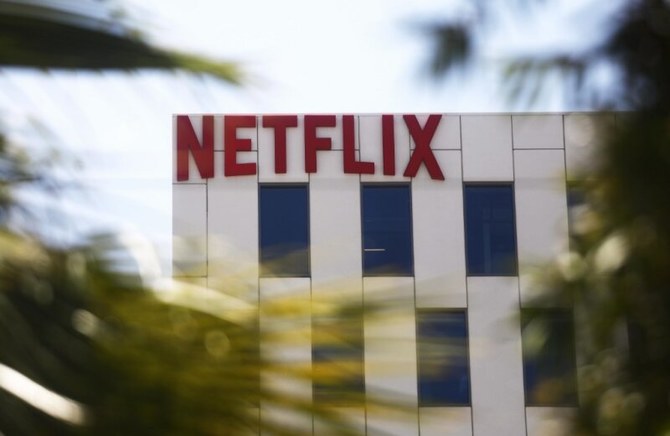
ISLAMABAD: Pakistan’s government is negotiating with Netflix and other global streaming services to secure greater visibility for the country’s films and television dramas, while separately developing a state-backed digital platform to carry Pakistani content abroad, a senior minister said, reviving a long-running debate over why a domestic entertainment industry with a vast international following has landed so few original commissions from the world’s dominant streaming companies.
The announcement, posted on X by Ahsan Iqbal, the federal minister for planning and development, arrived amid renewed public frustration over the near-total absence of Pakistani programming on major platforms. Pakistani television dramas draw large, devoted audiences across South Asia, the Persian Gulf, and diaspora communities in Europe and North America, yet the country has secured only a handful of original productions from Netflix or its rivals — a gap that has become a recurring source of grievance among producers, actors, and cultural officials.
Iqbal said the effort is part of Uraan Pakistan, the government’s five-pillar economic strategy — covering exports, digital governance, climate and environment, energy and infrastructure, and equity — which now counts the country’s creative industries among its export priorities. “Recognizing our massive export potential, the Government of Pakistan is currently in talks with Netflix and other global streaming giants to adjust the regional framework,” he wrote. “Our goal is clear: secure an equitable share of space and open sustainable partnership avenues for Pakistani creators.”
In the same post, Iqbal said the government did not intend to wait on the outcome of those conversations. “In parallel, we aren’t just waiting for a seat at their table — the government is actively working toward developing Pakistan’s very own independent OTT platform to champion our stories globally,” he wrote, using the industry shorthand for over-the-top services, the internet-delivered streaming model that has reshaped how television and film reach audiences worldwide.
The minister did not say what stage the Netflix talks had reached, what specific changes Pakistan was requesting, or how a domestic platform would be funded, built, or managed. He also did not offer a timeline for either effort.
Iqbal was more pointed in describing what he sees as the obstacle. Major streaming platforms, he said, have been “weaponized by regional politics” in ways that have denied Pakistani productions their rightful space. He did not name a country, but the remark appeared to allude to India, whose entertainment and streaming market dwarfs Pakistan’s and whose relationship with Islamabad has deteriorated sharply over the past year.
The reference was not oblique to anyone following the industry closely. In May 2025, following a sharp escalation in hostilities between the two nuclear-armed neighbors, Indian authorities ordered streaming and digital platforms operating in the country to remove Pakistani films, television series, music, and podcasts. The order followed years of intermittent restrictions on Pakistani actors and productions in India during periods of heightened tension — even as Pakistani dramas retained a devoted following among Indian viewers. Pakistan, in turn, has long banned Indian films and television content from its own cinemas and broadcast networks, a mirror-image restriction that predates the current dispute.
There is no public evidence that Netflix itself maintains any formal policy excluding Pakistani content. Industry analysts note that the company’s commissioning decisions are driven primarily by commercial calculations — audience size, projected subscriber returns, and a market’s production and technical capacity — rather than by political considerations. Several Pakistani dramas, including “Humsafar,” “Zindagi Gulzar Hai,” and “Sadqay Tumhare,” have appeared on Netflix in past years, though under licensing agreements in which the platform acquired already-completed productions rather than commissioning original series, a distinction that separates Pakistan’s presence on the platform from the local-language originals Netflix has built in markets such as India, South Korea, and Turkey.
Producers and industry figures have pointed to Pakistan’s comparatively small base of paying streaming subscribers as one likely factor limiting original investment. A Pakistani content distributor said in 2020 that Netflix had roughly 100,000 subscribers in the country at the time, though no authoritative current estimate is publicly available. Others in the industry have cited more structural constraints: limited production budgets, gaps in post-production infrastructure, and a domestic television economy built largely around advertising-supported broadcast networks and YouTube rather than premium subscription services — a business model fundamentally different from the one that draws streaming platforms to invest.
Reaction to Iqbal’s post came quickly from within Pakistan’s media industry, though not entirely in the direction the minister may have anticipated. Salman Iqbal, chief executive of ARY Digital, one of Pakistan’s largest media companies, responded by arguing that the country should not be lobbying for admission to platforms controlled by others. Championing the case for a homegrown streaming service instead, he said his company had already invested heavily in popularizing Pakistani content internationally and that Pakistan possessed the technology and creative talent needed to build its own platform. He said ARY Digital had, in fact, been approached by Netflix about acquiring content and had turned the offer down, adding that the global audience for Urdu-language programming exceeds a billion people — a market he suggested was large enough for Pakistan to chart an independent path rather than seek a larger foothold on existing platforms.
The concerns Iqbal raised were not new. Filmmaker Mehreen Jabbar had previously said a “neighbouring country” was using its political influence to sideline Pakistani content on international streaming platforms — a complaint that tracks closely with the minister’s own language. Jabbar said she remained hopeful the landscape would shift, pointing in particular to Pakistan’s first Netflix original series, which she said is expected to be released within the next year.
Copyright © 2021 Independent Pakistan | All rights reserved