By staff Reporter
QUETTA: Pakistani security forces have killed 114 militants in Balochistan province since July 5, according to state media reports on Monday, as a sprawling counterterrorism campaign launched after a deadly ambush on a police post entered its second week with no clear end in sight.
The latest deaths — eight militants killed in the past day alone — bring to 79 the number of people security forces say they have killed specifically under Operation Shaban, the military’s codename for the offensive. State broadcaster Radio Pakistan, citing security sources, said the broader tally of 114 includes casualties from Shaban as well as a parallel set of intelligence-based operations across the province.
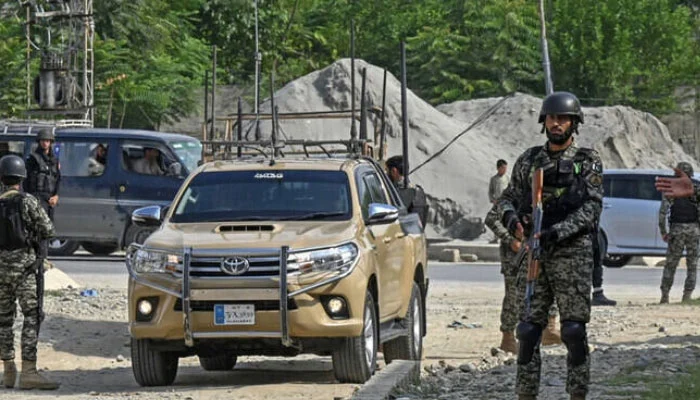
The operation is being carried out jointly by the Pakistan Army, the paramilitary Frontier Corps, and Balochistan police, using both ground assaults and airstrikes. State television footage broadcast in recent days has shown army helicopter gunships sweeping over the mountainous terrain that covers much of the province, engaging militant positions.
Balochistan, Pakistan’s largest province by land area but its least populated, sits along the country’s borders with Afghanistan and Iran. It has endured a separatist insurgency for two decades, driven chiefly by the banned Baloch Liberation Army, which seeks independence for the ethnic Baloch population and has increasingly targeted security forces and infrastructure tied to Chinese investment in the region. In recent years, the Pakistani Taliban — formally the Tehrik-e-Taliban Pakistan, and known within Pakistan by the government’s preferred term, Fitna al-Khawarij — has also stepped up attacks in the province, complicating what was already one of the most volatile corners of South Asia.
The current offensive traces back to July 5, when militants stormed a police post in the Mangi Dam area near Ziarat, in what officials have called one of the deadliest single attacks on Pakistani security forces in recent years. Twenty-seven police officers were killed. Pakistan’s top military spokesman, Lt. Gen. Ahmed Sharif Chaudhry, said in a briefing days later that the toll from that attack and the operations that followed had climbed to at least 42 dead altogether — four civilians, 27 police officers, and 11 additional security personnel — a reflection of how quickly the violence metastasized across the province in the days after the initial assault.
Interior Minister Mohsin Naqvi, in a statement posted to his ministry’s account on the social media platform X, praised the army and Balochistan’s Frontier Corps and police for the killing of the latest five militants, calling the operation evidence of what he described as the forces’ professionalism and readiness. He said the campaign would press on “until the elimination of Fitna al-Hindustan terrorists” — a term Pakistani officials use for Baloch separatist fighters, whom the government accuses of receiving backing from India. New Delhi has repeatedly denied any role in the insurgency.
“Those responsible for shedding the blood of innocent people in Balochistan deserve no leniency,” Naqvi said. He added that the broader campaign, which he said had by his count killed 114 fighters, “reflects the high level of preparedness, professionalism, and operational readiness of Pakistan’s security forces,” and said the country stood behind its military and police as the operation continues.
The offensive has become a proving ground for Prime Minister Shehbaz Sharif’s government, which has faced mounting pressure over a security situation in Balochistan that has deteriorated sharply even by the province’s own turbulent standards. Sharif traveled to Quetta last week to chair a meeting of the Provincial Apex Committee on the National Action Plan, the body that coordinates Pakistan’s civilian and military response to militancy. Field Marshal Asim Munir, the army chief and the country’s newly designated chief of defense forces, attended as well.
“One thing is decided: it is a mutual and singular decision of the civil and military leadership that we must end terrorism collectively,” Sharif told the gathering, according to state media accounts of the meeting.
The violence in Balochistan has also strained Pakistan’s already fraught relationship with Afghanistan. Islamabad contends that Baloch militants and Taliban-linked terrorists have found safe haven across the border and increasingly use Afghan territory to stage attacks. Tensions between the two governments have hardened over the past year, resulting in repeated border closures, exchanges of gunfire between security forces, and Pakistani airstrikes on sites it has identified as militant hideouts inside Afghanistan.
Officials have not said when Operation Shaban might wind down. State media reports have consistently quoted security sources as saying the campaign will continue “till elimination of the last terrorist,” language that has been repeated in near-identical form across a string of official updates as the death toll has climbed through the past week.
Copyright © 2021 Independent Pakistan | All rights reserved