By Staff Reporter
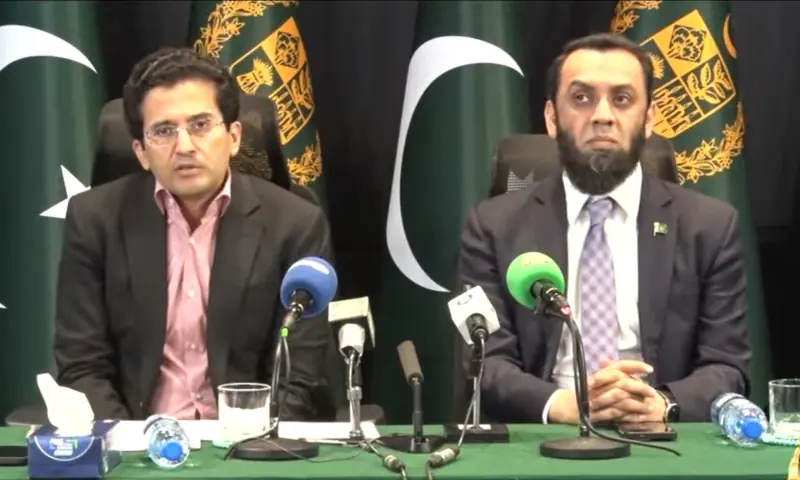
ISLAMABAD: Pakistan will begin adjusting petrol and diesel prices every day instead of on its traditional fortnightly schedule, as the government moves to pass through international market swings tied to the widening conflict between Iran and the United States, Petroleum Minister Ali Pervaiz Malik said on Friday.
The shift hands pricing authority to the Oil and Gas Regulatory Authority, which will calculate rates using a seven-day rolling average of international benchmarks and publish them daily on its website, Malik told reporters at a joint briefing with Information Minister Attaullah Tarar in the federal capital. The cabinet and Prime Minister Shehbaz Sharif approved the change, he said.
The regulator will go further than simply posting rates, according to Malik. Ogra will also disclose the underlying cost components that determine the price consumers pay at the pump, part of what the minister described as a broader push to make Pakistan’s opaque fuel-pricing system easier for the public to scrutinize. The change will also remove the need for sign-off from the petroleum ministry, the finance ministry or the prime minister’s office each time global prices move, he said.
Pakistan’s benchmark fuel prices already climbed this month. Petrol and high-speed diesel rose by more than Rs13 a litre on July 10, taking pump prices to roughly Rs311 and Rs323 a litre, respectively. Malik has separately argued that domestic pump prices remain below those in Bangladesh, Sri Lanka and Turkey, and are broadly in line with India’s.
Malik acknowledged the daily-pricing mechanism would add near-term strain on households but said it was a necessary trade-off for a more transparent system, one that would make clear to citizens why increases in fuel costs are, at times, unavoidable. He pointed to episodes of relief as evidence the mechanism could cut both ways: diesel, he said, has fallen from as high as Rs520 a litre to a range around Rs300 during periods when international prices retreated, and petrol has seen swings of Rs70 to Rs80 a litre tied to global market moves.
The minister said petroleum and carbon levies remain lower than they stood before the latest round of hostilities, pushing back on what he characterized as a public misconception that the government had used the crisis to raise levies.
The pricing overhaul is the product of a committee Sharif established under Malik’s chairmanship, which has met four times to review the mechanism. KPMG, engaged by the petroleum ministry to model alternatives, presented monthly, fortnightly, weekly and daily options before the government settled on the daily framework. Malik said the panel will deliver a broader assessment within 15 to 20 days covering post-war energy pricing and the country’s long-term energy security architecture — a framework he said would ultimately shape how the government’s handling of the crisis is judged.
That review will also address Pakistan’s reliance on imported energy. Malik said the government has commissioned international consultants to determine whether the country has the financial capacity to build strategic petroleum reserves, how much it could commit to such a program over the coming years, and whether trading firms or companies in neighbouring and allied nations could be persuaded to stockpile reserves domestically for redistribution to other markets. The findings will go before the cabinet next week, he said.
On supply, Malik said Turkish Petroleum is set to resume oil and gas extraction operations in Pakistan in October, its first such activity in the country in two decades, following Sharif’s recent visit to Turkiye.
Tarar, addressing the same briefing, tied the run-up in international oil prices directly to the deteriorating regional conflict, saying Pakistan’s diplomatic efforts to help de-escalate the situation had drawn recognition internationally. He said Islamabad avoided the shortages and rationing seen in some developed economies during the worst of the disruption by securing additional reserves in advance, maintaining supply cover of roughly one and a half to two months throughout the crisis, according to periodic briefings from the petroleum division.
To offset the impact of higher global prices on households, Tarar said the federal government redirected funds from its development budget to fund roughly Rs129 billion in subsidies, alongside targeted relief for the transport, agriculture and motorcycle sectors — a decision he attributed to Sharif’s intent to shield the public from the full burden of the price shock.
Tarar also disputed suggestions that oil marketing companies had profited excessively from the volatility, saying Sharif had directed the Federal Investigation Agency and sector regulators to ensure no company captured windfall margins. He cited an enforcement action taken a day earlier against a firm found hoarding fuel supplies, and said Ogra — under what he described as new leadership and an upgraded IT-based monitoring system introduced at the prime minister’s recommendation — was actively working to prevent hoarding, artificial price inflation and unwarranted profit-taking.
The information minister used the briefing to make the case for a broader shift toward electric vehicles, calling the transition “inevitable” for a country grappling with a heavy oil import bill, and said both the public and private sectors have a role in accelerating adoption, particularly among students commuting on electric two-wheelers.
Copyright © 2021 Independent Pakistan | All rights reserved