By Staff Reporter
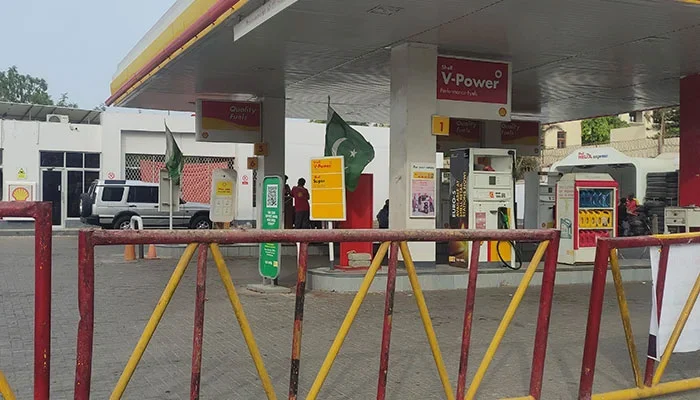
ISLAMABAD: Pakistan’s largest fuel retailer association said it will shut roughly 15,000 petrol pumps nationwide from Thursday, escalating a standoff with the government over a new daily pricing mechanism that dealers say threatens their survival.
The All Pakistan Petrol Pumps Owners Association said talks with Petroleum Minister Ali Pervaiz Malik’s team broke down on Tuesday after about an hour, with no agreement reached on how frequently fuel prices should be revised. The group said it would begin an indefinite strike from midnight Wednesday.
“We cannot accept daily changes in petroleum product prices under any circumstances,” APPPOA General Secretary Nauman Ali Butt told reporters after the meeting, calling the government’s plan “unacceptable” and “unworkable.”
The dispute centers on a shift from weekly to daily fuel-price notifications that Pakistan’s oil regulator began rolling out this week. Under the mechanism approved by the federal cabinet, the Oil and Gas Regulatory Authority will publish ex-depot prices for petrol and high-speed diesel every day, based on a seven-day rolling average of international benchmarks. Prices set on Fridays will hold through the weekend, according to an official document.
Malik has defended the change as a transparency measure. The minister has said the underlying methodology hasn’t changed — both the old weekly system and the new daily one rely on seven-day averages of global prices — and that the update simply allows those averages to be reflected more frequently, reducing distortions between international and domestic prices.
That argument hasn’t swayed retailers, who say the real issue is commercial, not technical. APPPOA Chairman Humayun Khan said the daily mechanism benefits oil marketing companies at dealers’ expense, allowing them to delay deliveries when prices are falling and book advance billing to lock in higher upliftment costs. Dealers are already operating on thin margins, he said, and daily volatility makes it harder to manage inventory and cash flow.
Khan also said dealer commissions have stayed frozen for three years, a demand he called long overdue for resolution. Butt said the association’s central ask is for the government to revert to monthly price-setting, and that both the pricing mechanism and the commission dispute should have involved consultation with pump owners before the policy was finalized.
“The daily pricing mechanism created confusion and destroyed our businesses already running at thin margins,” Khan said, adding that it was excluded from a decision affecting thousands of small businesses across the country.
The strike would affect the bulk of Pakistan’s roughly 15,000 fuel retail outlets, though the scale of disruption to consumers will depend on how long the shutdown lasts and whether other dealer groups join.
Second group weighs its own strike
The Pakistan Petroleum Dealers Association, a separate retailer body, said its executive committee would meet on Wednesday to decide whether to join the strike. PPDA Senior Adviser Malik Khuda Bukhsh said daily pricing was “not possible and unacceptable” for its members, echoing APPPOA’s position even as the government characterized talks with the PPDA differently.
A Petroleum Division statement said its negotiations with the PPDA had been successful, and that the dealers’ delegation had praised the government’s handling of fuel supplies during the Strait of Hormuz crisis, offering “full support” for the new pricing policy. The ministry said Malik had briefed PPDA representatives on Monday about the shift to daily notifications and that the association had expressed support for the mechanism.
Khuda Bukhsh disputed that characterization. He said Malik had instead directed the PPDA delegation to raise its objections directly with Ogra’s leadership, which it did. According to Khuda Bukhsh, Ogra officials acknowledged the daily-pricing rollout had been introduced hastily and asked for seven days to relay dealer concerns to the government, urging the association to hold off on strike action in the meantime.
He said the PPDA team made clear its delegation had no mandate to commit to a course of action, and that the decision on whether to strike would rest with the executive committee’s Wednesday meeting. Separately, the PPDA ran a newspaper appeal calling on the government to review the 24-hour price-adjustment system — a move at odds with the Petroleum Division’s account of dealer support for the policy.
Government holds its position
Petroleum Division officials said Malik has heard dealers’ concerns and would factor profit margins into further discussions, but gave no indication the daily pricing mechanism itself was under review. Officials said the change was intended to improve transparency and that the government remained open to “legitimate proposals” from stakeholders while maintaining an uninterrupted fuel supply.
The pricing overhaul is part of a broader set of changes to Pakistan’s fuel-import regime set to take effect in the 2026-27 fiscal year. Under the revised framework, imports of high-speed diesel will be routed exclusively through state-owned Pakistan State Oil, while other oil marketing companies will retain the right to import petrol according to their market shares. Companies that miss import or upliftment obligations face a nine-month freeze on new import permissions.
Ogra is set to begin publishing daily Platts reference prices from July 1, 2026, the document showed. Any increase in the petroleum levy will require sign-off from the Finance Division and cannot exceed limits set by the federal cabinet. Prices for kerosene and light diesel oil will also move to daily adjustment under the new rules.
The standoff adds pressure on a government already managing volatile energy markets, with officials pointing to the Strait of Hormuz crisis as one factor behind the push for a pricing system that reflects international price swings faster.
Copyright © 2021 Independent Pakistan | All rights reserved