By Staff Reporter
MUZAFFARABAD: Police in Azad Kashmir have said 26 of their officers have been killed this year in clashes linked to a banned protest movement, as violence surrounding the region’s staggered legislative elections left both sides trading starkly conflicting casualty figures.
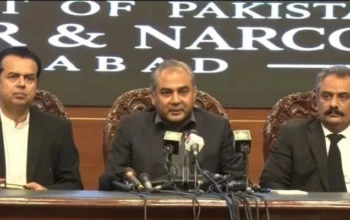
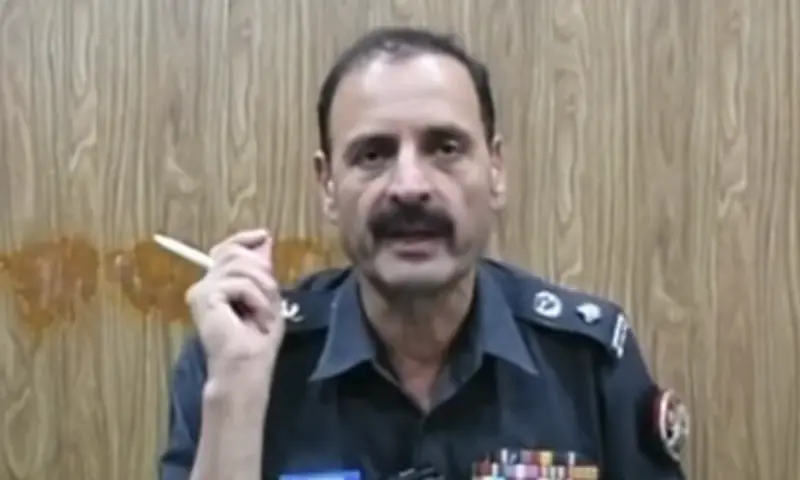
Riaz Mughal, spokesperson for police in Azad Jammu and Kashmir (AJK), told a press conference on Wednesday that members of the proscribed Joint Awami Action Committee (JAAC) had killed 26 police and paramilitary personnel so far in 2026, while a further 157 had suffered serious injuries and 629 had sustained minor ones. He did not detail the specific incidents behind the toll.
“After this figure, how can you say that they are peaceful protesters?” he asked reporters, adding that police “don’t target anyone” and “only target those who target our personnel.”
His remarks followed fresh unrest this week in Rawalakot on Monday and Mirpur on Tuesday, coinciding with the first phase of AJK’s legislative assembly elections. Voting concluded at 6pm on Monday across all 13 constituencies in Mirpur division, with two further phases scheduled for 2 August in Muzaffarabad division and the 12 seats reserved for refugees from Indian-occupied Kashmir, and 10 August in Poonch division, which includes Rawalakot.
Accounts of what happened during the clashes diverge sharply. JAAC has said at least 14 of its supporters were killed when security forces opened fire on its long march as it attempted to reach Rawalakot on Monday, according to reports citing committee figures, with the toll including Usman Nazir, brother of core committee member Umar Nazir Kashmiri. A JAAC spokesperson has also alleged that security forces fired on unarmed protesters in Mirpur the following day and removed bodies from the scene to conceal the death toll. Officials have disputed those figures; one AJK official in Mirpur told reporters only a single death had been confirmed in connection with Tuesday’s violence, and neither account has been independently verified.
Police say the confrontation began after JAAC groups tried to force their way into Rawalakot as officers repeatedly appealed to protesters to disperse peacefully. Mughal alleged that some demonstrators were armed with sniper rifles and described their actions as “tantamount to terrorism,” saying more than 300 officers had been injured by gunfire and knife attacks. “They have snipers. They target people who are from our institutions and police,” he said, presenting weapons he said had been recovered from protesters during operations against the group. He also claimed 70 percent of the demonstrators were criminals, including drug dealers sheltering under the JAAC banner.
‘Working under an agenda’
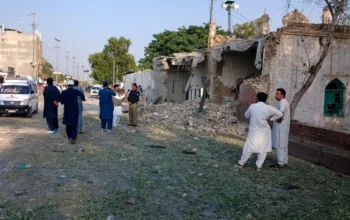
Separately on Wednesday, SSP Khawar Ali Shaukat, addressing reporters in Rawalakot, alleged that armed groups had ambushed officials at multiple locations across the city over the previous two days, opening fire with sophisticated weapons, including an American-made automatic rifle. He said one Rangers officer had been killed and around 15 police and other law enforcement personnel injured in the attacks.
“This demonstrates that the proscribed group is working under an agenda, the purpose of which is to disrupt peace in AJK, disturb the social fabric and damage the atmosphere of brotherhood,” Shaukat said, rejecting what he called a misleading narrative on social media portraying JAAC as peaceful. He said law enforcement had exercised restraint throughout and responded only when officers came under attack, and that several suspects had been arrested along with a cache of weapons.
Government ministers have echoed the characterisation of the unrest as the work of “militant elements”. On Tuesday, Information Minister Attaullah Tarar said the protests involved militants “pursuing a foreign agenda and backed by Indian funding,” and argued that peaceful elections earlier in the week showed the public did not support the group’s campaign. JAAC has denied its marchers were armed, saying they carried only sticks, and has previously accused authorities of understating the death toll from earlier confrontations.
A year of escalating clashes
Wednesday’s press conference placed the current unrest within a longer pattern of violence between AJK security forces and JAAC, which first emerged as a significant political force in May 2024 over demands linked to wheat and electricity prices, before a broader protest movement developed in 2025 around an expanded charter of demands, including the abolition of 12 assembly seats reserved for refugees from Indian-occupied Kashmir.
Mughal recalled that on 11 May 2024, when police confronted JAAC protesters heading towards Muzaffarabad, one officer was killed, 60 personnel were seriously injured — most still recovering, he said — and a further 174 sustained minor injuries. In October 2025, he said, three officers were killed and 52 seriously injured, with 357 others also hurt.
JAAC has said the current confrontation stems from the government’s failure to fully implement an agreement reached after the 2025 protests within a 90-day deadline that expired in January. The AJK government has previously said it fulfilled the “vast majority” of its commitments, including supplying electricity at Rs3 per unit and flour subsidies, and has argued the current protest — centred on the 12 refugee seats — is unjustified given that the AJK Supreme Court has ruled the matter requires a constitutional amendment rather than executive action.
The AJK government proscribed JAAC under anti-terrorism legislation in June, shortly before clashes at Rawalakot’s Combined Military Hospital left four officers dead and at least 20 injured, according to a police statement at the time. Legal proceedings on sedition charges have since been opened against JAAC leaders Shaukat Nawaz Mir and Khawaja Mehran Arshad. The government has also alleged the group’s activities have caused Rs15 billion in losses to the state and has said it has evidence linking protest organisers to overseas backers, though it has not published that evidence.
With voting still to take place in two further phases over the coming fortnight, and mobile data and internet services curtailed across parts of the region, independent verification of casualty figures from either side has remained difficult. The AJK government has urged the public to disregard what it has called false information circulating on social media and to rely only on verified sources.
Copyright © 2021 Independent Pakistan | All rights reserved