By Staff Reporter
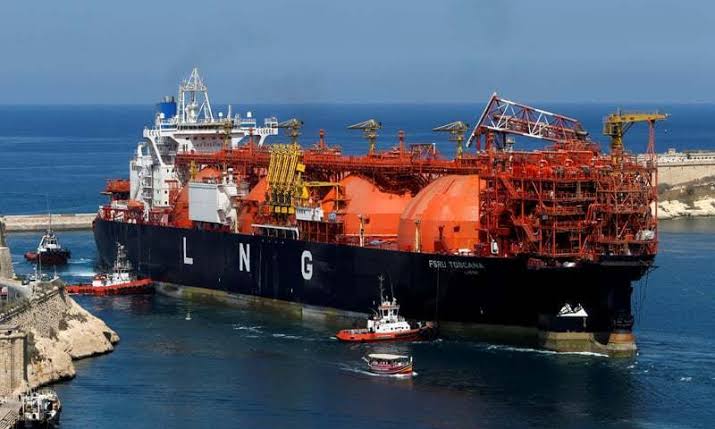
ISLAMABAD: Pakistan LNG Ltd. has tendered for two spot cargoes of liquefied natural gas for December and January, trying to narrow a winter supply gap that widened after Qatar extended its force majeure and ships came under fire near the Strait of Hormuz.
The state-owned importer issued the tender on Wednesday after the prime minister’s approval. It wants two cargoes of 140,000 cubic meters each, plus or minus 5%, delivered ex-ship to Port Qasim in Karachi. Delivery windows are Dec. 14-16 and Jan. 9-11, according to a notice on the company’s website under tender number PLL/IMP/LNGT80.
Bids are due Nov. 6 at 2 p.m. and will be opened at 2:30 p.m. on the government’s EPADS 2.0 e-procurement platform. Manual submissions won’t be accepted. Suppliers not yet registered on the new version of the system must sign up through the EPADS vendors’ portal. PLL will award orders after evaluating offers on technical and commercial grounds, and it has reserved the right to reject all bids.
Spot LNG is trading around $32 per million British thermal units. After insurance, war-risk surcharges, freight and port handling, the delivered cost is expected to reach $33.50 to $34. The Japan-Korea Marker, the Asian spot benchmark, was in the low $34s on Oct. 30, according to S&P Global Platts, the highest since December 2022. By contrast, Pakistan’s state entities bought eight cargoes on Feb. 13 at an average of $10.47 per million Btu, according to data compiled by a researcher at the Policy Research Institute for Equitable Development. The higher cost could raise the price of electricity generated from regasified LNG, adding to the burden on consumers.
Pakistan needs nine cargoes in December and 11 in January. Given the security risks around Hormuz, authorities are trying to arrange only eight to 10 for each of the two months. QatarEnergy, Pakistan’s main supplier, has extended its force majeure on LNG supplies to Dec. 29. Pakistan imported 36 cargoes last winter, 35 of them from Qatar, according to official data. The force majeure followed attacks on Qatari facilities.
LNG flows through Hormuz are still only about 30% of pre-war levels. Vessels carrying LNG to Pakistan and Bangladesh have been attacked before entering the strait. On Wednesday, Iran’s Revolutionary Guards said four oil tankers were destroyed after hitting naval mines in a passage south of the strait that Tehran has declared off-limits. The claim couldn’t be independently verified. It came a day after President Donald Trump said the US had struck targets on Qeshm, the largest island in the strait.
Pakistan’s National Crisis Management Centre is monitoring the situation and is in contact with Iran to secure three to four cargoes for each of the two months. In May, Qatari cargoes crossed Hormuz under a government-to-government sale to Pakistan that Iran had approved. Pakistan has served as a mediator in the conflict that began in late February.
Consumers are already feeling the squeeze. Sui Northern Gas Pipelines Ltd. and Sui Southern Gas Co. began load management for households on Wednesday, restricting supply to cooking hours. Domestic users nationwide will get gas in three windows, 6:30 a.m. to 9 a.m., noon to 2:30 p.m. and 6 p.m. to 9 p.m., or eight hours a day in total.
Gas utility officials expect household demand in Punjab and Khyber Pakhtunkhwa to rise from about 500 million cubic feet a day to 1,500 million in December and January, and demand in Sindh and Balochistan to double from 300 million to 600 million. Authorities are weighing curbs on gas to power plants, fertilizer producers and export and non-export industries to protect household supply during the peak winter months.
One official said seven of the country’s 10 fertilizer plants run on dedicated gas networks and that producers hold inventories of about 300,000 tons. Another said power plants could switch to alternative fuels such as furnace oil if imported gas isn’t available.
Pakistan began 2026 with more imported LNG than it could use, and it had been negotiating to offload unwanted cargoes. The war in the Gulf turned that surplus into a shortage within months.
Copyright © 2021 Independent Pakistan | All rights reserved