By Staff Reporter
KARACHI: A cargo of Qatari liquefied natural gas bound for Pakistan cleared the Strait of Hormuz overnight, the first shipment from the world’s largest LNG exporter to make the transit in nearly three weeks, even as the war between the US and Iran shows no sign of abating.
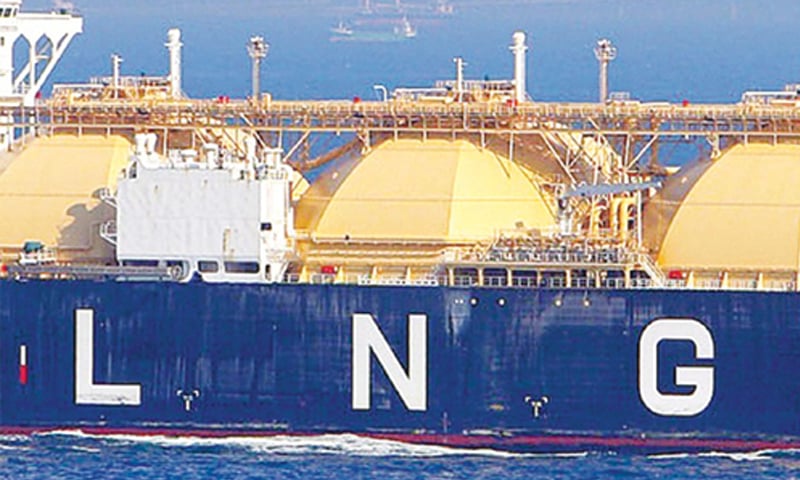
The Al Areesh, which took on a cargo at Qatar’s Ras Laffan terminal between July 4 and July 6, exited the strait overnight on July 29 and is now headed for Pakistan’s Port Qasim, with an estimated arrival of July 31, according to ship-tracking data from Kpler and LSEG. Its passage is the first by a QatarEnergy-linked LNG carrier since July 11, when the strait’s traffic all but froze in the aftermath of an attack that hit one of the company’s tankers days earlier.
That earlier vessel, the Al Rekayyat, was struck on July 7 as it moved through Hormuz, an assault Qatar blamed on Iran and one that rattled shipowners across the Gulf. The Al Hamra, carrying a cargo loaded at Abu Dhabi’s Das Island, was the last LNG tanker to make the transit before Thursday, departing July 11, Kpler data show.
Pakistan has particular reason to watch the Al Areesh’s progress. Islamabad has played a mediating role in US-Iran talks and had been holding off on pricier spot-market LNG purchases on the expectation that Qatari supply would resume — a bet that, until now, had not paid off. More recently, Pakistani buyers had begun lining up shipments for August regardless, hedging against the possibility that Hormuz would stay effectively closed.
The timing underscores how precarious the reopening is. A lull in hostilities that had briefly supported talks aimed at ending the conflict collapsed this week: Iran fired a barrage of ballistic missiles at a US base in Jordan on Tuesday night, and the US answered with a fresh round of strikes on Iranian targets Thursday. The Al Areesh’s transit took place squarely inside that renewed exchange of fire. Iran’s Fars news agency said separately Thursday that a Qatari LNG carrier had crossed Hormuz along an Iran-designated route with Tehran’s permission, though it did not identify the vessel.
The passage also came a day after Iran rejected a proposal from Oman for joint management of the strait, with a senior Iranian official arguing that Iran and Oman alone should oversee the waterway — a sign that any durable de-escalation around Hormuz remains distant even as individual cargoes begin to move again.
Still, there are signs QatarEnergy may be preparing to restart flows through Hormuz more broadly. More than a dozen tankers were seen idling near Ras Laffan, suggestive of vessels positioning to lift cargo from the export terminal once the company judges the route safe enough. A sustained resumption could allow QatarEnergy to lift output at Ras Laffan, the world’s largest LNG facility, where production was curtailed after the July 7 strike.
Separately, the Mraweh, an LNG carrier controlled by ADNOC Gas, reappeared inside the Strait of Hormuz on Thursday after last being tracked outside the waterway in ballast on July 24. Kpler data showed the tanker remained in ballast as it moved back into the strait.
Broader tanker traffic through Hormuz picked up modestly this week. Twelve commodity vessels transited the strait Wednesday — six inbound, six outbound — up from the prior two days, according to Kpler. The figures capture only vessels visible on tracking systems; some ships are believed to be sailing with transponders switched off to avoid detection, meaning actual traffic could run higher. The strait carried roughly a fifth of the world’s crude oil and LNG supply before the wider conflict, which began in February with US and Israeli strikes on Iran, disrupted shipping through the waterway.
Red Sea Disruption Deepens
The picture was more strained at the Bab el-Mandeb strait, the narrow waterway linking the Red Sea to the Gulf of Aden, where Yemen’s Houthi rebels have declared a blockade on Saudi Arabia. Nineteen commodity ships passed through Bab el-Mandeb on Wednesday, Kpler data showed, down from Monday and Tuesday’s pace; LSEG put the transit count higher, at 26. Of the Kpler-tracked vessels, eight entered the strait and 11 exited, including four crude tankers.
The Houthi blockade has already begun to show up in loading data. Visible crude shipments from the Red Sea port of Yanbu fell by at least 30% last week, according to figures from Kpler and AXSMarine. Vortexa, however, estimated that exports have held broadly steady, pointing to a rise in so-called dark loadings — cargoes moved by tankers that go dark on tracking systems to obscure their voyages.
“We have observed a clear increase in the number of crude/condensate tankers heading north after loading in the Red Sea,” said George Morris, an analyst at Vortexa. “The shift reflects the renewed security risk around Bab el-Mandeb.”
Morris noted that the stakes extend well beyond Saudi Arabia’s own export volumes. Cargoes loaded at Yanbu accounted for around 15% of Asia’s seaborne crude and condensate imports in June, he said, meaning a prolonged disruption at the port would ripple through refining hubs across the region.
Copyright © 2021 Independent Pakistan | All rights reserved