By Staff Reporter
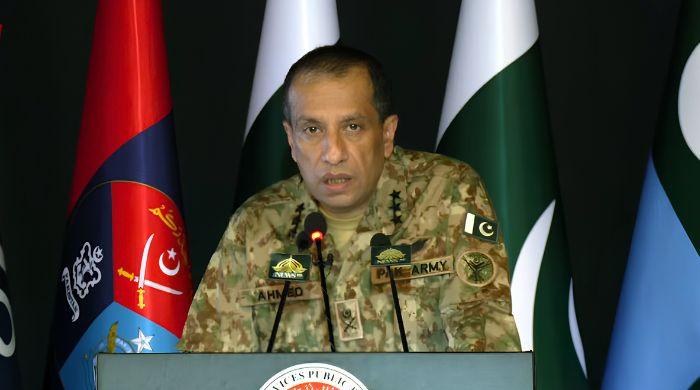
RAWALPINDI: Pakistan’s military has ruled out any negotiations with militant groups operating in Balochistan, insisting the state’s only choice for insurgents is surrender or continued armed confrontation, as its chief spokesman used a lengthy Friday press briefing to defend a security campaign that has left more than 2,000 terrorists killed this year.
Lieutenant General Ahmed Sharif Chaudhry, director general of the military’s Inter-Services Public Relations wing, told reporters in Rawalpindi that security forces had carried out 40,348 operations since the start of the year, killing 2,084 confirmed militants — a toll he described as the highest daily kill rate the country has recorded. The vast majority of those operations, more than 31,000, were concentrated in Balochistan, the resource-rich south-western province that has for two decades been the centre of a separatist insurgency against the Pakistani state.
The briefing, billed as a broad account of the country’s security situation, became in large part a defence of the military’s record in Balochistan, where attacks on security personnel, officials and civilians have continued at pace despite the scale of the counter-insurgency effort. General Chaudhry was blunt about who he held responsible, accusing powerful tribal chiefs, or sardars, and a wider provincial elite of exploiting unrest to protect their own interests. “We will not talk to you,” he told them directly during the briefing. “We will talk to the people of Balochistan.”
“There is no room for talks”
Pressed on why violence in the province appeared to be intensifying rather than easing, the spokesman argued the increase reflected a more assertive military posture rather than a weakening of the state’s position. He said militant groups had shifted greater resources into Balochistan after failing to achieve their objectives elsewhere, and accused the Afghan Taliban administration in Kabul of continuing to shelter fighters responsible for cross-border attacks — an allegation Kabul has consistently denied.
The general was unambiguous in closing the door on any political settlement with armed groups. Militants and those who back them, he said, now understood there was no prospect of talks or concessions from the state, only a choice between laying down arms within the framework of the constitution or facing continued military pressure. “There is no room for talks with terrorists,” he said. “These terrorists and their sponsors have come to understand that there is no space for appeasement or any talks with them […] They know that the state is telling them very clearly that either you submit to the state’s will in accordance with the law and the Constitution, or we are here and fighting.”
He extended that argument to grievances raised more broadly in the province, telling reporters that any conversation about rights had to begin with citizens first meeting their obligations to the state — a formulation he tied explicitly to constitutional provisions on loyalty and obedience to the law, and one he suggested ought to apply as much to the political and tribal elite as to ordinary citizens. “Without the state, there is no politics,” he said. “Without the state, there is no identity. Without the state, there is no security.”
A grim toll on both sides
The casualty figures set out during the briefing pointed to a conflict that remains costly for the Pakistani state as well as for the militant groups it is fighting. More than eight hundred Pakistanis, including members of the security forces, have been killed this year, according to the ISPR account, a toll that includes soldiers, police officers and civilians caught up in attacks. Twenty-eight suicide bombings were recorded over the same period, the majority attributed to Afghan nationals, the general said.
The briefing came against the backdrop of a string of recent, high-profile attacks in the province. Earlier this month a district and sessions judge was killed in Mastung when gunmen ambushed his vehicle, while police reported that six abducted labourers were later found shot dead. The military separately disclosed that dozens of security personnel and civilians had been killed in a cluster of major attacks in Balochistan in early July, underlining the persistent volatility in a province that borders both Afghanistan and Iran.
Tribal elites blamed for entrenched unrest
General Chaudhry devoted a significant portion of the briefing to what he characterised as the underlying drivers of instability in Balochistan, placing the blame squarely on a tribal and political elite he accused of resisting change in order to preserve a status quo that predates the country’s independence. He said the arrangement was designed, in essence, to keep a “poor man’s child” from ever studying, so that they would remain dependent on the same families as a servant, guard or driver.
He also pointed to what he described as extensive use of Levies forces — the traditional tribal policing structure in parts of Balochistan — as private militias loyal to tribal leaders rather than the state, and suggested resistance to reforming that system, including efforts to convert Levies units into a conventional police force, had contributed to unrest. Smuggling networks operating under the guise of legitimate business, he said, were similarly resistant to state intervention.
On the contentious issue of missing persons, long a source of grievance in the province, the spokesman said a government commission established to investigate such cases had received just under 11,000 applications since it began work, of which the great majority had since been resolved — through located individuals, discovered deaths, or cases the commission concluded had been misreported.
“Not a military-run state”
Addressing perceptions that the state was tightening its grip on the province through force, General Chaudhry rejected the idea that a tougher security posture amounted to military rule, offering his own definition of what he called a “hard state.” “Being a hard state does not mean that the military runs the state or that the armed forces dominate the state,” he said, adding that in his view this was a “perception being created” about the government’s intentions.
On good governance and new administrative units
The briefing also touched on a live political debate, after Interior Minister Mohsin Naqvi recently floated the idea of creating new administrative units to improve governance. Asked about the proposal, General Chaudhry was careful to distance the military from Naqvi’s remarks, making clear any such decision rested with elected representatives and the democratic process rather than the security establishment.
He did, however, endorse the underlying premise that governance needed to improve. “Good governance is essential for Pakistan’s security,” he said. “If the issues are not being resolved, it means that there should be done something for good governance.” Pressed further, he added that if a governance overhaul were genuinely required, it ought to proceed through constitutional means: “If good governance requires an administrative reset, then let it happen.”
Development spending and new security deployments
The military spokesman also set out figures on state investment in the province, telling reporters that Balochistan’s per capita development allocation exceeded that of any other province in the country. Funds had been earmarked, he said, for socioeconomic projects and a dedicated Balochistan development initiative, alongside efforts to improve road connectivity and expand IT and vocational training.
On the security side, he confirmed the establishment of a new Frontier Corps command, to be based in Chagai, which he said was intended to protect a mineral-rich transport corridor considered central to the province’s economic future. Newly recruited police officers were also being deployed to the province, he added, alongside efforts to better equip units responding to attacks.
Unrest in Azad Jammu and Kashmir
Asked about recent protests in Azad Jammu and Kashmir, the spokesman said the territory remained central to Pakistan’s national identity, describing it in the traditional formulation as the country’s “jugular vein.” He addressed demonstrations organised by the Joint Awami Action Committee, saying the group had been invited to contest elections and pursue its objections to refugee representation in the region’s legislature through legal and political channels, and suggesting its recourse to street protest rather than the ballot box had undermined its own position.
Copyright © 2021 Independent Pakistan | All rights reserved