By Staff Reporter
ISLAMABAD: The International Monetary Fund asked Pakistan to build a broader, simpler and more predictable tax system to pay for education, infrastructure and investment, saying the harder work of stabilising the economy is behind it and the focus must now shift to raising long-term growth.
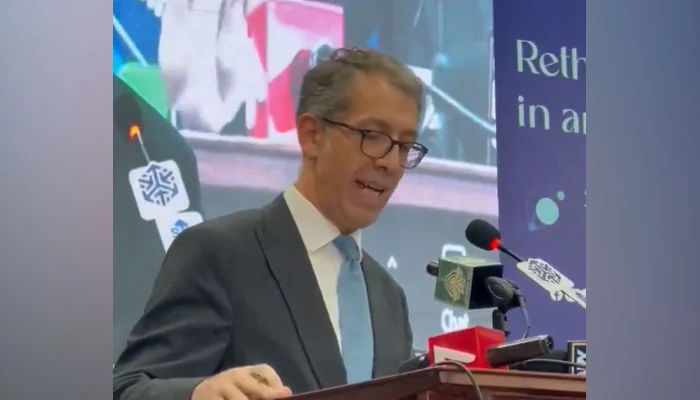
Mahir Binici, the fund’s representative in Pakistan, said on Thursday the country has reached a turning point at which the debate should move beyond taxation to how reforms can translate into investment, exports, jobs and higher living standards. He put the economy’s growth rate at 3.5%, and described the progress as significant.
“I think Pakistan has already done the hard work and, from this point forward, it is really about how to cement that stabilisation and where we are right now, and move towards a direction where we have more investment, activity and better jobs,” Binici said at a session on growth reforms at the 29th Sustainable Development Conference in Islamabad, hosted by the Sustainable Development Policy Institute.
His remarks come as the lender weighs the next installment of its aid. Pakistan and the IMF reached a staff-level agreement in early October on the fourth review of the 37-month Extended Fund Facility and the third review of a 28-month climate-resilience facility, which would give Pakistan access to about $1 billion and $210 million, respectively, once the Executive Board signs off. That would bring total disbursements under the two arrangements to about $5.7 billion. The fund said at the time that Pakistan had navigated the impact of the Middle East conflict and kept the macroeconomy stable.
Binici cited the Middle East war, recurring climate shocks and heightened global uncertainty as tests that the country’s buffers had so far withstood. Stability had held, he said, despite “extremely high global uncertainty, whether it is driven by trade, tariffs or geopolitics.” He said Pakistan had shown over the past two to three years why it matters to build reserves and keep policy steady when shocks recur.
The tax system was the centerpiece of his remarks. Binici said there was broad understanding among stakeholders of the need for a wider and more predictable regime, and that the aim was to generate resources rather than revenue for its own sake.
“We need a broader, simpler, fairer and more predictable taxation system,” he said. “That would also enable increasing revenue, not only for the sake of increasing revenue but also generating the resources that the country needs, whether for human capital, infrastructure or investment.”
He said the fund’s research puts the threshold for an emerging economy like Pakistan at about 15% of gross domestic product in revenue, the minimum needed for a state that can deliver services. “Pakistan was still far from that level,” he said.
Finance Minister Muhammad Aurangzeb told the National Assembly that the tax-to-GDP ratio had risen to 10.3% from 8.5%. Collections have since lagged: the Federal Board of Revenue fell about 335 billion rupees short of its target for the first half of the current fiscal year, prompting the government to lower its annual goal.
Binici said fiscal discipline needs to be backed by price stability and continued efforts to rebuild buffers. Prices remain a concern. The State Bank of Pakistan raised its benchmark rate by half a percentage point to 12% on Oct. 26, its first increase since April, citing a worsening inflation outlook, with annual inflation at 10.26% in September. The IMF’s latest forecasts call for growth of 3.5% in the current fiscal year and inflation of 9.9%. The government has set a growth target of 4%.
On human capital, Binici said spending on health and education had risen gradually from about 2% of GDP over the past two to three years and is expected to reach 2.8% to 3% this fiscal year. “It is still, I think, far below our peers and what Pakistan needs, but there has been some gradual progress,” he said.
He named governance, the national tariff policy and the cost of doing business as areas where Pakistan stands to gain the most in growth, and said they are also central to the reform program, particularly in energy. Governance, he said, should be treated as economic policy. He commended the authorities for completing a Governance and Corruption Diagnostic and drawing up an economic governance reform plan. He also said the national tariff policy had helped the economy and that higher exports are essential to creating jobs.
Binici said restoring stability, keeping it, rebuilding confidence and strengthening buffers had been a significant achievement in difficult circumstances, but that considerable work remains. He called for deeper and broader reforms, properly sequenced and targeted, and said the fund would keep working with Pakistan over the long term. He added that meetings with Pakistani officials on raising tax revenue had been held and that serious efforts to improve the economy had been under way for several months.
Copyright © 2021 Independent Pakistan | All rights reserved