By Staff Reporter
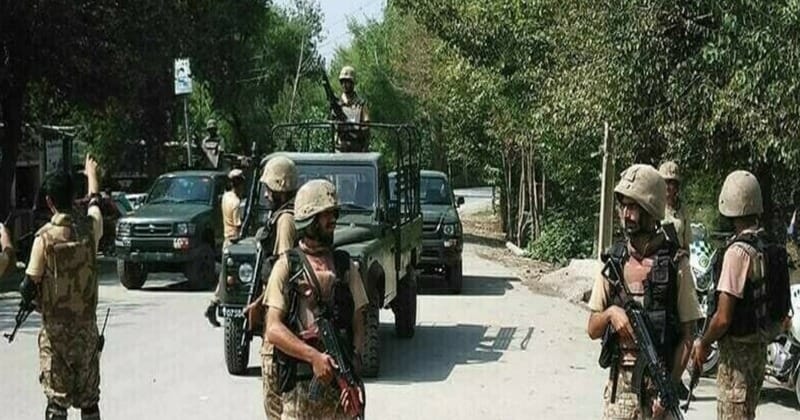
ISLAMABAD: Pakistan suffered its bloodiest month of the year in July, with 112 security personnel and 401 militants killed in fighting that has engulfed the country’s restive north-west and south-west, according to new figures from an Islamabad-based security think tank.
The death toll among security forces was the highest in a single month since January 2023, when 114 personnel died, more than 100 of them in a single suicide bombing at a police compound in Peshawar. The number of militants killed in July was the highest recorded in any month in more than ten years, according to the Pakistan Institute for Conflict and Security Studies (PICSS), which published its monthly assessment on Saturday.
Also killed during the month were 74 civilians and 19 members of local peace committees, community groups formed in militancy-hit areas to support the security forces. The toll among peace committee members was itself the highest recorded in a single month in a decade, the institute said.
The figures mark a dramatic escalation from June. Security force deaths rose 195 percent month on month, from 38 to 112. Militant deaths rose 109 percent, from 192 to 401. Civilian deaths were up 21 percent, from 61 to 74.
PICSS also recorded at least eight suicide attacks in July, five of them using explosive-laden vehicles, the highest monthly number of suicide bombings in ten years. Kidnappings doubled over the same period, climbing from 33 incidents in June to 66 in July.
In total, 232 people were wounded during the month, among them 101 security personnel, 103 civilians, 14 peace committee members and 14 militants.
Balochistan bears the brunt
The violence was most acute in Balochistan, the vast, mineral-rich province in Pakistan’s south-west, where the overall death toll rose 241 percent, from 109 in June to 372 in July.
Security force deaths in the province surged more than ninefold, from six in June to 62 in July — a rise of 933 percent. Militant deaths rose from 75 to 238, while civilian deaths climbed 93 percent, from 28 to 54. A further 18 peace committee members were killed in the province.
Balochistan has for years been the centre of a separatist insurgency led by the Balochistan Liberation Army (BLA), which accuses Islamabad of exploiting the province’s natural resources while neglecting its ethnic Baloch population. The group has increasingly targeted security convoys, police checkpoints and infrastructure linked to Chinese-backed development projects in the province.
Khyber Pakhtunkhwa also hit hard
In mainland Khyber Pakhtunkhwa, excluding the semi-autonomous districts that border Afghanistan, deaths rose 105 percent, from 75 in June to 154 in July, with the number of injured climbing from 60 to 98.
Security personnel killed in the province rose from 12 to 38, while militant deaths jumped 192 percent, from 37 to 108. Civilian deaths, unusually, fell sharply — down 73 percent, from 26 to seven — while one peace committee member was killed.
The former tribal districts of Khyber Pakhtunkhwa, previously governed separately as the Federally Administered Tribal Areas (Fata) before their merger with the province in 2018, recorded a slight overall decline, with 79 deaths in July compared with 85 in June. Security force deaths there nonetheless nearly doubled, from six to 11, while civilian deaths rose from seven to 13. Militant deaths fell 24 percent, from 72 to 55.
Khyber Pakhtunkhwa has borne the brunt of a resurgent campaign by Tehreek-e-Taliban Pakistan (TTP), the Pakistani Taliban, since the Afghan Taliban seized power in Kabul in August 2021. Islamabad maintains that Afghan territory continues to shelter TTP fighters and that India provides the group with financial backing — allegations that both Kabul and New Delhi reject.
Elsewhere in the country
Sindh, Pakistan’s southern province, recorded two militant attacks in July in which one security officer was killed, down from 12 deaths the previous month. Security forces there arrested six suspected militants during counter-terrorism operations.
Punjab, the country’s most populous province, along with the capital Islamabad, Azad Jammu and Kashmir, and Gilgit-Baltistan recorded no militant violence at all during July. Police in Punjab nonetheless arrested three suspected militants in the course of ongoing operations.
A year of rising bloodshed
The figures for July cap what has already been a punishing year for Pakistan’s security establishment. PICSS said the first seven months of 2026 have brought 2,786 deaths linked to militancy and counter-terrorism operations nationwide — among them 1,857 militants, 463 civilians, 434 security personnel and 32 peace committee members.
The monthly average of security force deaths has climbed from 56 in 2025 to 62 so far this year. The average number of civilians killed each month has risen from 48 to 66, while the average monthly militant death toll has increased from 178 to 265.
Pakistan has grappled with periodic waves of militancy in Khyber Pakhtunkhwa and Balochistan for close to two decades, but the past five years have seen a marked deterioration, coinciding with the return of Taliban rule in neighbouring Afghanistan. Repeated rounds of talks between Islamabad and the Afghan Taliban, aimed at curbing TTP activity from Afghan soil, have so far failed to produce a lasting reduction in violence.
Copyright © 2021 Independent Pakistan | All rights reserved