By Staff Reporter
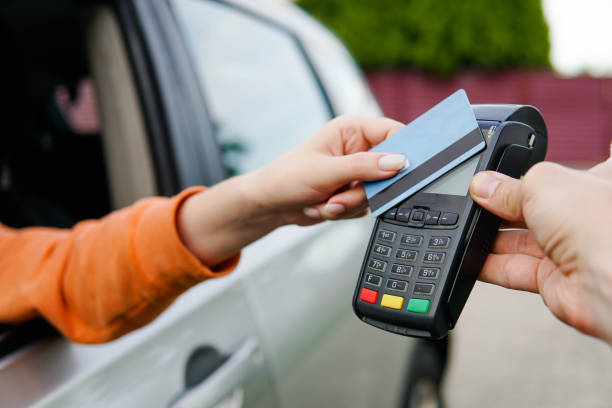
ISLAMABAD: Pakistan’s central bank capped fees banks can charge on digital fuel payments, a move aimed at easing pressure on the country’s petroleum dealers after months of complaints that transaction costs were eating into already-thin margins.
The State Bank of Pakistan said merchant discount rates on card-based purchases at fuel stations will be limited to one rupee per liter, while fees on transactions made through QR codes and the Raast instant payment system will be capped at 20 paisas per liter. The central bank also set a matching ceiling on the interchange reimbursement fee banks pay each other for card transactions.
The changes take aim at a fee structure that petroleum dealers said had become unsustainable. Banks previously set digital transaction charges at their own discretion, with rates ranging from 0.7% to 1.5% of the transaction value — translating to roughly three to four rupees per liter, according to the All Pakistan Petroleum Dealers Association.
That compares with a regulated dealer commission of just 8.64 rupees per liter, said Hassan Shah, the association’s spokesperson. Once a 12% withholding tax and other fixed costs are deducted, he said, dealers were often left with little choice but to resort to dishonest practices to stay afloat.
“This was too high compared to the fixed and regulated dealer commission of Rs8.64 per litre. After adding the 12pc withholding tax and other fixed charges, dealers were left with little option but to adopt dishonest means to survive,” Shah said.
The pressure intensified after Pakistan introduced a daily fuel pricing mechanism, Shah said, creating a mismatch between how dealers buy and how they sell. Delivery lead times run about 48 hours, he said, while retail prices now shift every 24 hours — a gap that left station owners absorbing losses and operating in constant uncertainty.
The fee cap was among the demands petroleum dealers submitted to the government in a charter presented in recent days.
In its notification, the State Bank said the capped rates apply to all card-present transactions at fuel stations for the purchase of fuel and related products, and will remain in effect until Jan. 31, 2027, covering all payment cards issued in Pakistan. The central bank framed the move as part of a broader push to expand digital payment acceptance and speed the rollout of Raast QR technology nationwide.
Banks and other regulated entities have been directed to work directly with fuel station operators over the coming six-month period to enable and expand Raast QR-based payment acceptance for fuel purchases, the central bank said. It plans to review the pricing framework around Jan. 31 based on how the market responds.
The dealers association offered a cautious welcome, calling the decision a step toward wider digital adoption but arguing the new rates still exceed what is economically justified. A standard point-of-sale terminal costs about 30,000 rupees to install, the group said, with monthly maintenance typically under 5,000 rupees — costs it said should be easily recoverable given the transaction volumes fuel stations handle, without the need for a per-liter surcharge of this size.
Dealers currently earn a commission of just 8.64 rupees per liter, the association said, out of which withholding tax is deducted before accounting for salaries, rent, electricity, financing and compliance costs. Even a one-rupee-per-liter charge represents a meaningful cut to an already narrow margin, it said.
Shah argued that fuel, as an essential good rather than a discretionary purchase, should carry the lowest possible cost for digital acceptance. Lower transaction charges, he said, would encourage wider adoption of digital payments among both merchants and consumers.
On QR-based payments specifically, the association said dealers have the strongest incentive to promote Raast when it remains cheaper than card transactions — and would naturally steer customers toward it under those conditions.
The group outlined several steps it said could accelerate adoption, including setting Raast QR fees at zero or well below card rates, ensuring payments process instantly and integrate smoothly with station operations to avoid slowdowns during busy periods, and having banks provide free onboarding, staff training and technical support, especially for smaller dealers. It also called for consumer incentives such as cashback or reward points to build demand from both sides of the transaction, along with reliable system uptime and fast dispute resolution given that fuel stations operate continuously.
“If Raast QR payments prove to be faster, more reliable and more economical than traditional card payments, fuel station operators will willingly promote them because they benefit both merchants and consumers,” the association said.
Copyright © 2021 Independent Pakistan | All rights reserved