By Staff Reporter
ISLAMABAD: The United States and Pakistan have agreed to deepen their counterterrorism partnership, holding a fourth round of high-level talks in Washington that named four militant groups as the principal threats to regional stability, even as Pakistan endures its deadliest month of violence so far this year.
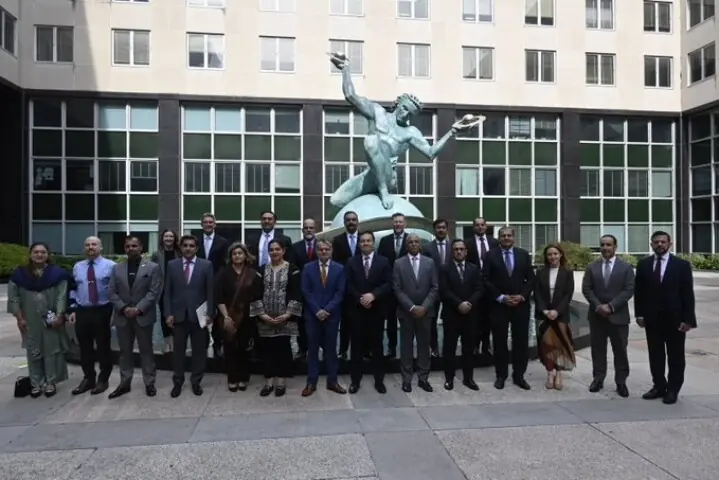
Tuesday’s dialogue, confirmed in a joint statement from the US State Department and separately by Pakistan’s Foreign Office, was led by Gregory LoGerfo, the US Coordinator for Counterterrorism, and Ambassador Nabeel Munir, Special Secretary at Pakistan’s Foreign Ministry. Officials from both sides described the discussions as wide-ranging, touching on border security, intelligence sharing and the disruption of networks that finance and facilitate terrorist activity.
The joint statement identified ISIS-Khorasan, al-Qaeda, the Tehreek-e-Taliban Pakistan and the Balochistan Liberation Army, along with its affiliated groups, as organisations of shared concern. Washington and Islamabad said they remained resolved to confront any group that threatens the safety of their citizens or the wider stability of the region, framing their renewed cooperation as part of a longer-term push towards regional peace and prosperity.
Pakistan’s Foreign Office, in a statement issued on Wednesday, said the two delegations had held extensive deliberations on the regional and global terrorist threat, and had committed to strengthening collaboration both through bilateral channels and at international forums.
The talks represent a marked thaw in a relationship that cooled sharply after American forces withdrew from Afghanistan in 2021. In the years that followed, Washington repeatedly voiced concern over militant sanctuaries operating in the region, while Islamabad pressed its own case about the scale of cross-border militancy it was contending with, much of it traced back to instability inside Afghanistan. That friction has gradually given way to a broader effort by both governments to find common ground, not only on security but on trade, investment and climate cooperation.
Pakistan’s position in regional diplomacy has also shifted. Its geography and long-standing ties across the region have placed it at the centre of several recent flashpoints, most notably its role mediating during the conflict between the US and Iran, a contribution that has not gone unnoticed in Washington.
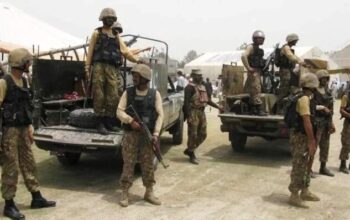
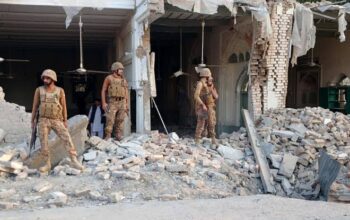
That diplomatic capital comes against a grim domestic backdrop. Figures from the Pakistan Institute for Conflict and Security Studies, an Islamabad-based think tank, show that July was the deadliest month of 2026 so far, with 205 people killed, among them 112 members of the security forces. The toll reflects a sustained escalation in violence, particularly across Khyber Pakhtunkhwa and Balochistan, since the Taliban’s return to power in Kabul in 2021.
Islamabad has consistently argued that India provides support to militant groups operating from Afghan soil in order to carry out attacks inside Pakistan, an allegation New Delhi denies. Pakistani officials have also repeatedly urged the Taliban administration in Kabul to take firmer action against groups using Afghan territory as a base for cross-border strikes. When Islamabad concluded that Kabul had failed to do so, it launched Operation Ghazab lil-Haq in February this year, a military response directed at cross-border militant attacks originating from Afghanistan.
The scale of the threat has featured prominently in Pakistan’s domestic political discourse in recent weeks. Speaking at the Balochistan National Workshop in Islamabad on 17 July, Prime Minister Shehbaz Sharif called on the nation to unite against terrorism, telling participants that India’s involvement in militant activity inside Pakistan was, in his words, absolutely clear. He said India-sponsored terrorism had killed more than 90,000 Pakistanis to date.
Copyright © 2021 Independent Pakistan | All rights reserved