By Staff Reporter
ISLAMABAD: Pakistan’s president, prime minister and military chiefs delivered a coordinated message of solidarity with Kashmiris on Wednesday, using the seventh anniversary of India’s decision to strip the disputed region of its special constitutional status to renew calls for international intervention.
The day, marked annually in Pakistan as Youm-i-Istehsal, or Exploitation Day, commemorates India’s move on 5 August 2019 to revoke Article 370 of its constitution, the provision that had granted Jammu and Kashmir a measure of autonomy since 1949. New Delhi split the territory into two federally administered union territories, a decision it framed as opening the way to economic development after decades of insurgency that has claimed thousands of lives.
President Asif Ali Zardari led the tributes, telling Kashmiris that Islamabad continued to “reaffirm our unwavering solidarity” with their cause. He praised their “courage, resilience and commitment” to a struggle for self-determination that Pakistan regards as unresolved under international law.
Seven years on, the president argued, India’s actions had achieved nothing in legal terms. “These actions cannot change the legal status of the dispute, nor can they weaken the resolve of the Kashmiri people,” he said, adding that the intervening years had brought only hardship: restrictions on daily life, constrained opportunities for young people, and communities left to bear “the burden of prolonged conflict and instability”.
Zardari pledged that Pakistan would keep pressing the issue at international forums until it was settled in line with United Nations Security Council resolutions and Kashmiri wishes, and offered a direct message to the region. “To my Kashmiri brothers and sisters, I say: Pakistan stands firmly with you,” he said. “You are not alone.”
Prime Minister Shehbaz Sharif echoed the sentiment, accusing India of using the years since 2019 to deepen repression rather than deliver the prosperity it had promised. He said New Delhi’s measures had “accelerated attempts to alter the demographic composition” of the territory through legislative and administrative changes, and voiced concern over the suppression of Kashmiri political leadership, curbs on civil liberties and restrictions on independent media.
Describing Kashmir as the “principal unresolved issue affecting peace and stability in South Asia”, Sharif said no lasting settlement could be imposed by force. “Lasting peace in the region cannot be achieved by coercion or unilateral action, but only through a peaceful settlement of the dispute in accordance with the aspirations of the Kashmiri people,” he said, calling on the international community to move beyond mere statements of concern.
The prime minister renewed a set of longstanding demands: that India end human rights violations in the region, reverse the measures introduced since August 2019, repeal what he termed “draconian laws”, and allow Kashmiris to exercise their right to self-determination under UN resolutions.
Deputy Prime Minister and Foreign Minister Ishaq Dar was equally pointed, describing India’s 2019 actions as a “grave challenge” to the established international order and calling on the global community to fulfil its “long-overdue responsibility” to help resolve the dispute. He said the developments of that August had “further complicated efforts to promote peace and stability in South Asia” and taken a toll on the rights and freedoms of ordinary Kashmiris.
Dar urged India to halt its efforts to undermine the region’s disputed status and to create conditions conducive to a peaceful settlement, while reiterating that Pakistan would continue raising the issue on the world stage.
Pakistan’s military leadership issued its own statement through the Inter-Services Public Relations wing, with Field Marshal Syed Asim Munir, the army chief and chief of defence forces, joined by naval chief Admiral Naveed Ashraf and air chief Air Chief Marshal Zaheer Ahmed Baber Sidhu in expressing support for Kashmiris living under Indian illegal occupation.
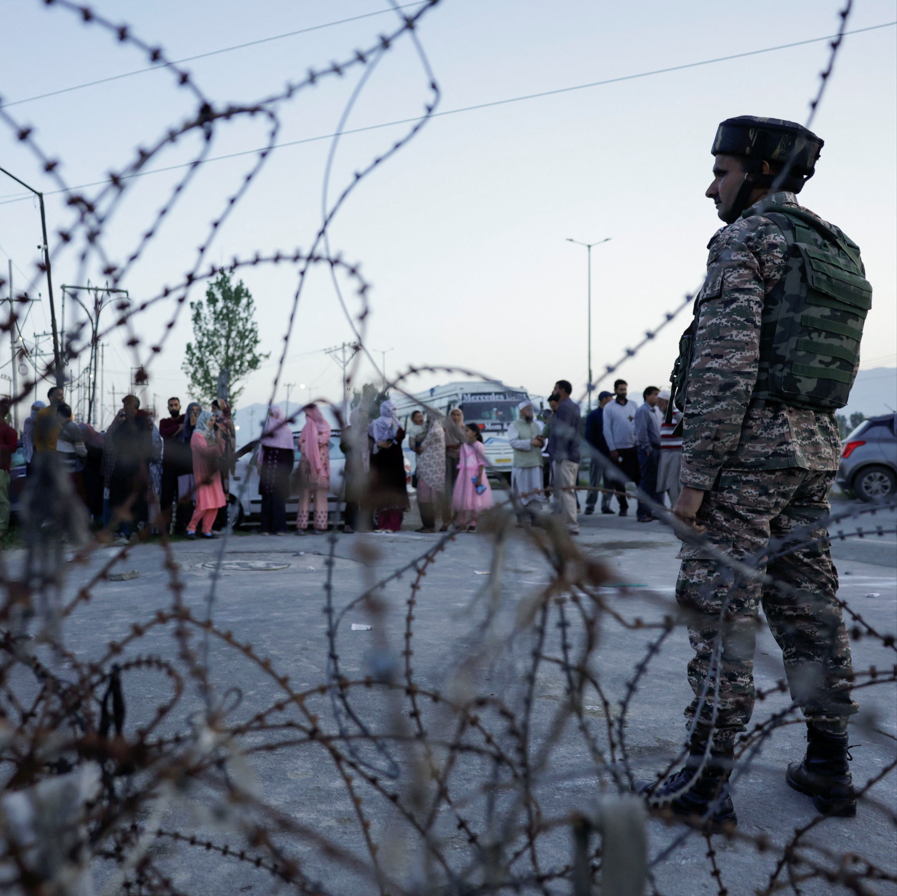
The military’s statement was notably blunt in its language, accusing Indian security forces of maintaining the territory under “military siege” and of committing “rampant human rights violations” while attempting to reshape its demographic makeup. “Such actions, coupled with provocative rhetoric and belligerent posturing, serve only to exacerbate regional instability and perpetuate human suffering,” the statement said.
The armed forces paid tribute to those killed in the disputed territory and reiterated an enduring commitment to stand with Kashmiris in their pursuit of freedom.
Copyright © 2021 Independent Pakistan | All rights reserved