By Staff Reporter
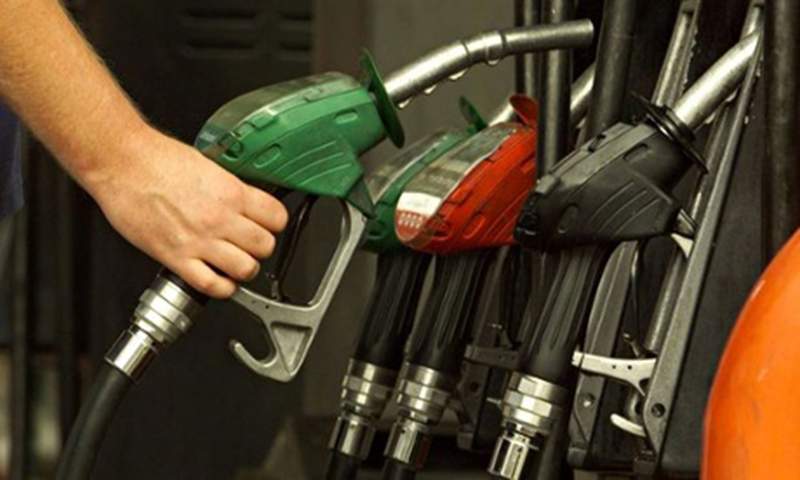
ISLAMABAD: Pakistan raised the price of petrol while cutting diesel rates, the first divergence between the two fuels since the government abandoned weekly price-setting for a daily mechanism designed to track international crude markets in near real time.
Petrol will rise 4.45 rupees to 333.01 rupees a liter, according to a notification from the Petroleum Division late Wednesday, while high-speed diesel will drop 2 rupees to 383.86 rupees. The new rates take effect Thursday.
The moves mark a shift from the pattern of recent months, when petrol and diesel prices largely moved in tandem as Islamabad worked to shield consumers from a surge in global oil costs triggered by the conflict between the US and Iran. Taxes and duties remain unchanged at 110 rupees a liter on petrol and 96 rupees on diesel, among the largest components of the retail price.
Petroleum Minister Ali Pervaiz Malik said the government would now set fuel prices daily rather than weekly, citing continued volatility in international markets tied to the hostilities between Tehran and Washington. The cabinet, acting on the recommendation of Prime Minister Shehbaz Sharif, handed the Oil and Gas Regulatory Authority responsibility for calibrating prices against global benchmarks on a rolling basis, Malik said.
The switch ends a system Pakistan had relied on since early March, when it began revising prices weekly alongside a broader push to conserve fuel amid fears that the conflict would disrupt supply routes through the Strait of Hormuz. The federal government also rolled out targeted subsidies in April to cushion the impact on lower-income households.
Not everyone welcomed the change. The All Pakistan Petroleum Dealers Association rejected the move to daily pricing and said it was weighing a protest campaign, arguing that more frequent adjustments would complicate operations for the retail network that supplies pumps across the country.
Wednesday’s increase leaves petrol well below the record levels reached earlier this year. The price peaked at 458.41 rupees a liter on April 3, having climbed from 266 rupees in the first week of March as the Iran-US conflict roiled energy markets. Diesel followed a similar arc, touching an all-time high of 520.35 rupees on the same date after starting its climb from 281 rupees when hostilities erupted on Feb. 28.
Petrol and diesel are Pakistan’s two largest sources of fuel-related revenue, with combined monthly sales running between 700,000 and 800,000 tons. That dwarfs kerosene, which sells roughly 10,000 tons a month, underscoring how sensitive government revenue and household budgets are to swings in the two benchmark fuels.
The two products serve different segments of the economy, amplifying the political stakes of any price move. Petrol is consumed mainly by private cars, motorcycles and rickshaws, making it a direct cost pressure on middle- and lower-middle-income commuters. Diesel powers the freight trucks, buses, power plants and industrial generators that underpin goods transport and electricity generation, meaning shifts in its price ripple more broadly through consumer prices for food and other goods.
The transition to daily pricing represents Pakistan’s latest attempt to align its regulated fuel market with volatile international conditions, following a similar move by other oil-importing economies grappling with the fallout from the Iran-US conflict.
Copyright © 2021 Independent Pakistan | All rights reserved