By Staff Reporter
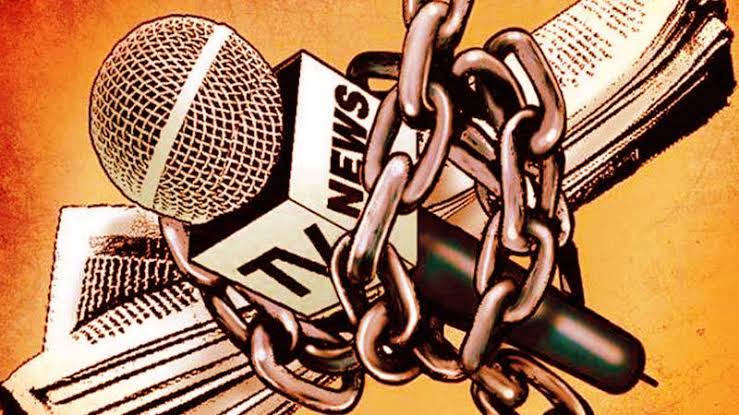
ISLAMABAD: Pakistan’s leading press freedom bodies have accused the government of tightening its grip on independent journalism, after new rules were introduced requiring foreign media personnel to obtain official permission before travelling outside the country’s three largest cities to report the news.
The Human Rights Commission of Pakistan (HRCP) and the Pakistan Federal Union of Journalists (PFUJ) have both issued strongly worded statements condemning the measures, which they say will chill critical reporting and further shrink the space available for journalists working in the country.
Under the newly introduced “Foreign Media Facilitation Guidelines 2026”, foreign journalists must now secure a no-objection certificate from the information ministry before travelling to any Pakistani city beyond Islamabad, Lahore and Karachi in order to produce news content, whether that be written stories, video, film, documentaries or material for social media.
The rules do not stop at foreign nationals. Pakistani journalists employed by international media outlets are also barred from travelling independently to these areas, effectively requiring them to seek the same official clearance as their foreign counterparts before reporting from anywhere outside the three approved cities.
The guidelines further stipulate that any organisation operating in Pakistan to assist foreign media “in any capacity” must register with the information ministry’s External Publicity Wing. That requirement extends to non-journalists living in the country who provide services to foreign outlets, broadening the scope of state oversight considerably beyond reporters themselves.
Perhaps most strikingly, the rules grant authorities sweeping discretion to suspend or withdraw a journalist’s press registration for actions deemed to work against Pakistan’s “ideology, sovereignty, security or public order” — or simply whenever the External Publicity Wing “deems appropriate at any stage”, a clause that press freedom advocates say leaves the door open to arbitrary enforcement.
In a statement issued on Wednesday, the HRCP said the requirement for journalists to obtain state approval before reporting from large parts of the country sent a “chilling message” that critical reporting is unwelcome. The commission warned that the guidelines would, in practice, entrench bureaucratic control over news gathering rather than ease it, and risked discouraging independent reporting on matters of public interest.
The rights body placed the new rules within what it described as a wider pattern of eroding press freedoms in Pakistan, pointing to arbitrary restrictions on reporting, growing censorship, and mounting legal and administrative obstacles that have steadily narrowed the space in which independent journalism can operate. It called on the government to withdraw the measures and to honour its constitutional and international commitments to protect freedom of expression.
The PFUJ was equally forthright in its condemnation. In a statement released on Thursday, union president Afzal Butt and secretary general Arshad Ansari described the guidelines as an assault on freedom of expression and a direct curb on press freedom.
They noted that the government had effectively barred foreign journalists from visiting most parts of Pakistan outside its major cities, while also restricting the independent movement of Pakistani media workers employed by international outlets. Neither group, they said, is permitted to travel to these areas unaccompanied or without prior clearance.
The union leaders questioned how foreign correspondents and their Pakistani colleagues could realistically continue to perform their professional duties under the new notification, and warned that the move would damage the country’s international reputation. They pointed out that Pakistan already ranks poorly on global press freedom indices, and argued the new restrictions would only worsen that standing.
The PFUJ went further, warning that the rules could threaten the livelihoods of Pakistani journalists working for foreign media organisations. If those journalists are unable to travel to different regions of the country, the union argued, they will be unable to carry out their professional responsibilities — and could ultimately lose their jobs as a result.
In particularly pointed language, the union’s leaders said such restrictions were the hallmark of “banana republics”, not of countries that claim to uphold democratic principles. They called on the government to lift the measures immediately if it truly believed in democracy and press freedom, and cautioned that continued inaction would leave journalists no choice but to take to the streets in protest.
“If the demands of PFUJ are not accepted, we would be left with no option but to resort to protest and demonstrations,” the union warned, signalling that the row over the guidelines is unlikely to be resolved quietly.
Copyright © 2021 Independent Pakistan | All rights reserved