By Staff Reporter
KARACHI: A second post-mortem examination carried out on the exhumed body of a young Karachi businessman has found that he was shot from behind and suffered extensive injuries consistent with a violent assault before his death, according to a preliminary medical report described by the family’s lawyer and cited by local broadcasters on Saturday.
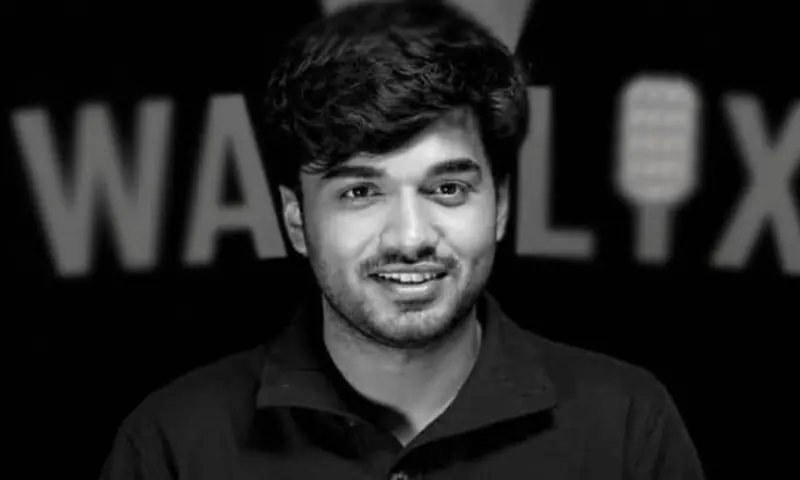
Mir Raza Ali, the 25-year-old owner of the Wafflix eatery chain, went missing from his home in Karachi on the night of 28 July after telling relatives he was stepping out and would return within ten minutes. His body was recovered the following day from bushes near Shahi Qila Ground in Gulistan-i-Jauhar, bearing a gunshot wound. Police have treated his death as a probable suicide, a conclusion his family has rejected from the outset.
The case took a sharp turn on Saturday after Ali’s body was exhumed at a graveyard near Tariq Road under judicial supervision and a second post-mortem was carried out, following days of wrangling between the family, the police surgeon’s office and the Sindh health department over who should sit on the medical board overseeing the procedure.
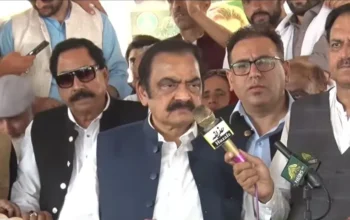
Speaking to reporters after the examination, the family’s lawyer, Jibran Nasir, said the new findings amounted to answers on all “14 questions” that had been raised by police surgeon Dr Summaiya Syed about inconsistencies in the original post-mortem report — and that those answers pointed towards murder, not suicide.
“This was murder following torture — the murder of a happy, ambitious and educated young man from Karachi,” Nasir told reporters.
According to the medical board’s findings as relayed by Nasir, Ali had suffered an injury to his chin, compression of his eye sockets, and traces of a foreign substance on his body that have been sent for chemical analysis. He also had wounds to his forehead, a fractured nose, and swelling with congealed blood around his lower jaw, consistent with having been struck. A fracture above his ear, on his temple, pointed to a further blow to the head, Nasir said.
The board also identified a congealed black substance in the tongue area, not naturally present in the body, which has been sent for laboratory testing to establish what Ali may have been forced to ingest. The same substance was found on internal muscles of the throat, while a broken hyoid bone and associated muscle damage were consistent with strangulation, according to the findings Nasir outlined.
On the gunshot wound itself, Nasir said the original account — that Ali had been shot in the chest with the bullet exiting through his back — had now been reversed. “We have now proven 110 percent that the bullet entered his back and exited after breaking and fracturing his ribs,” he said.
Local broadcasters, citing sources close to the investigation, reported that the preliminary findings showed Ali had sustained a gunshot wound from the rear, fractured ribs and multiple injury marks to his head and face, corroborating the account given by the family’s lawyer.
SSP Samiullah Somroo, who heads the police investigation team, told a private television that investigators had not yet been formally briefed on the contents of the medical report and had not been contacted regarding its findings.
Exhumation carried out after days of dispute over medical board
The exhumation itself had been delayed by more than 24 hours amid a dispute over who should examine the body. A judicial magistrate had authorised the exhumation on Thursday, acting on an application from Ali’s father, Mir Hussain Ali, and ordering the police surgeon and Sindh health secretary to jointly constitute a medical board.
The Sindh health department duly formed an eight-member board convened by Dr Syed, whose earlier assessment — based only on the original post-mortem report and photographs, since she had not examined the body herself — had flagged discrepancies between the written report and the photographic evidence. The board also included Prof Dr Naseem Ahmed of Dow University of Health Sciences, Dr Farah Waseem of Jinnah Sindh Medical University, CPLC forensic identification expert Amir Hassan Khan, Additional Police Surgeon Dr Sirichand, and Dr Kamran Khan and Dr Daniyal Mirza of Jinnah Postgraduate Medical Centre, along with Dr Mohammed Yaseen as administrative in-charge.
However, in the early hours of Friday, the Sindh health department’s director general issued a fresh notification reconstituting the board with only five members, retaining Dr Syed as convener but replacing the rest with Prof Dr Zakiuddin of DUHS, Prof Dr Kazi Akbar and Prof Dr Abid Hussain Chang of Liaquat University of Medical and Health Sciences, and Hyderabad police surgeon Dr Waseem Khan.
The change prompted immediate objections from Ali’s family, who said they had no confidence in a panel drawing heavily on doctors from outside Karachi. When the exhumation began on Friday morning at the Tariq Road graveyard, the family halted proceedings, and Nasir accused the police, the health department and the Sindh government of trying to “bury the facts” by delaying the process.
Facing the family’s refusal to proceed, the authorities restored the original eight-member board on Friday, and the exhumation went ahead on Saturday under what Nasir described as satisfactory conditions. He said the entire process had been carried out in the presence of a judicial magistrate, the investigating officer, all eight members of the medical board and the deceased’s parents.
Strict security was in place around the graveyard, close to Rehmania Mosque in the jurisdiction of Ferozabad police station, with a heavy police contingent deployed and a civil judge and judicial magistrate for Karachi East also present. Ali’s father, Mir Hussain, said he was satisfied with how Saturday’s proceedings had gone. “I pray that what happened during the earlier post-mortem does not happen again,” he said, adding that a fake audio clip purportedly featuring his son had been circulated in an attempt to discredit the family’s case.
Samples sent for forensic testing
Investigation sources said the exhumation took around three hours and was carried out under the supervision of forensic experts, with a total of 17 samples collected. Four were taken for DNA testing, including two reference samples from Ali’s parents for matching purposes, while the remainder were collected for chemical examination. Bone and tissue samples will be examined in detail in connection with the gunshot wound, while further samples have been taken to establish the presence of older injuries, fractures or gunpowder residue.
All material collected has been preserved and is due to be submitted to the University of Karachi’s forensic laboratory on Monday, with chemical and DNA results expected within three to four days, according to investigation sources.
Family accuses senior police of pressuring them towards a suicide finding
Nasir used Saturday’s briefing to renew sharp criticism of senior police officials handling the case, accusing them of working to discourage the family rather than pursue the investigation. “They are finding months-old recordings and frustrating, emotionally exhausting and humiliating Mir Hussain and Maryam Hussain,” he said, referring to Ali’s parents. “Are you investigating or harassing them? They sat them in their offices and told them repeatedly, ‘It’s a suicide, accept it’. Our city’s AIG was saying this.”
He said the family had “no faith” in either the additional inspector general or the SSP’s investigation team and wanted the entire team replaced, including senior officers. “If they appoint the same kind of officers, such as those doctors from Jamshoro and Hyderabad, then we will approach the court,” Nasir said, adding that senior officers had spent ten days with Ali’s parents “and misguided them into believing it was a suicide”.
He also criticised the fact that police had shared audio material related to the case with the media before it was disclosed to Ali’s parents, who he said learned of it from television reports, and said “incomplete CCTV footage and out-of-context messages” had been used to fuel speculation since Ali’s death.
Nasir credited the judiciary for moving the case forward, saying court intervention had achieved in two days what police had failed to do in eight or nine. “The work that police could not do in eight to nine days was done in two days after judicial intervention,” he said.
Father: ‘We only received his body’
Ali, a graduate of the Institute of Business Administration, had run his own business, Wafflix, for five years before his death. His father, Mir Hussain, said in the days after the killing that his son had left the family home in the early hours of 28 July after saying he would be back shortly, and that the family had subsequently learned his body had been found in Gulistan-i-Jauhar.
“My son had been running his own business for the past five years. He never came back. We only received his body,” Mir Hussain said at the time, calling for the immediate arrest and punishment of those responsible.
The medical board’s full report had not been released as of Saturday evening. Nasir said he expected it to be finalised imminently and that its conclusions would settle definitively whether Ali’s death was a murder or a suicide. “The police will be under even more pressure” once that question was resolved, he said. Police have not commented publicly on the findings described by the family’s lawyer, and the investigation remains formally open.
Copyright © 2021 Independent Pakistan | All rights reserved