By Staff Reporter
ISLAMABAD: Pakistan’s state-run power distribution companies are seeking to pass roughly 33.8 billion rupees in additional costs onto consumers, as households and factories increasingly defect to rooftop solar and leave utilities stuck paying for power plants that are barely running.
The distribution companies, known locally as Discos, asked the National Electric Power Regulatory Authority to approve the adjustment for the April-to-June quarter, according to a petition reviewed at a public hearing Wednesday. The request marks a sharp jump from the 23 billion rupees Discos had initially sought when the filing was first submitted, and works out to roughly 1.34 rupees per unit for consumers of Discos and K-Electric, the private utility serving Karachi.
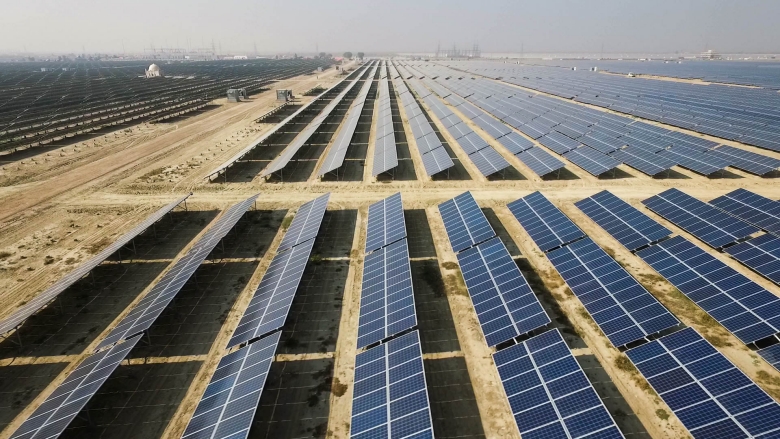
At the center of the dispute is a familiar culprit in Pakistan’s electricity market: capacity payments. Under long-term contracts, the government pays power producers a fixed fee to keep plants available regardless of whether they generate electricity. As solar panels proliferate on rooftops nationwide and electricity demand slackens, more of that capacity sits unused — while the bills keep coming.
Discos told the regulator the adjustment includes 46.38 billion rupees in capacity charges alone, along with roughly 4.97 billion rupees in variable operations and maintenance costs and 3.08 billion rupees tied to transmission losses. Those increases were partially offset by a 13.5 billion-rupee reduction from system-usage and market-operator fees, and a 21.2 billion-rupee credit tied to an incremental-consumption incentive program. An additional 14.2 billion rupees was claimed for unrecovered costs from small and captive power producers.
The numbers drew immediate pushback from industrial representatives, who argued the sector cannot absorb another round of increases while the country contends with elevated security tensions in the region.
Tanveer Barry, representing the Karachi Chamber of Commerce and Industry, told the hearing that capacity charges alone had climbed to more than 50 billion rupees from 36 billion rupees in the prior quarter — a jump he said would add over 86 billion rupees in costs and translate to roughly 3.50 rupees per unit for consumers. Barry noted that eight of Pakistan’s distribution companies reported positive capacity-charge adjustments while three reported negative ones, and pressed the regulator to scrutinize the disparity before approving any increase.
Barry also questioned why consumers should shoulder capacity payments at all when Discos and K-Electric continue to impose rolling blackouts. He argued the payments largely flow to aging, inefficient plants sitting idle in violation of the country’s economic merit-order rules — which are meant to prioritize dispatch from the cheapest available generators — and that the mismatch is itself inflating the cost of power. Industry representatives Rehan Javed and Aamir Sheikh raised similar objections during the hearing, which was attended by officials from the Ministry of Energy and the distribution companies.
The hearing also surfaced tension over solar power’s role in the shifting math. Officials from the Peshawar Electric Supply Company told the regulator that electricity consumption in their service area had fallen by roughly 5%, driven largely by weaker demand from residential and commercial customers. When NEPRA member Maqsood Anwar Khan asked whether the utility was also load-shedding in areas with reliably paying customers, Pesco officials confirmed that it was.
Khan said the pattern illustrated one reason behind the broader decline in electricity sales, but pushed back against the idea that rising solar adoption was itself to blame. He argued the opposite was closer to the truth: without the growth in rooftop solar, the country’s load-shedding problem would be considerably worse, and outages that once hit during the day increasingly now happen at night instead — a shift he said was also helping ease pressure on the grid during the current regional conflict.
Distribution companies across the board acknowledged during the hearing that residential sales had dropped as more customers install solar panels, even after the government moved to discourage the shift. Islamabad’s authorities scrapped the previous net-metering framework, which allowed solar customers to exchange excess power for credit, in favor of a net-billing system offering less favorable terms. Despite that policy change, utility representatives said the decline in residential demand has continued.
A representative from the Faisalabad Electric Supply Company said the utility had recorded a 5% drop in sales tied to solarization, even as industrial consumption rose 2% over the same period. The representative acknowledged that the company was continuing to load-shed customers who pay their bills on time, notwithstanding the overall fall in demand. A representative from the Islamabad Electric Supply Company said the utility sold 303 million fewer units during the quarter and confirmed that a significant share of its adjustment request stemmed from capacity payments, also attributing part of the sales decline to solarization.
Some utilities have felt the shift more acutely than others. The Quetta Electric Supply Company, which serves Balochistan, has effectively exited the capacity-payment cycle after all agricultural tube wells in the province switched to solar power, according to the hearing. The Multan Electric Power Company said roughly half of the tube wells on its network have also moved to solar, contributing to a marked sales decline in the province during the period under review.
Individual distribution companies reported sharply differing adjustment amounts. The Peshawar Electric Supply Company sought a net adjustment of 6.29 billion rupees, followed by Faisalabad at 5.36 billion rupees, Multan at 5.09 billion rupees, Gujranwala at 4.99 billion rupees, Islamabad at 4.87 billion rupees, Lahore at 2.95 billion rupees and Hazara at 1.24 billion rupees. Three utilities posted negative adjustments instead: the Tribal Areas Electric Supply Company at roughly 4.4 billion rupees, Quetta at 3.65 billion rupees and Hyderabad at 2.08 billion rupees.
NEPRA has not indicated when it will issue a decision on the request. The regulator’s quarterly adjustment mechanism allows Discos to recover or refund cost variations tied to power-purchase prices, though the Authority typically holds public hearings before finalizing any change, even when the adjustment is formula-driven.
Copyright © 2021 Independent Pakistan | All rights reserved