By Staff Reporter
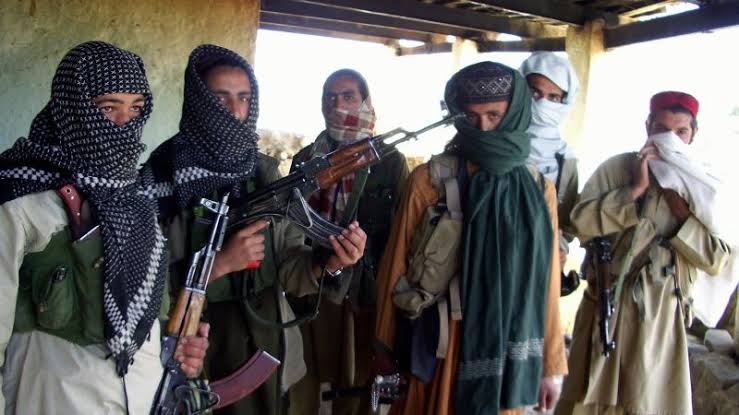
ISLAMABAD: The Afghan Taliban has continued to support the Tehreek-i-Taliban Pakistan (TTP), fuelling a surge in the frequency and severity of terrorist attacks inside Pakistan, according to a new United Nations report — even as Kabul has taken tentative steps to curb the group’s activities.
The findings, published by the UN’s Analytical Support and Sanctions Monitoring Team and covering the six months from 16 December 2025 to 9 June 2026, paint a picture of a region sliding deeper into instability, with increasingly blurred lines between the TTP, Al Qaeda, Islamic State-Khorasan (ISIL-K) and the Baloch Liberation Army (BLA).
Cross-border attacks between Pakistan and Afghanistan escalated sharply during the period, the 38th edition of the monitoring team’s report found, driven largely by a marked rise in TTP operations against Pakistani targets. In language echoing previous assessments, the report stated bluntly that Afghanistan’s ruling authorities “continued their support” to the TTP, whose escalating campaign has repeatedly provoked military exchanges between the two neighbours.
UN member states have expressed alarm that the ongoing conflict risks creating fresh openings for terrorist organisations to entrench themselves further, compounding security challenges across an already volatile region.
A dual-track strategy
Despite the report’s stark conclusions about Kabul’s complicity, it also documents the first tangible, if limited, moves by Taliban authorities to contain the TTP — steps that appear designed to manage the group rather than dismantle it outright.
According to the monitoring team, Afghan authorities relocated roughly 2,000 TTP fighters, along with their families, away from border areas with Pakistan and deeper into Afghan territory. Separately, Taliban supreme leader Hibatullah Akhundzada is reported to have warned TTP commanders through backchannel communications that continued attacks on Pakistan could cost the group its Taliban backing.
Taken together, the measures suggest a calculated balancing act: the Taliban continues to afford the TTP sanctuary and support, bound by shared ideological roots, while simultaneously attempting to distance fighters from the border to blunt the risk of full-scale escalation with Islamabad and ease mounting international pressure.
For Pakistan, though, the relocation of fighters offers little practical relief. Analysts note that as long as the TTP’s command structure, training camps and logistical networks remain untouched on Afghan soil, the group retains the capacity to plan and launch attacks regardless of where its foot soldiers are based.
An expanding organisation
Far from being weakened, the TTP has spent the reporting period consolidating and expanding. Following its annual rahbari shura — the group’s leadership council — in December, the TTP unveiled a restructured command comprising two new divisions: one covering Balochistan and central Pakistan, the other focused on Kashmir and Gilgit.
Among the more striking additions was a unit the group has styled its “TTP Air Force”, a designation that has prompted concern among analysts about the militants’ ambitions to expand their operational reach, including the use of aerial technology.
In March, the TTP formally launched its spring offensive, dubbed “Operation Khyber”, issuing calls in multiple languages for intensified attacks on Pakistani security forces and civilians alike.
The group’s deadliest strike of the period came on 16 February in Bajaur, where a vehicle-borne improvised explosive device killed 11 security personnel and a child, and left several others wounded. The TTP claimed responsibility, with the monitoring team noting the attack was reportedly launched from inside Afghanistan.
Overlapping networks
Perhaps most troubling to UN monitors is the extent to which the boundaries between armed groups operating in and from Afghanistan appear to be dissolving.
On 28 April, Al Qaeda’s official media arm, As-Sahab Media Foundation, issued a statement pledging support for the Taliban and, notably, for the first time explicitly backing TTP operations against Pakistan. The monitoring team said this marked a shift from Al Qaeda’s previous role — providing ideological guidance, training and quieter forms of support — towards more overt endorsement.
One member state told the monitoring team that BLA fighters had trained alongside TTP militants under Al Qaeda instructors inside Afghanistan, pointing to a level of operational integration between groups with ostensibly different aims and grievances.
The report further identified Al Qaeda in the Indian Subcontinent (AQIS) as the backbone of Ittihadul Mujahideen Pakistan, a group linked to a string of attacks in Khyber Pakhtunkhwa. AQIS leaders were said to remain based in Kabul, having been issued official Afghan identity documents — a detail the monitoring team said pointed to “close cooperation between the Taliban and AQIS”.
Taken as a whole, the assessment suggests Pakistan is confronting not an isolated militant group but an interconnected ecosystem of armed organisations whose training, funding and logistics increasingly cross organisational lines.
ISIL-K’s resurgence
The report singled out ISIL-K as the most serious threat facing both the Taliban administration and the wider region, notwithstanding significant losses the group has suffered as a result of counterterrorism operations conducted by Pakistan and the Afghan Taliban.
Monitors said ISIL-K had shifted its operational base towards northern Afghanistan while spreading its training infrastructure across the Pakistan-Afghanistan frontier, including into Khyber Pakhtunkhwa, and maintaining a foothold in Kabul’s outskirts.
Rather than attempting to seize and hold territory, as it once did, the group appears to have entered a rebuilding phase focused on fewer but more devastating, high-profile attacks — a pattern the report described as evidence of the group’s continuing resilience and capacity to adapt.
Member states reported that ISIL-K fighters had acquired sophisticated equipment, including drones, night-vision goggles and thermal imaging devices, alongside specialist training in urban warfare and drone operations. One state also told the monitoring team that ISIL-K and the BLA now share facilitation networks used to move supplies and personnel.
While ISIL-K attacks have declined within Afghanistan itself, the report noted a corresponding rise in the group’s activity across the border in Pakistan.
Among the deadliest incidents attributed to the group was the 6 February bombing at the Khadija Tul Kubra Mosque in Islamabad, where a suicide bomber detonated explosives during Friday prayers attended by the city’s Shia community, killing 32 people and injuring more than 150 others. Responsibility was claimed by a group calling itself “ISIL in Pakistan”, though the monitoring team assessed the attack was most likely carried out by ISIL-K itself.
The group also claimed responsibility for the assassination of Pakistani cleric Sheikh Muhammad Idrees in Khyber Pakhtunkhwa on 5 May.
A more complex threat
The cumulative picture presented by the UN’s findings is one of a rapidly evolving and increasingly interconnected militant threat: the TTP sustained by Taliban ideological and logistical backing, Al Qaeda supplying training and religious legitimacy, and ISIL-K and the BLA drawing on shared networks of facilitation and support.
While the Taliban’s relocation of TTP fighters and its private warning to the group’s leadership may ease pressure along the border in the short term, the monitoring team’s assessment stops well short of concluding that Kabul has taken the decisive step of severing its ties to the TTP altogether — leaving the fundamental source of the conflict unresolved.
Copyright © 2021 Independent Pakistan | All rights reserved