By Staff Reporter
ISLAMABAD: Norway’s foreign minister will arrive in Pakistan on Thursday for a two-day visit that officials in Islamabad say marks the first trip by a Norwegian foreign minister to the country in ten years, as the two nations look to deepen cooperation on trade, climate and education.
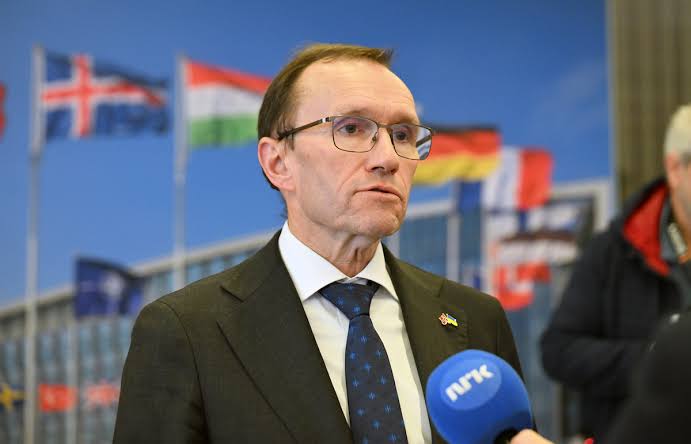
Espen Barth Eide has been invited to Pakistan by deputy prime minister and foreign minister Ishaq Dar, according to Pakistan’s Foreign Office, with the visit running from 13 to 14 August. The pair are expected to hold delegation-level talks touching on what officials describe as the full range of the relationship between the two countries.
Trade and investment are likely to feature prominently in the discussions, alongside climate change, renewable energy, education and what the Foreign Office called people-to-people contacts — a phrase typically used to describe cultural exchange, diaspora links and educational ties rather than government-to-government business. The two ministers are also expected to compare notes on regional and international developments more broadly.
The visit does not come out of nowhere. The Foreign Office pointed to a run of contacts between the two sides in recent months as evidence of building momentum, including phone calls between Dar and Eide in March and April this year. Norway’s state secretary, Andreas Motzfeldt Kravik, travelled to Islamabad in May, laying some of the groundwork for Eide’s own trip. The two foreign ministers had also crossed paths more recently still, meeting on the sidelines of an event in Manila in late July.
Dar made the return journey to Norway himself in May, where he met his Norwegian counterpart at deputy level to discuss the regional picture — part of what both sides are now framing as a steady thickening of contact after years of relatively limited diplomatic engagement.
Pakistan’s Foreign Office said it hoped the visit would help “further strengthen the longstanding and cordial relations” between the two countries and open up “new areas of mutually beneficial cooperation” — language that, while standard in diplomatic communiqués, reflects a genuine effort on Islamabad’s part to court Western partners beyond its traditional circle of allies in the Gulf and China.
Islamabad has also credited Eide with acknowledging Pakistan’s efforts earlier this year to help de-escalate tensions in the region during the war between the US, Israel and Iran, in which Pakistani officials took on a mediating role between Washington and Tehran — an unusual position for a country more often associated with regional instability than with brokering peace between rival powers. That conflict, which spilled into a broader crisis across the Middle East and rattled global energy markets before easing earlier this year, saw Pakistan positioning itself as one of the few actors capable of maintaining channels to all sides.
For Norway, the visit fits a broader pattern of outreach to South Asia, a region where its diplomatic footprint has historically been modest compared with its engagement in the Middle East or sub-Saharan Africa. Eide, who has served as Norway’s foreign minister since October 2023 under prime minister Jonas Gahr Støre, previously held the country’s defence and climate portfolios and has built something of a reputation as a details-focused operator on cross-border issues — expertise that may prove useful given the breadth of the agenda in Islamabad, spanning everything from clean energy financing to education partnerships.
Neither government has indicated whether the visit will produce formal agreements or simply set the direction for further talks. But the decade-long gap since a Norwegian foreign minister last visited Pakistan underlines how far down the list of priorities the relationship had slipped — and how much both sides now appear keen to change that.
Copyright © 2021 Independent Pakistan | All rights reserved