By Staff Reporter
ISLAMABAD: Pakistan joined seven other Muslim-majority nations on Friday in a strongly worded condemnation of Israel’s settlement expansion in the occupied West Bank, demanding international sanctions against those responsible and warning that a controversial new building scheme risks permanently dividing the Palestinian territories.
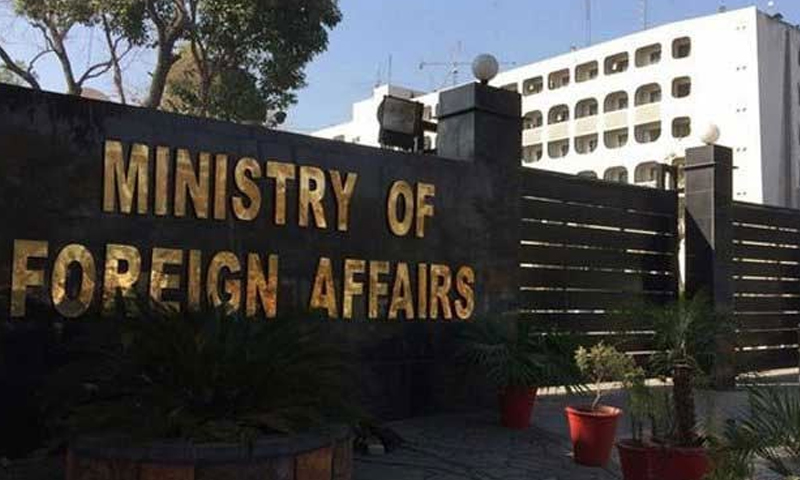
In a joint statement released by Pakistan’s Foreign Office, the foreign ministers of Pakistan, Egypt, Turkiye, Indonesia, Jordan, Qatar, Saudi Arabia and the United Arab Emirates said they “unequivocally condemn” Israel’s ongoing settlement policies and “categorically reject” the so-called E1 plan, along with related construction east of occupied East Jerusalem.
The statement also renewed condemnation of what the ministers called violence committed by Israeli settlers, “with the support of the Israeli occupying authorities,” against Palestinian residents and their property. Such acts, they said, do nothing to diminish the rights of the Palestinian people and amount to clear breaches of international law and United Nations resolutions, while posing a serious threat to peace across the region and beyond.
A plan to cut the West Bank in two
At the heart of Friday’s statement is the E1 scheme, a long-stalled Israeli project to build thousands of housing units in a strip of land connecting the settlement of Maale Adumim to Jerusalem. The eight ministers described it as “a dangerous escalation” that would advance settlement expansion and annexation while destroying the geographical link between the West Bank and East Jerusalem.
Left unchecked, they warned, the project would make it all but impossible to realise an independent, contiguous Palestinian state along the 1967 lines with East Jerusalem as its capital — the internationally recognised basis for any future settlement.
Israel’s Ministry of Construction and Housing issued a tender this week for more than 1,200 housing units in the E1 area, part of a wider plan for roughly 3,400 units approved last year. Bids are due by 19 October, days before Israel holds a general election on 27 October. Palestinian officials and Israeli human rights groups, including Peace Now, Ir Amim and Bimkom, have separately warned that construction in the corridor would sever the northern and southern West Bank from one another and cut East Jerusalem off from the wider Palestinian territory.
A challenge to Trump’s peace plan
The ministers framed the settlement drive as a direct affront to ongoing diplomatic efforts to end the conflict, chief among them the comprehensive plan put forward by US President Donald Trump. That plan explicitly rejects annexation and forced displacement and sets out an implementation process through the newly created Board of Peace. The statement pointed to Trump’s own commitment not to permit annexation of the West Bank as central to achieving lasting stability.
Reaffirming their support for a two-state solution grounded in international law and UN resolutions, the ministers said it remained “the only viable path towards a just, comprehensive and lasting peace.” They cautioned that any effort to unpick that solution would only deepen tensions and jeopardise the prospects of stability across the region.
Beyond condemnation, the eight nations pressed for concrete action. They backed international measures and sanctions against individuals and entities found responsible for illegal settlement activity, including the E1 project, as well as those who support, facilitate or implement settlement expansion and annexation more broadly.
The ministers also called for a halt to any financing that helps establish, expand or entrench illegal settlements, arguing that continued impunity only fuels further violations and erodes the chances of a comprehensive peace. They demanded immediate action to stop the E1 plan altogether, the reversal of any measures already taken to advance it, and an end to all settlement activity aimed at changing the geographic and demographic make-up of the occupied Palestinian territory.
The statement closed with an appeal to the UN Security Council and the wider international community to meet their obligations under international law, take urgent steps to halt settlement expansion, and protect Palestinians’ right to self-determination and statehood.
Friday’s statement followed a similar joint declaration issued by the same eight countries on Sunday, in which they condemned Israel’s rejection of a roadmap — endorsed by UN Security Council Resolution 2803 — for completing the implementation of Trump’s Gaza ceasefire plan, as well as Israel’s rejection of Palestinian statehood more broadly. Hamas welcomed that earlier statement, saying it reflected “a clear condemnation” of Israel’s position.
Friday’s declaration on the E1 plan was not made in isolation, either. The United Kingdom, France, Germany, Italy, the Netherlands, Canada and Norway issued their own joint statement this week rejecting the settlement scheme and calling for its immediate reversal, which Palestinian Authority President Mahmoud Abbas welcomed on Friday. Belgium’s foreign minister, Maxime Prevot, separately called the tenders “unacceptable,” warning they jeopardised prospects for peace and security for both Israelis and Palestinians.
Separately, 12 nations denounce Syria airbase strikes
In a parallel development on Friday, a bloc of 12 Muslim-majority countries issued a sharply critical statement condemning Israeli airstrikes on the Abu al-Duhur military airbase in northwestern Syria, which took place on 18 August. The foreign ministers of Turkiye, Algeria, Indonesia, Jordan, Lebanon, Malaysia, Mauritania, Pakistan, Palestine, Qatar, Saudi Arabia and Somalia described the strikes as an assault on Syria’s sovereignty, territorial integrity and political unity.
The ministers said they were “deeply concerned” by what they characterised as the continuous targeting and degradation of Syrian territory and infrastructure, warning that such actions risked undermining Syria’s efforts to restore security, rebuild its institutions and address the humanitarian toll of years of conflict.
They called on the international community to adopt “a firm, clear and principled position” against what they termed Israel’s continued aggression, and urged concrete steps under international law and the UN Charter to end the violations, enforce the 1974 Disengagement Agreement in full, and secure the withdrawal of Israeli forces from areas they currently occupy. Respect for Syria’s sovereignty and political unity, they said, was non-negotiable.
What happened at Abu al-Duhur
Israel struck the airbase in Idlib province in the early hours of 18 August, dropping at least eight bombs on runways and hangars, according to Axios, which reported that recently rebuilt runways were damaged in the attack. No casualties were reported.
US and Israeli officials told Axios that Israel had briefed the Trump administration that the strike was designed to prevent a Turkish military buildup at the base, which sits roughly 45 miles from the Turkish border. Israeli Prime Minister Benjamin Netanyahu said on Wednesday that Israel had explicitly warned Syria in advance against allowing a Turkish presence at the facility.
Syria’s foreign minister, Asaad al-Shaibani, rejected that characterisation outright. He said work under way at the base was limited to repairing an airfield and facilities damaged during the country’s civil war, and that no Turkish military buildup had taken place that would justify Israel’s framing of events.
“There was no Turkish military build-up at the base in any sense that would justify such an interpretation,” al-Shaibani said, adding that the facility remained largely empty and had not yet become fully operational. “Therefore, linking the strike to a Turkish military presence at the base is not supported by the situation on the ground as it stood at the time.”
He acknowledged that Turkish military officers had visited the base in the days before the strike, but described this as part of routine cooperation involving training and the exchange of expertise — comparable, he said, to arrangements Syria has separately pursued with Saudi Arabia, Jordan, Qatar and Russia as it works to rebuild its military and civilian institutions.
“Syria is a sovereign state, and it has the right to establish relations of cooperation and alliance with any country, including Turkiye,” al-Shaibani said.
Copyright © 2021 Independent Pakistan | All rights reserved