By Staff Reporter
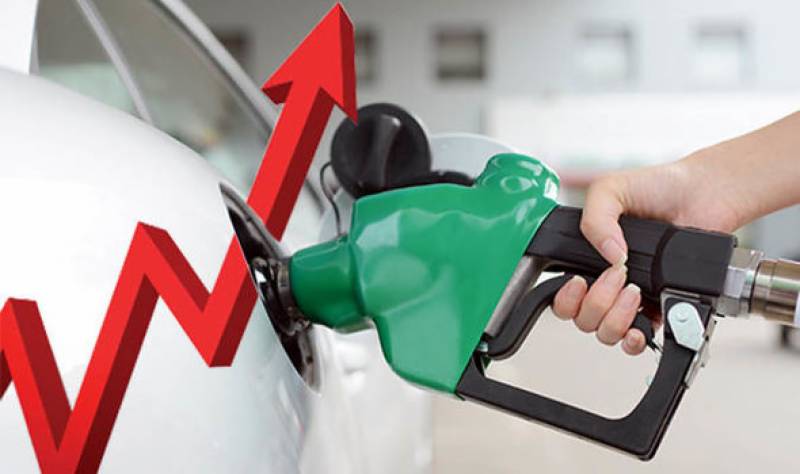
ISLAMABAD: The government raised gasoline and diesel prices for the weekend, the latest move under a daily pricing mechanism the country adopted last month to keep pace with volatile international crude markets.
The Petroleum Division said in a notification on Friday that motor spirit, as gasoline is known locally, will rise 3.81 rupees to 341.59 rupees a liter, while high-speed diesel climbs 3.59 rupees to 368.29 rupees. The new rates take effect Saturday and hold through Monday — standard practice for a Friday pricing review, since local commodity and foreign-exchange markets do not trade over the weekend, leaving no fresh benchmark data to act on until Tuesday.
The government continues to collect 114 rupees a liter in taxes and duties on gasoline and 100 rupees on diesel, tax rates that have themselves shifted several times this year as officials balanced budget pressure against relief for consumers.
A volatile week
Friday’s increase caps a turbulent stretch even by the standards of Pakistan’s new pricing regime. Diesel alone swung by more than 65 rupees across three sessions: a 32.63-rupee cut on Wednesday, negotiated directly between Petroleum Minister Ali Pervaiz Malik and refiners in Karachi at Prime Minister Shehbaz Sharif’s direction, was followed by increases of 1.64 rupees on Thursday and now 3.59 rupees on Friday. Gasoline moved in the same direction across the same stretch — up 2.97 rupees, then 27 paisas, then Friday’s steeper 3.81-rupee rise.
Malik has said the shift to daily reviews, using a rolling seven-day average of international Platts benchmarks, was adopted specifically because price swings tied to renewed hostilities in the Middle East were moving faster than Pakistan’s old weekly review cycle could track.
Still a fraction of April’s peak
Even after Friday’s increase, both fuels remain well below the levels that alarmed consumers and policymakers earlier this year. Diesel peaked at 520.35 rupees a liter on April 3, and gasoline topped out the same day at 458.41 rupees — jumps of 184.49 rupees and 137.24 rupees, respectively, from where the fuels had been trading just weeks before.
That spike traced to a specific shock: the United States and Israel struck Iranian targets on Feb. 28, and Tehran’s response — effectively blocking traffic through the Strait of Hormuz and hitting refineries elsewhere in the Gulf — rattled a region that accounts for roughly a third of global oil supply. Brent crude jumped almost 8% that day to $109.12 a barrel, while West Texas Intermediate surged more than 12% to $112.60, a multi-month high. Gasoline had been trading as low as 266 rupees in the first week of March before the escalation began; diesel’s ascent started from 281 rupees.
Islamabad’s response to that spike included targeted relief measures, among them a subsidy that cut gasoline prices by 100 rupees a liter for motorcyclists buying up to 20 liters — a direct nod to how heavily fuel costs weigh on lower-income households that depend on two-wheelers for daily transport.
The stakes for households and industry
Gasoline and diesel remain the two largest sources of fuel-related revenue for the government, with combined monthly sales of roughly 700,000 to 800,000 tonnes — dwarfing the 10,000 tonnes of kerosene Pakistan consumes in an average month. At that scale, even incremental per-liter changes move quickly through household budgets and headline inflation figures.
The two fuels also weigh on different parts of the economy. Gasoline price changes land most directly on Pakistan’s middle and lower-middle classes, who rely on it for private cars, motorcycles and the auto-rickshaws that handle much of the country’s short-distance transport. Diesel functions more as an industrial input, powering the heavy trucking fleet that moves goods nationwide, along with power plants and the generators many businesses lean on to offset an unreliable electricity grid — meaning diesel costs filter into freight rates, manufacturing costs and, ultimately, food prices in urban markets.
Because Pakistan imports the bulk of both its crude and refined products, its import bill, foreign exchange reserves and inflation outlook all remain tied to global benchmarks that Islamabad has limited power to influence — an exposure that has only grown more acute since February’s escalation redrew the risk map for the Gulf shipping lanes the country depends on.
Copyright © 2021 Independent Pakistan | All rights reserved