By Staff Reporter
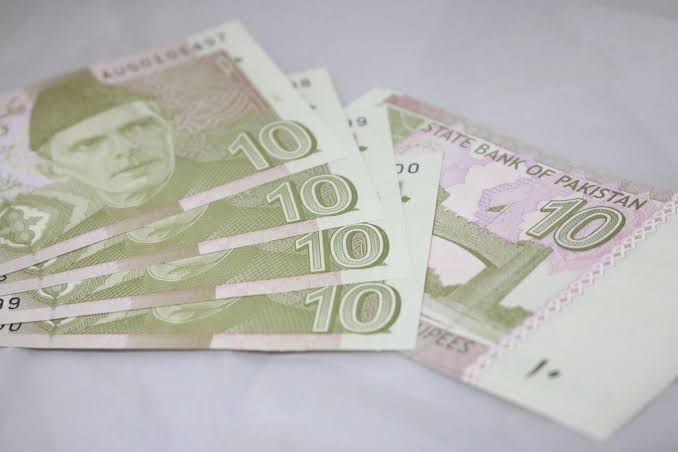
ISLAMABAD: Pakistan’s central bank is considering scrapping its lowest-denomination banknote, the Rs10 note, as officials weigh the rising cost of printing currency that’s becoming increasingly expensive to produce.
State Bank of Pakistan Deputy Governor Inayat Hussain told a Senate panel on Friday that the central bank has twice previously attempted to discontinue the note, and that doing so now hinges on the rollout of a broader currency redesign.
“The Rs10 note would be phased out once new banknotes are introduced,” Hussain told the Senate Standing Committee on Finance and Revenue.
The disclosure came as the committee, chaired by Senator Saleem Mandviwalla, reviewed a range of currency-related matters including counterfeiting risks, the state of Pakistan’s banknote security features and delays in verifying suspect Rs5,000 notes submitted to the central bank nearly two years ago.
Pakistan’s currency overhaul has been years in the making. The State Bank began the process of redesigning all denominations in January 2024, launching an art competition two months later to solicit design concepts before naming winners in September of that year. The current series has been in circulation since printing began in 2005 — a two-decade run that officials say has left the notes increasingly vulnerable to counterfeiting as reproduction technology has advanced.
The federal cabinet has weighed in twice on the redesign, forming a subcommittee that made what Hussain described as substantial changes to the proposed note designs. Those changes still need to be finalised before new notes can enter circulation, he said. The State Bank submitted its design proposals to the Ministry of Finance roughly a year ago, and cabinet members were briefed in January on plans to issue new notes in denominations of Rs100, Rs500, Rs1,000 and Rs5,000.
The committee also pressed the central bank on how it selected the contractor for the redesign. Hussain said a public tender drew four bidders, with the contract ultimately awarded to a consulting firm now incorporating the government’s requested changes. Mandviwalla had raised concerns that the same consultant appeared to have been retained without a competitive process, prompting an SBP executive director to clarify that the firm associated with the consultant would handle the full scope of work. Mandviwalla directed the central bank to submit complete documentation of the bidding process, noting that the State Bank, while operationally autonomous, remains bound by standard procurement rules.
Senator Anusha Rahman Ahmad Khan urged the central bank to streamline its design-approval process, arguing that repeated referrals back to the cabinet for minor revisions have slowed the timeline unnecessarily.
Cost featured prominently in the briefing. The State Bank told the committee that printing a single Rs5,000 note currently costs approximately Rs14, and that introducing the new series in full is expected to take about a year from approval.
The redesign follows a separate upgrade to Pakistan’s currency-printing infrastructure. Security Papers Limited, the state-run printer, said in March last year that it had awarded a 3.4 billion-rupee contract to German firm Giesecke+Devrient to modernise its paper-manufacturing line, including an international tender component worth 8.3 million euros. That upgrade was expected to take 18 months to complete.
The push for a more secure, modernised currency series comes as Pakistan’s central bank works to stay ahead of counterfeiters equipped with increasingly sophisticated printing and reproduction tools — a challenge facing banknote issuers globally as digital imaging technology has become more accessible.
Copyright © 2021 Independent Pakistan | All rights reserved