By Staff Reporter
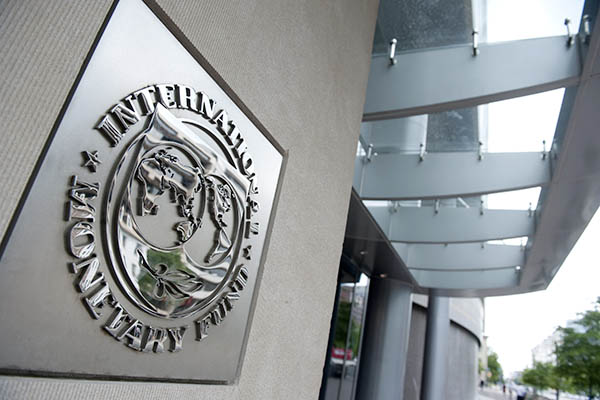
ISLAMABAD: Pakistan and its development partner, the IMF, are stretching their negotiatory limits to carve out a consensus on Prior Actions (PAs) for a staff accord, but the talks are stalemating as the lender is not backing down on its demand for putting a powerful anti-corruption watchdog among the dirty government officials from top to bottom.
The IMF wants to make the anti-corruption reforms a part of PAs list because the government failed to fulfil the Structural Benchmark (SB) agreed by the last regime on the completion of 6th review.
The fund is now vying to convert it into a fresh PA for reviving the stalled IMF programme.
Pakistan has made a case with the IMF to exclude the anti-corruption watchdog related PA from the list, arguing it does not fall within the purview and the mandate of the fund.
For striking a staff-level agreement, Pakistan and the IMF are discussing the list of PAs. Some of the PAs are bound to take effect from July 1, 2022, including enactment of the Finance Act 2022 after getting Parliament nod, imposition of petroleum levy, and phasing in a power tariff hike.
The Monetary Policy Committee is also scheduled to meet on July 7, 2022 for tightening of monetary stance. Now keeping in view CPI based inflation skyrocketing to 21.3 percent while Wholesale Price Index touched 38.94 percent, there is no doubt that monetary tightening is on cards.
The deregulation of petroleum prices is part of the structural benchmark for the completion of the next reviews under the IMF programme.
Replying to one of the Independent Pakistan’s queries, sent to the IMF’s headquarters in Washington DC via email, asking if strengthening the anti-corruption institutional mechanism is a part of Prior Action for the completion of 7th and 8th reviews under EFF programme, an IMF spokesperson said, “Discussion with the Pakistani authorities on the review continue and we do not comment on specific elements under discussion.
In general, strengthening governance and transparency has been a key goal under Pakistan’s EFF-supported programme as these ultimately support robust inclusive growth”.
However, Pakistani authorities did not have any objections to the continuation of the Structural Benchmark for establishing a task force with inputs from international experts and civil society organisations to strengthen the institutional framework for the purpose of an anti-corruption drive.
But the IMF argued that the missing out on the Structural Benchmark resulted in the placement of prior actions as Islamabad made a commitment to implement the SB in the last review but failed to meet the envisaged deadline.
Pakistan and the IMF had agreed on the completion of the 6th review during the PTI led regime on the former’s commitment that the government would take measures for strengthening the effectiveness of anti-corruption institutions.
Priority measures include the establishment of an asset declaration system with a focus on high-level public officials (including federal cabinet members) by end-January 2022 (end-June 2021 SB, reset to end-January 2022), publication of the second review cycle report under the UN Convention against Corruption, and review of the institutional framework for Pakistan’s anti-corruption institutions by independent experts with international experience.
The measures to strengthen governance and the control of corruption remain the key.
Pakistani authorities committed with the IMF that their priorities include strengthening the effectiveness of anticorruption institutions.
However, the government could not deliver on those commitments and now the IMF wants to include it as part of prior actions for revival of the loan programme.
Copyright © 2021 Independent Pakistan | All rights reserved