By Staff Reporter
GILGIT: In the high valleys of northern Pakistan, where five of the world’s 14 peaks above 8,000 meters rise within a few hundred miles of each other, more than 2,200 foreign climbers and trekkers arrived this summer to test themselves against some of the most punishing terrain on Earth — a number tourism officials say marks a clear rebound from a difficult year before, even as the broader region absorbed the shock of a war between the United States, Israel, and Iran.
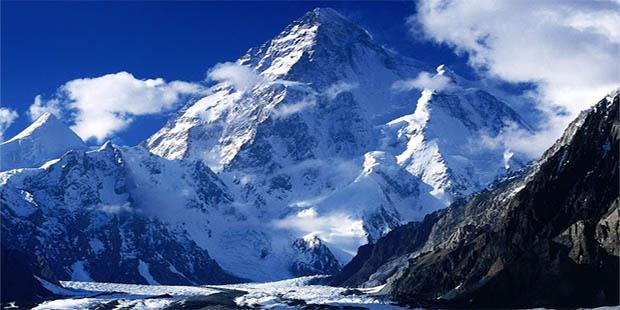
The climbers came from April through August to Gilgit-Baltistan, the mountainous territory that borders China, Afghanistan, and India-occupied Kashmir, Sajid Hussain, deputy director of the region’s tourism department, told Dawn newspaper. Their targets included K2, the world’s second-highest mountain at 8,611 meters and widely regarded as more technically demanding and more dangerous than Everest; Nanga Parbat, long nicknamed “Killer Mountain” for its brutal history of fatalities; and the twin giants of Gasherbrum I and II, along with Broad Peak, rounding out a cluster of five peaks that draw the world’s most serious high-altitude mountaineers.
Hussain said the climbing season has now formally closed, but trekkers are still making their way toward restricted zones, including the demanding route to K2 Base Camp, and are expected to keep arriving through October. Foreign tourists visiting Gilgit-Baltistan’s open-zone areas — as opposed to the restricted high-altitude routes requiring special permits — do not need government authorisation to travel, a policy officials credit with helping draw broader tourist traffic beyond the elite climbing community.
Combined with domestic travellers and tourists visiting the region’s more accessible attractions, officials expect the total number of foreign visitors to Gilgit-Baltistan this year to top 10,000 once the spring, summer, and autumn seasons are all counted.
The government collected roughly 350 million Pakistani rupees — around $1.2 million — in expedition and trekking permit fees during the summer season alone, through the end of June, according to figures provided by the tourism department.
That the numbers rose at all struck some in Pakistan’s mountaineering community as notable, given what the region weathered over the past several months. In late February, the United States and Israel launched a joint military operation against Iran that killed the country’s supreme leader, Ayatollah Ali Khamenei, in a strike on his compound in Tehran — an assassination that upended the security calculus across the broader Middle East and prompted numerous countries to issue fresh travel advisories warning citizens against visiting Pakistan, according to Major General Irfan Arshad Khan, the retired officer who now serves as president of the Alpine Club of Pakistan.
The fallout also slowed the bureaucratic machinery that foreign climbers depend on. Khan said permit issuance for international climbers and trekkers was delayed in the aftermath of the strikes, a bottleneck he believes suppressed what otherwise would have been an even stronger season.
“Otherwise, the number of foreign adventurers visiting GB would have been higher than 2,200,” Khan said, adding that he expects those permitting issues to be resolved and that the region could draw more than 4,000 foreign climbers and trekkers next year.
Hussain, the tourism official, pointed to a separate factor that had depressed visitor numbers the previous year: a spike in fuel prices in 2025 that, combined with regional instability at the time, had discouraged both foreign and domestic travellers from making the trip north. This year’s totals, he said, represent a clear improvement over that slump.
For Khan, the resilience of the tourism sector carries weight well beyond the climbing statistics. Mountaineering and trekking fees flow directly into government coffers, he said, but the broader economic ripple effect matters just as much to the people who live in Gilgit-Baltistan’s remote valleys and depend on the short climbing season for their livelihoods.
“Tourism is a source of employment for the people of GB,” Khan said. “Besides the revenue collected through trekking and mountaineering fees, local people, including porters, hotel owners, transporters and shopkeepers, benefit by millions of dollars directly from tourists.”
Even so, the mountains themselves offered little mercy this season. Despite the strong turnout, the rate of successful summits on the region’s major peaks — K2, Broad Peak, the two Gasherbrums, and Nanga Parbat — remained low, hampered by the same hazards that have long made these among the most dangerous climbs on the planet: snow avalanches, sudden rockfalls, punishing high winds, and weather at extreme altitude that can turn without warning.
Copyright © 2021 Independent Pakistan | All rights reserved