By Staff Reporter
ISLAMABAD: Prime Minister Shehbaz Sharif ordered the suspension of eight hospital and government officials on Saturday and directed that criminal charges be filed against them, after an official inquiry into a nursery fire that killed 14 newborns found the hospital lacked basic fire alarms, a workable evacuation plan, and had ignored warnings from a nearly identical fire just weeks earlier.
The blaze tore through a third-floor neonatal nursery at the Pakistan Institute of Medical Sciences, PIMS, the country’s largest public hospital, shortly before 6:40 a.m. Wednesday. Surveillance footage reviewed by investigators showed conditions inside the nursery collapsing from a contained emergency into an uncontrollable fire in less than two minutes.
The interim findings, presented to Sharif at a meeting in Lahore and later released publicly, portray a hospital where fire risks had been documented and then set aside. A separate fire at a PIMS nursing dormitory in early July had prompted a list of recommended safety fixes — new alarms, evacuation drills, an electrical inspection — that investigators said were never carried out.
“Those guilty of criminal negligence do not deserve any leniency,” Sharif said in a statement issued by his office after the meeting. “Those responsible for this incident will be brought to justice.”
The eight officials suspended include the hospital’s executive director, Dr. Imran Sikandar; the head of its neonatal department, Dr. Sadia Riaz; a senior registrar, Dr. Nagham; two joint executive directors, Dr. Mutahir Shah and Ch. Waris Ali Raza; the director of the hospital’s mother-and-child health program, Dr. Nosheela Amjad; the assistant director of hospital security, Muhammad Usman; and Dr. Abdul Rehman, director general of emergency services for the Capital Development Authority, the agency that oversees Islamabad. Sharif directed that all eight face criminal proceedings in addition to internal disciplinary action.
He also ordered a review of the contract held by the private security firm responsible for the hospital, with proceedings to follow if violations are confirmed, and asked regulators to examine the company’s license. A charge nurse and a security guard who were on duty when the fire broke out were ordered to remain off the job pending further investigation, though the inquiry said no determination had yet been made about their individual conduct.
Dr. Muhammad Salman, chief executive of Pakistan’s National Institutes of Health, was named acting executive director of PIMS while continuing to lead the NIH. Sharif ordered that new officials be appointed immediately to the other posts left vacant by the suspensions.
A hospital with no plan for fire
Investigators found that PIMS had thirteen standard operating procedures governing its operations — and that only two of them so much as mentioned fire or emergency response. There was no detailed, hospital-approved plan for evacuating the neonatal nursery specifically, no rehearsed drill for moving newborns who cannot walk or be carried quickly, and no single officer whose job was to manage a fire emergency. That responsibility had been handed, as an add-on to an already full workload, to an assistant director of security.
The nursery itself had no fire alarms and no sprinklers, according to the Prime Minister’s Office, which said the ward had been operating in violation of World Health Organization safety standards.
Investigators reconstructed the fire’s opening minutes using hospital surveillance video, which they called the most reliable record of what happened. At 6:38:15 a.m., a charge nurse identified in the report as Nasreen ran from the nursery calling for help. Twenty seconds later, she and a security guard, identified as Maria, went back in; flames were already visible in the camera’s reflection. A staff nurse, Razia Noreen, entered the nursery at 6:38:56 a.m. and came out eight seconds later carrying an infant — the rescue Sharif would later honor. She tried to go back in for another child shortly after.
By 6:39:15 a.m., smoke had obscured one hallway camera almost entirely. A door connecting the nursery to an adjoining corridor, closed until that point, was opened around 6:39:45 a.m. Within roughly thirty more seconds, a second camera was blinded by smoke as well. In all, one infant was rescued directly from the nursery and four more were pulled from an adjacent room before the fire fully took hold.
The inquiry was direct in stating what the video did not show. Despite accounts that circulated in the fire’s aftermath suggesting nurses had fled and left the infants behind, investigators said the footage “did not support generalised allegations that frontline medical and nursing staff simply abandoned the newborns,” and instead documented immediate, if ultimately overwhelmed, rescue attempts.
A gap in the call for help
The report also examined how long it took for word of the fire to reach outside emergency crews — and found a discrepancy investigators have not yet been able to fully explain. Hospital surveillance showed the emergency becoming visible at 6:38 a.m. But Capital Emergency Service records show the first call reporting the fire was not logged until roughly 6:54 a.m., a gap of about sixteen minutes. Rescue crews were dispatched within a minute of that call and reached the hospital around 7:01 a.m. — six to seven minutes after being notified, but nearly a full half-hour after the fire began.
Investigators said other evidence pointed to a possibly earlier call that has not yet been reconciled with the official log, and cautioned that they could not yet say which person or agency, if any, was responsible for the delay.
Locked doors and an earlier warning ignored
Emergency crews from the Capital Emergency Service told investigators that fire and life-safety conditions at the hospital were “inadequate and compromised” — that some emergency exits and escape routes were locked or obstructed, that security personnel got in the way of parts of the initial response, and that firefighters had to force open locked doors to reach the ward. The inquiry called these serious, prima facie deficiencies, while noting it was still confirming the exact location and status of each door in question before assigning individual blame.
The report drew a distinction, however, around the corridor door captured on camera. Because a neonatal unit has a legitimate need for controlled access, investigators wrote, a locked or restricted door cannot by itself be treated as proof of negligence. What matters, the report said, is whether that particular door was a required emergency exit, whether it could have been opened immediately in a crisis, and whether its condition actually delayed the rescue — questions the committee said it had not yet resolved.
What the inquiry did establish is that the warning signs were not new. A fire broke out at the PIMS nursing hostel on July 6, more than six weeks before the nursery fire, and prompted recommendations for a fire-safety audit, better alarms, clearer evacuation procedures, upgraded firefighting equipment, an electrical inspection and staff training. “The available record shows that the earlier inquiry had already identified deficiencies in fire detection, alarm, evacuation preparedness, electrical inspection, security response and record keeping,” investigators wrote, adding that the record indicated the fixes were never properly carried out.
“The July record demonstrates that identifying deficiencies without ensuring implementation does not provide effective institutional protection,” the report said.
Cause still under investigation
Investigators said they had not conclusively determined what sparked the fire. Accounts collected in its early aftermath variously pointed to an air conditioner, an incubator or infant warmer, or an electrical short circuit or overloaded outlet. Records from the Islamabad Electric Supply Company showed no fault or power trip on the external electrical feeder serving the hospital at the time, which investigators said shifts the focus of the inquiry inward, toward the hospital’s internal wiring, outlets and equipment.
Maintenance logs showed several incubators had recently been serviced and returned to use, the report noted, but that alone does not rule out an equipment-related origin. “An internal electrical/equipment-related origin remains plausible,” the report said, “but it would be premature to identify any particular appliance or component as the established cause.” A final determination will depend on forensic examination still to come.
The committee was similarly careful in how it discussed responsibility. While it identified potential grounds for criminal investigation — including allegations of locked or obstructed exits, the failure to act on fire risks flagged after the July hostel fire, and the unexplained gap before emergency services were notified — it said criminal liability requires proof of specific wrongful acts or omissions, and that the evidence gathered so far does not yet support attributing blame to particular individuals with certainty.
Immediate fixes ordered
The inquiry, led by former federal secretary Shahid Khan, said some safety measures could not wait for its final report. It recommended an immediate, hospital-wide fire and electrical safety audit, starting with the neonatal nursery, intensive care units and operating theaters, to be carried out by outside technical experts. Every smoke detector, alarm, extinguisher, hydrant, emergency light and fire exit should be inspected, tested and documented, the committee said, and any required emergency exit found locked or blocked should be fixed without delay — while legitimate, controlled access to the neonatal unit is preserved through fire-safe means.
It also called for an urgent inspection of incubators, warmers, air-conditioning units and electrical systems in high-risk clinical areas; temporary fire-watch staffing anywhere automatic detection is lacking; practical fire and evacuation drills involving doctors, nurses, security and engineering staff; and a tested emergency protocol under which any fire would trigger an internal alarm, mobilize hospital responders and directly notify outside emergency services — without depending on word passing informally through layers of hospital administration.
Sharif ordered the interim report published on the National Health Ministry’s website, and asked Khan’s committee to complete a fuller investigation.
A nurse’s rescue, honored
Sharif approved Pakistan’s Sitara-i-Khidmat award and a cash payment of Rs1 million for Noreen, the nurse who carried an infant out of the burning nursery. “Razia Noreen has demonstrated an exceptional sense of responsibility and humanity,” Sharif said in a statement from his office. “The entire nation, including myself, is proud of Nurse Razia Noreen for risking her own life to save the child. Such dutiful individuals cannot be praised enough.”
Health Minister Mustafa Kamal and Parliamentary Affairs Minister Tariq Fazal Chaudhry visited the hospital’s children’s ward earlier on Saturday and later travelled to Rawalpindi to meet with grieving families, presenting checks of Rs5 million each to two of the households that lost children in the fire.
“This financial assistance can in no way compensate for their loss,” Kamal told the families, according to the government’s account of the visit, calling the payment a gesture meant to show the government stood with them and shared their grief.
At a hospital briefing earlier in the day, Kamal said a full and impartial investigation was underway. “Strict action will be taken against those found responsible for this tragic incident,” he said. Speaking to reporters on Friday, Kamal had pushed back on reports that multiple committees were investigating the fire, saying only the panel appointed by Sharif was doing so. “There is only one committee formed by PM Shehbaz,” he said, adding that Khan’s committee was due to submit its findings within another 24 hours.
Fire follows hospital’s account of chaos
PIMS said in its own statement after the fire that the blaze had been “initially caused by a spark inside the nursery at 06:38am,” and that it spread within seconds because of oxygen equipment positioned at each incubator. Two doctors and two nurses on duty responded immediately and called security, the hospital said, and staff tried twice to get into the nursery before a ceiling collapse.
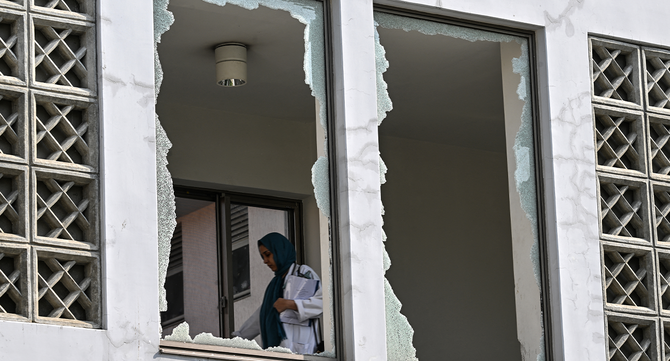
Witnesses at the scene described a starkly different picture in the fire’s immediate aftermath, saying they waited for what felt like hours for emergency crews to arrive and had to break windows to reach the ward, with some alleging the doors had been locked. The hospital and the government have since disputed accounts of major delays or locked exits, though Saturday’s interim report suggests the truth lies somewhere the investigation has not yet fully mapped — acknowledging both a notification gap and evidence of exits that were locked or obstructed, while stopping short of attributing either to any individual.
In the fire’s immediate wake, Sharif formed the inquiry committee and removed federal Health Secretary Muhammad Aslam Ghauri from his post. The Senate unanimously passed a resolution calling for a special committee to investigate, and the National Assembly separately called for an impartial inquiry and accountability for any negligence or safety lapses. The government has pledged Rs5 million in compensation to each family that lost a child in the fire.
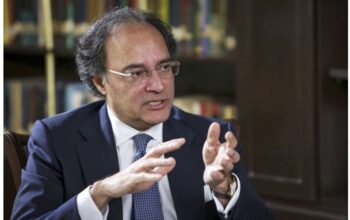
Speaking in the Senate on Friday, Kamal said the tragedy could not be allowed to become “an episode lasting merely a few days” and endorsed a parliamentary investigation, arguing it would expose deeper problems across the health system. Calling that system “rotten,” he said the deaths at PIMS should serve as the basis for broader reform. Asked about calls for his own resignation, he said: “Let the investigation be completed. I have already taken action beyond what they are thinking.”
Copyright © 2021 Independent Pakistan | All rights reserved