By Staff Reporter
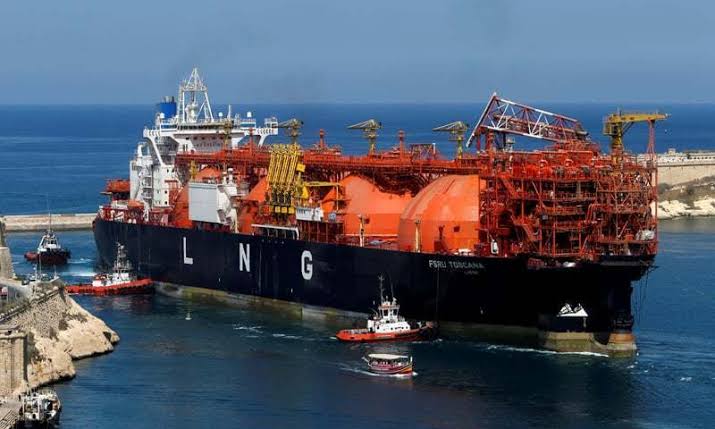
ISLAMABAD: Pakistan is seeking an emergency spot cargo of liquefied natural gas for delivery in the first week of September, as a shortfall in the fuel needed to run the country’s power plants leaves millions of households facing extended blackouts.
State-owned Pakistan LNG Ltd. issued a tender Sunday for 140,000 cubic meters of LNG, with a tolerance of 5% either way, seeking delivery at the Port Qasim terminal in Karachi between Sept. 4 and Sept. 8. The purchase marks the government’s latest attempt to plug a gap in gas supplies that has forced utilities to ration power during peak evening hours.
The rush order follows an apology from officials who acknowledged that a shortage of regasified LNG — the form in which the imported fuel is fed into the power grid — had contributed to the nighttime load-shedding disrupting daily life across the country.
Power Minister Awais Leghari, appearing alongside Petroleum Minister Ali Pervaiz Malik, told reporters Monday that a stalled shipment of contracted LNG from Qatar has left power plants with roughly 5,000 megawatts of combined capacity unable to run.
Supply has kept pace with demand during the day, Leghari said, but a nighttime surge in consumption is outstripping what non-RLNG sources can cover. “People are passing through a difficult time, for which I apologise,” he said.
The government could turn to the spot market for LNG to keep the plants running, Leghari said, but prices there have surged because of the Iran-US conflict and the closure of the Strait of Hormuz. Passing that cost to consumers would push electricity bills up by Rs5 to Rs6 per unit once it filters through in roughly two months, he said. “Though people are facing difficulties for a few days, we are trying to save them from additional bills of thousands of rupees,” he added.
Diesel- and coal-fired plants are running at full capacity, Leghari said, alongside hydropower output, which remains constrained by agricultural water needs. Generation from the south is being pushed north to the limit of what the transmission network can carry, he said.
Leghari said Hyderabad Electric Supply Co.’s territory has avoided load-shedding tied to supply constraints, while outage durations have been extended in areas where distribution losses run higher. He repeated his apology and pledged outages will end once the gas shortfall is resolved.
Prime Minister Shehbaz Sharif has instructed that electricity prices not be raised, Leghari said, adding that ending load-shedding remains the government’s top priority and that all available generation is being deployed to meet demand.
Malik, the petroleum minister, said energy markets are under strain from the regional situation. A single LNG cargo that would typically run $30 million to $35 million is now fetching around $75 million on the spot market, he said.
The government is also weighing the toll of costlier energy imports on the current account, Malik said, noting the fuel import bill totaled roughly $1.3 billion between March and July. The state has extended a Rs130 billion subsidy on petroleum products to soften the impact of volatile international prices on consumers, he said.
Malik said his ministry and the Energy and Petroleum Division have worked to keep energy supplies uninterrupted despite the regional turmoil, maintaining continuity even through what he called a war-like situation. The government is tracking regional and international energy markets closely and taking steps to secure adequate supplies of petroleum products, LNG and other resources, he said.
Efforts are underway to restore gas flows from Qatar, Malik said, after which the government expects conditions to improve and nighttime load management to end.
The energy squeeze traces back to the war between the U.S. and Iran that erupted in February, which has periodically disrupted the flow of LNG cargoes from Qatar through the Strait of Hormuz, one of the world’s most critical energy chokepoints. That has forced Islamabad to turn repeatedly to the more expensive spot market to keep the lights on, exposing a economy already grappling with a dollar shortage and elevated borrowing costs to sharper swings in global gas prices.
Costs Climbing for Consumers
The price of that dependence is showing up in consumers’ bills. The cost of RLNG-fueled power generation surged 242% to 47.4 rupees per unit in July from less than 14 rupees in April, according to Pakistani regulatory filings — the sharpest jump in the fuel’s decade-long trading history in the country. Power companies have since sought a 2.52-rupee-per-unit increase in the fuel cost adjustment passed on to consumers in September bills, even though cheaper domestic sources — many of them zero-cost — accounted for 73% of generation in July. LNG made up roughly 11% of total supply to the grid that month.
Pakistan LNG’s procurement pattern over the past two months illustrates the volatility. The state buyer purchased no spot cargoes in August, receiving only a single shipment under its long-term, government-to-government contract with Qatar. In July, by contrast, it bought five spot cargoes on the open market while receiving nothing from Qatar under that same agreement — a reversal that underscores how exposed the country’s gas-fired power fleet has become to disruptions in a single supply relationship.
Tender Details
Sunday’s tender calls for delivery on a Delivered Ex-Ship basis to the terminal operated by Pakistan Gas Port Consortium Ltd. at Port Qasim. The solicitation, issued Aug. 30, gives suppliers until 2 p.m. local time Sept. 1 to submit bids, with technical offers to be opened 30 minutes later. Commercial bids from technically compliant suppliers follow at 3:30 p.m., and Pakistan LNG intends to award the contract the same day, with offers required to remain valid until 10 p.m.
The company will award the cargo to the technically qualified bidder offering the lowest price in U.S. dollars per million British thermal units, with commercial offers to be quoted to four decimal places. The process follows a single-stage, two-envelope structure that separates technical and commercial submissions.
To qualify, suppliers must show they have delivered at least eight LNG cargoes over the preceding 24 months, and must post a $300,000 bid bond. The winning bidder will be required to furnish an unconditional performance guarantee equal to 10% of the total contract value.
Pakistan has increasingly relied on such short-notice purchases to bridge gaps left by disruptions to its term contracts, a pattern that has left the country’s power sector — and its consumers — more exposed to the swings of the global spot market at a time when it can least afford it.
Copyright © 2021 Independent Pakistan | All rights reserved