By Staff Reporter
QUETTA: Security forces killed 12 armed militants on Monday after gunmen ambushed a convoy of vehicles associated with the Reko Diq copper and gold project in a remote stretch of southwestern Pakistan, the latest in a string of assaults on a mining venture that foreign investors have been assured is safe.
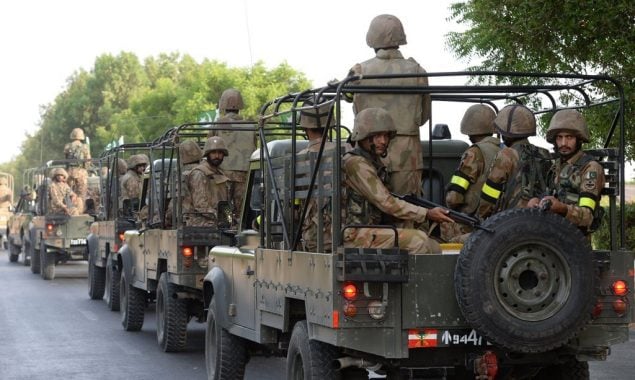
The convoy — roughly three dozen empty vehicles making the return trip from the project site in Chagai district to the provincial capital of Quetta — came under sustained gunfire in the Nokacha area, according to security officials. The vehicles were travelling under armed escort at the time.
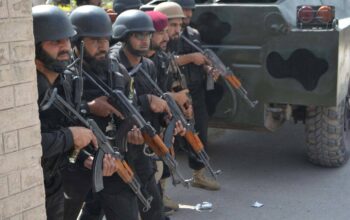
The attackers attempted to intercept the convoy before opening fire, an official said. Security personnel assigned to protect the convoy took up defensive positions and returned fire almost immediately, touching off a battle that lasted more than two hours. Two members of the security detail were wounded in the exchange, officials said.
In the immediate aftermath, officials put the death toll among the attackers at 11, saying troops recovered arms and ammunition, including heavy weapons, from the site. By evening, Balochistan’s chief minister, Mir Sarfraz Bugti, had revised that figure upward, saying 12 attackers had been killed.
No one had claimed responsibility for Monday’s ambush as of late evening. Officials with the Reko Diq project did not respond to requests for comment.
The assault is the latest to strike Chagai district, home to one of the largest undeveloped copper and gold deposits in the world and a linchpin of Pakistan’s efforts to attract foreign mining investment. The Reko Diq project is being developed by Barrick Mining in partnership with Pakistani state entities, part of a broader push by Islamabad to position the remote desert district — which also hosts the Chinese-run Saindak copper and gold mine — as a secure gateway for international capital.
That reputation has been tested repeatedly over the past year. In July, militants seized government buildings in Chagai town and blockaded a key highway linking Quetta to the Iranian border, forcing mining and energy companies operating in the area to adjust convoy schedules, restrict travel to daylight hours and, in some cases, factor a security premium into their cost of doing business, according to an analysis published by the Royal United Services Institute, a London-based defense think tank. In late November, a suicide bomber struck a paramilitary headquarters in the district, an attack claimed by the separatist Balochistan Liberation Front.
Balochistan, Pakistan’s largest and least populated province, has for decades been the site of a low-grade insurgency waged by ethnic Baloch militant groups seeking independence or greater autonomy from Islamabad, along with sporadic attacks by other armed factions. The province’s mineral wealth — and the foreign workers and infrastructure that come with developing it — has increasingly become a target, even as Pakistani officials insist the region is stabilising.
Bugti, in a post on the social media platform X on Monday, said intelligence-driven operations against militants were continuing “successfully and consistently” across the province.
“There will be no negotiations with those who take up arms against the state and shed the blood of innocent citizens,” he wrote, adding that anyone who chose “the path of terrorism and violence” would be dealt with under the law.
The chief minister said the state would not compromise on its authority or on protecting the lives and property of Balochistan’s residents. Security forces and law enforcement agencies, he said, were carrying out coordinated operations aimed at restoring peace and stability in the province, and vowed that “indiscriminate action” would be taken against militants and anyone found to be assisting them. Every attempt to undermine peace in Balochistan, he said, would be foiled.
Copyright © 2021 Independent Pakistan | All rights reserved