By Staff Reporter
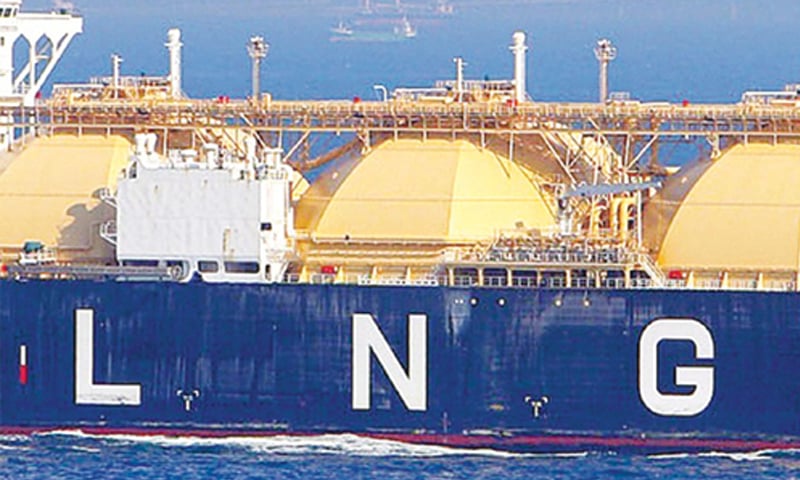
ISLAMABAD: Pakistan rejected the only bid submitted for an emergency cargo of liquefied natural gas, deeming the price too high even as the South Asian nation scrambles to plug a supply gap left by halted shipments from Qatar.
Pakistan LNG Ltd., the state-run buyer, turned down an offer from BP Plc’s Singapore trading unit after its board determined the price exceeded expectations, according to a petroleum ministry official who asked not to be identified. BP Singapore had proposed $26.969 per million British thermal units for a 140,000 cubic meter cargo, an evaluation report issued by PLL showed.
The rejection leaves Islamabad without a clear path to secure September supplies at a moment when its energy system is already under strain. PLL had sought the cargo for delivery at Port Qasim in Karachi between Sept. 4 and 8, seeking to offset disruptions tied to the conflict between the US and Iran that has rattled energy markets across the Gulf region.
BP Singapore was the sole participant in the tender and met the technical requirements to qualify, the PLL report showed. The company was designated the “lowest evaluated bidder” — a classification that reflects its status as the only qualifying offer rather than confirmation that a contract had been awarded.
The petroleum ministry official didn’t say whether Pakistan intends to relaunch the tender to secure the cargo it still needs.
Force Majeure
Pakistan’s predicament traces back to March, when QatarEnergy declared force majeure on deliveries after Iranian strikes on two of its key facilities knocked out production. The declaration — a contractual mechanism that lets companies suspend obligations when extraordinary circumstances intervene — severed the flow of gas from Pakistan’s principal long-term supplier and pushed Islamabad into the spot market to cover the shortfall.
The stakes are heightened by timing. Pakistan depends on imported LNG to run its gas-fired power plants, and the disruption is landing squarely in the summer months, when electricity demand typically peaks. Compounding the problem, the conflict has also disrupted vessel traffic through the Strait of Hormuz, the narrow passage linking the Gulf to the Arabian Sea that serves as a critical corridor for global oil and LNG shipments.
Petroleum Secretary Mirza Nasir Uddin Mashood confirmed earlier Tuesday that Pakistan was pursuing the emergency cargo through competitive bidding. “We are working on the procurement of LNG cargo, and the process will be completed through open tender,” he said following a parliamentary committee meeting.
Narrow Window
Before the bid’s rejection became public, a senior energy ministry official said the sought-after cargo could sustain roughly seven days of national power-sector demand — stretching to as much as 10 days if supplemented with domestically produced natural gas. Officials were counting on softening demand to buy additional time.
“We hope the demand for power will reduce too in coming days, which will give us a window of up to 15 days before we need another cargo,” the official said.
The energy squeeze extends beyond gas. Pakistan has also confronted higher petroleum prices as the regional conflict disrupts supply chains and shipping routes, adding further strain to an economy that leans heavily on imported energy to function.
“Petroleum supply is volatile. The prices will come down when the volatility will end,” Mashood said, noting that the bulk of Pakistan’s petroleum imports are currently routed through the Red Sea rather than the Gulf.
The disruption to Hormuz traffic has pushed Islamabad to reassess how it secures energy supplies more broadly, given that the strait has historically carried the majority of the oil and LNG the country imports.
Copyright © 2021 Independent Pakistan | All rights reserved