By Staff Reporter
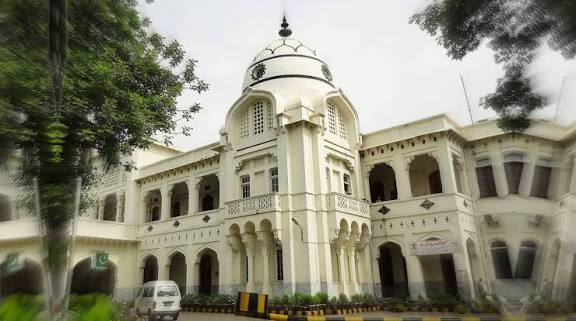
LAHORE: Twenty Afghan medical students at King Edward Medical University were given 24 hours to report to the administration and begin the process of leaving Pakistan. Seven were in their final year of training. For the women among them, the order does not just interrupt a degree. It sends them back to a country where they are barred from attending university at all.
The ultimatum, issued on Tuesday, is the sharpest instance yet of a directive from Pakistan’s Medical & Dental Council ordering all Afghan nationals enrolled in the country’s medical and dental programs to return to Afghanistan. At King Edward alone, the order affects students who have spent years and, by their account, significant family savings working toward degrees they are now being told to abandon before completion.
The council’s Sept. 1 letter reiterated an existing policy: no new admissions, transfers or migrations involving Afghan nationals for the current academic year, and a requirement that those already enrolled leave the country. At two leading universities in Lahore, at least 43 students — 26 of them women — have been notified this week that they must complete departure paperwork.
The Human Rights Commission of Pakistan said on Wednesday the order has moved beyond the realm of education policy entirely. The commission said it has heard from students in Lahore estimating that as many as 100 Afghan medical and dental students could be affected, including 20 to 40 women, and that some have already sought the commission’s help — not just for legal support, but for emergency shelter.
“This is no longer simply an education policy; it is also a humanitarian crisis affecting young people whose education, safety and futures are at immediate risk,” the HRCP said on a statement posted on X.
“We call on the government urgently to uphold the principle of non-refoulement,” the commission said. “Given the well-documented risks faced by Afghans returning to Afghanistan—and particularly by women—no student should be forcibly returned without an individual assessment of the risks they face.”
It argued that Pakistan’s security concerns and its deteriorating relationship with the Taliban government do not justify what it called the collective punishment of students, and that no one should be sent back without an individual assessment of the risk they face. The commission called for the repatriation orders to be suspended immediately, for enrollment to be restored, and for shelter to be arranged for students who need it.
One Afghan woman studying medicine in Lahore, who spoke to Arab News on condition of anonymity, put the stakes in blunter terms. Being forced out, she said, would not simply mean leaving a university — it would mean losing years of work and her family’s investment, with nothing to return to. Afghan girls and women have been shut out of secondary schools and universities under Taliban rule for nearly five years, she said, leaving no path to finish her education if she is sent home.
The Afghan embassy in Islamabad has called the order a forced deportation of students who entered Pakistan legally. An embassy spokesperson said roughly 1,000 Afghan students are enrolled across Punjab, about 400 of them in medical programs.
Pakistan’s foreign office pushed back on the deportation framing on Wednesday, saying visa extensions for Afghan students are still being processed under existing rules. “Our relevant institutions continue to process visa extension applications of Afghan students in Pakistan in line with our existing policy, rules and regulations,” said spokesperson Sajjad Haider Khan, adding that under the government’s Illegal Foreigner Repatriation Plan, any foreign national without a valid visa and passport is subject to deportation regardless.
A political fight breaks out
The directive has become a rallying point for opposition politicians. Allama Raja Nasir Abbas, the opposition leader in the Senate, argued that students who entered the country legally and are paying full tuition — final-year students especially — should be allowed to finish what they started. Writing for the opposition alliance Tehreek Tahaffuz-e-Ayeen Pakistan, Abbas called education a fundamental right and said granting the students visas in the first place amounted to a promise they’d be able to study without disruption.
He described the council’s notification as politically motivated, warned that punishing students for a diplomatic rift would only breed lasting resentment, and pointed to countries that court international students as a source of soft power and goodwill — an advantage he said Pakistan is throwing away. Noting ties between Pakistan and Afghanistan that predate Pakistan’s founding, Abbas asked what message the policy sends to future applicants: “If this becomes our precedent, who would ever choose to study in our country?” He called on the council to withdraw the order.
Asad Qaiser, a Pakistan Tehreek-e-Insaf leader and the alliance’s secretary general, was more pointed, calling the expulsions absurd and accusing authorities of gambling with students’ futures for the sake of government-to-government friction. He said he has filed a challenge against the directive in the Peshawar High Court and intends to raise it in the National Assembly.
The paperwork of expulsion
Beyond the political response, the order has triggered a wave of administrative processing across Punjab’s medical schools. The council has suspended new admissions, transfers and migrations involving Afghan nationals until further notice. Universities are working through transcripts and exam records to help students transfer or continue their studies elsewhere where regulations permit — a difficult proposition for those in the clinical phase of training, where interruptions can set students back significantly, according to medical education specialists.
Hostels have begun standard exit procedures: clearing rooms, returning university property, settling outstanding charges, and signing off with libraries and laboratories before students vacate campus housing, with continued residency tied to their legal status during the transition.
The order lands amid a broader collapse in relations between Islamabad and the Taliban government in Kabul, strained by a rise in militant attacks along the countries’ shared border. Pakistan launched its Illegal Foreigners Repatriation Plan in 2023 and has since expanded efforts to remove foreign nationals — overwhelmingly Afghan — who remain in the country without valid documentation.
Copyright © 2021 Independent Pakistan | All rights reserved