By Staff Reporter
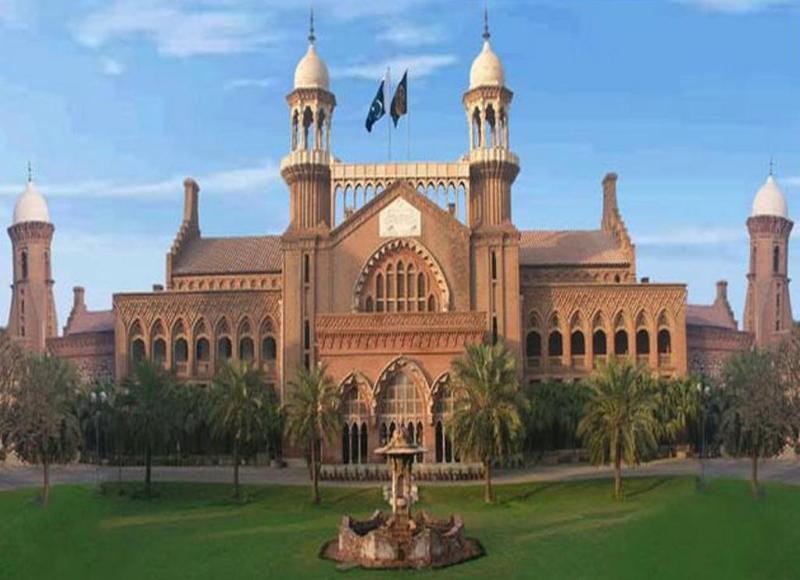
LAHORE: Thirteen Afghan medical students filed suit against Pakistan’s top medical regulator on Thursday, asking a provincial court to block an order that would send them home to Afghanistan before they finish the degrees they have spent years pursuing.
The students — seven women and six men — brought their petitions to the Lahore High Court through attorney Asad Jamal. All were enrolled at prominent institutions in the city: King Edward Medical University, the Shaikh Khalifa Bin Zayed Al Nahyan Medical & Dental College, and the Services Institute of Medical Sciences. Each had been removed from classes on instructions from the Pakistan Medical and Dental Council, the licensing body that oversees medical education nationwide.
Their argument is straightforward: the council overstepped its authority. Lawyers for the students contend that neither the law establishing the regulator nor Pakistan’s constitution gives it power to expel students who have already built years of their education in the country, and that any exercise of that authority has to answer to constitutional and international legal standards, not operate outside them.
Nilofar Nikzad, one of the petitioners, has already lost one shot at a medical career to the strictures of Taliban rule. She completed two years of medical study in Afghanistan before the government there barred women from continuing their education, forcing her to abandon it. She rebuilt that education in Lahore. Now that, too, is in jeopardy.
Many of the students hold scholarships through the Higher Education Commission’s Allama Iqbal program, the same pipeline that brought roughly 350 Afghan students into Pakistan for study, feted at a welcome reception the commission held just last July.
According to the petitions, the process by which their expulsions unfolded left little room for preparation. Students said they were evicted from college hostels with no alternative housing lined up, even as their degrees — and the years of tuition and coursework behind them — hung in question. Filing suit, they said, was what remained after every other option had closed.
The petitions ask the court to strike down two PMDC directives, issued July 31 and again September 1, as illegal, unconstitutional, and void from the moment they were written. One petition put the objection bluntly: the orders, it said, discriminate against women and against Afghan students generally.
The petitions have been fixed for hearing before Justice Khalid Ishaq on Friday.
A directive with reach
The Sept. 1 notification at the center of the dispute instructed Afghan nationals enrolled in Pakistani medical and dental programs to return to Afghanistan and barred colleges from admitting or placing any new Afghan students for the current academic year. Word of the resulting expulsions spread quickly on social media, particularly involving students at Lahore’s public medical colleges.
A Pakistani health ministry official described the decision as one made “in principle,” rooted less in the specifics of any student’s case than in the broader deterioration of relations between Islamabad and Kabul. Asked about the expulsions, Foreign Office spokesperson Sajjad Haider Khan said any foreign national in the country without a valid visa and passport remained subject to deportation under the government’s Illegal Foreigner Repatriation Plan.
Jamal, the students’ lawyer, disputed that framing in a social media post, writing that PMDC’s directive drew no distinction between students with valid visas and those without.
The Human Rights Commission of Pakistan has already weighed in, warning that what began as an education policy risks becoming, in its telling, a humanitarian crisis. The commission estimated roughly 100 Afghan medical and dental students in Lahore alone could be swept up in the order, among them 20 to 40 women.
Regulator says no “blanket ban”
Pressed on the fallout, Khan, the Foreign Office spokesperson, told reporters at a briefing in Islamabad on Thursday that the government has not imposed any across-the-board prohibition on Afghan students. Those holding valid visas and enrolled in legitimate degree programs, he said, will be permitted to finish their studies.
“Those who are holding valid visas and registered in valid degree programs, they will continue and they will complete their education in Pakistan,” Khan said, framing the visa requirement as standard practice for any country hosting foreign students. He directed further questions about the specifics of the PMDC letter back to the council itself, suggesting reporters ask “if all these students are validly registered and hold valid visas… or are there some deficiencies.”
That distinction matters on the ground. This week, more than 40 Afghan students across two of Lahore’s leading medical universities — 26 of them women — were told to complete departure paperwork within 24 hours, according to university directives. Students responded with appeals to Islamabad asking to be allowed to finish their degrees.
Separately, Pakistan’s Ministry of Kashmir Affairs, Gilgit-Baltistan and States and Frontier Regions asked the Punjab government this week to seek approval from the interior ministry to let Afghan medical and dental students already in the province continue their studies. A letter noted that the students in question hold valid visas and are enrolled on Higher Education Commission and other scholarship funding, and asked that they be allowed to finish “on humanitarian ground,” with visa extensions granted as needed to complete their degrees.
The PMDC, for its part, has pushed back on any characterization of the policy as discriminatory. In a statement, the council said its review amounted to a matter of regulatory compliance and documentation, not a bar on any nationality. It said its verification process had identified more than 200 Afghan nationals studying medicine in Pakistan, but only 22 currently registered with the council — 14 of whom have already finished their degrees, with eight more expected to graduate next year. The remaining roughly 176 students’ status, the council said, is still being verified.
Registration with the council, PM&DC noted, is a separate question from the right to practice; even completed degree holders must meet Pakistan’s licensing requirements to work as physicians in the country. Students lacking that registration and the required immigration permissions, the council said, cannot be considered lawfully enrolled within its regulated system.
“It is important to clarify that there is no nationality-based prohibition on medical education in Pakistan,” the council said. “The issue is one of compliance with the applicable regulatory, documentation and immigration requirements.” The statement added that affected students were being “facilitated” in completing necessary paperwork and making return arrangements in what the council described as an orderly and humane process, and that it remained committed to welcoming foreign students who meet its requirements.
The broader picture
The order lands amid a much larger reckoning between Islamabad and Kabul. Pakistan has been engaged in an escalating campaign to repatriate Afghan nationals since November 2023, when it launched the effort in response to a spike in militant violence the government has linked — without publicly presented evidence — to Afghan nationals. Data released by the United Nations refugee agency this week showed more than 300,000 Afghans have returned from Pakistan in just the first seven months of 2026 alone.
Pakistan has hosted Afghan refugees in some number since the Soviet invasion of Afghanistan in 1979, through decades of subsequent conflict and the Taliban’s 2021 return to power. But that long history of hospitality has been increasingly strained by militant attacks on Pakistani security forces and civilians in the years since, souring relations between the two governments and, now, extending the dispute into university hallways and hostel rooms in Lahore.
Copyright © 2021 Independent Pakistan | All rights reserved