By Staff Reporter
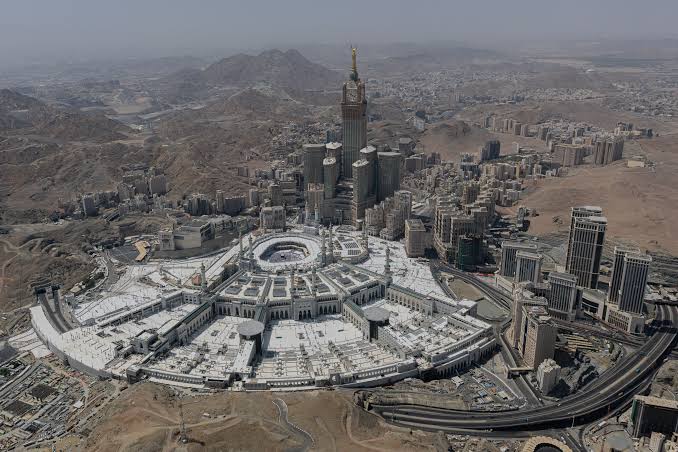
ISLAMABAD: Saudi air defences shot down a drone on Tuesday evening as it approached the restricted airspace over Mecca, the birthplace of the Prophet Muhammad and the site Muslims worldwide face in prayer five times daily, in what Saudi officials called an attempted attack by Yemen’s Houthi rebels on the holiest city in Islam.
The interception, announced by the Saudi-led military coalition early on Wednesday, set off a wave of condemnation across the Muslim world and added a volatile new dimension to a regional war that has already drawn in the United States, Israel, and Iran. It also raised, within hours, uncomfortable questions about a defence pact Saudi Arabia signed with Turkey and Pakistan just last month — an alliance built explicitly around collective deterrence, but one that neither partner had yet been asked to activate.
Royal Saudi Air Defence Forces destroyed the drone at 6:50 p.m. local time on Tuesday, roughly 680 miles from Yemen’s border, before it crossed into the no-fly zone that shields Mecca and its Grand Mosque, according to Major General Turki al-Maliki, spokesman for the Saudi-led coalition fighting the Houthis. Millions of Muslims visit the city each year, many of them during the annual Hajj pilgrimage, one of Islam’s five pillars.
Al-Maliki called the episode a “red line,” language the coalition has used before but rarely with this much urgency. He said it marked only the second time the Houthis have attempted to strike Mecca — the first came in 2017, when the group fired a ballistic missile toward the city that was also intercepted, without casualties.
The Houthis denied any such attempt. Yahya Saree, the group’s military spokesman, said early Wednesday that its targets that night had been Saudi oil facilities and military installations, not the holy city. A Houthi politburo official, Hazem al-Assad, went further on social media, dismissing the coalition’s account as recycled propaganda.
The dispute over what, exactly, happened on Tuesday evening may never be fully resolved. But the reaction it produced was immediate and largely unanimous. The Organisation of Islamic Cooperation, representing 57 member states, condemned what it called a heinous act. Governments from the United Arab Emirates to Bahrain issued statements of solidarity with Riyadh. And in Islamabad, Prime Minister Shehbaz Sharif offered some of the day’s sharpest language.
“There can be no words strong enough to capture the depth of anguish and sorrow felt by us,” Sharif wrote in a post on the social platform X, calling the episode unforgivable. He praised the vigilance and professionalism of Saudi forces, and said Pakistan stood, in his words, shoulder to shoulder with the kingdom. Sharif’s statement did not name the Houthis directly. He also urged all parties in the wider Middle East conflict to show restraint, arguing that the region has already paid too high a price for war.
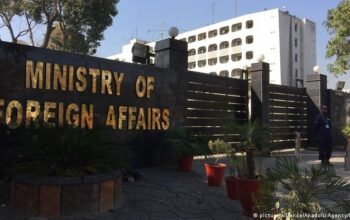
Pakistan’s foreign minister, Ishaq Dar, echoed the message, calling the incident a violation of Saudi sovereignty and an affront to Muslims worldwide.
A pact untested
The words of support were plentiful. Military help was not — at least not yet.
Saudi Arabia, Turkey, and Pakistan signed what has become known as the Mecca Joint Defence Agreement in August, a pact under which an attack on any one signatory is to be treated as an attack on all three. Turkish President Recep Tayyip Erdoğan spoke afterwards of building a collective deterrence for the region.
But as Houthi attacks on Saudi territory have mounted in recent weeks, officials in both Ankara and Islamabad have told reporters, on condition of anonymity, that Riyadh has not asked either country to intervene militarily. A Turkish official said the alliance still needs to be institutionalised — a process involving command structures and interoperability between the three militaries — before it can function as intended. Pakistan’s government said last week it was not weighing an immediate military response under the pact.
The gap between the alliance’s rhetoric and its practice has not gone unnoticed in the region. Analysts have begun describing the current crisis as the agreement’s first real test, and so far, the pact has produced statements rather than sorties.
Escalation on multiple fronts
Tuesday’s episode came one day after Houthi missile and drone strikes wounded 13 civilians in the Saudi cities of Khamis Mushait, Abha, and Taif, and one week after a separate wave of attacks left more than 70 people injured across the kingdom. Saudi Arabia briefly shut down its East-West Pipeline after drone strikes targeted it in the Riyadh and Madinah regions.
The renewed violence traces back to July, when the Houthis — who have controlled large parts of northern Yemen for years — launched a new offensive against Yemen’s internationally recognised government, shattering a rough calm that had held since a United Nations-brokered truce in 2022. The group has since declared a maritime blockade against Saudi Arabia, targeted its shipping in the Red Sea, and, within the past two weeks, seized full control of Yemen’s Red Sea coastline along with the Bab el-Mandeb Strait — a chokepoint through which a significant share of the world’s shipping traffic passes.
The strait’s importance has only grown since February, when the United States and Israel launched a joint military campaign against Iran that killed the country’s supreme leader and triggered months of retaliatory strikes across the region. That war has periodically closed off the Strait of Hormuz, pushing global oil prices above $100 a barrel and turning Bab el-Mandeb into one of the few remaining reliable routes for energy shipments — a fact that has made the Houthi advance along Yemen’s coast a matter of concern well beyond the Arabian Peninsula.
Egypt, whose Suez Canal revenues depend on traffic through the Red Sea and have already fallen by roughly half since the Houthis began targeting shipping in 2023, has pressed for the waterway to remain open. Saudi Crown Prince Mohammed bin Salman and Egyptian President Abdel Fattah al-Sisi met in Cairo this week and called for guaranteeing free passage through both Hormuz and Bab el-Mandeb. Qatar warned separately that closing the strait would be catastrophic for the global economy.
Saudi Arabia has responded with its own airstrikes inside Yemen — 52 of them in a single 24-hour period, according to Houthi military spokesman Saree, who accused Riyadh of hitting civilian infrastructure, including schools and bridges. Those strikes do not appear to have slowed the Houthi advance. A U.S. military task force is providing Saudi forces with intelligence-sharing and planning assistance, an American official said on Tuesday, though Washington has stopped well short of direct involvement.
President Trump said over the weekend that the Houthis had approached the United States and did not want to fight American forces, suggesting the group’s focus remained squarely on Saudi Arabia. Vice President JD Vance said Monday that Washington remained in what he called constant contact with Riyadh and had held direct conversations with Houthi representatives as well, describing the situation as fluid.
The Saudi crown prince made a personal appeal to Trump last week for direct American intervention, according to US media reports, and was turned down.
An urgent session at the UN
The scale of the crisis prompted an emergency session of the United Nations Security Council this week, convened at France’s request during its rotating presidency. Pakistan’s ambassador to the UN, Asim Iftikhar Ahmad, told the council that the expanding conflict had reached what he called an extremely dangerous juncture, and warned that any interference with shipping through Bab el-Mandeb would carry consequences for global trade and energy security.
Saudi Arabia’s ambassador, Abdulaziz M. Alwasil, cited the wounding of civilians in Abha, Khamis Mushait, Jazan, and Najran, and described the Houthis as pursuing a deliberate strategy of choking off the strait. Yemen’s UN representative, Abdullah al-Saadi, told the council his country was fighting to restore what he called national institutions across its territory, and pressed for stronger enforcement of an existing arms embargo.
China’s representative, Sun Lei, called for a return to negotiations and suggested Gulf states take on a larger mediating role. The American representative, Jennifer Locetta, demanded that the Houthis halt their advance and withdraw from captured territory, and accused Iran of arming, funding, and directing the group.
The human cost of the renewed fighting has continued to climb. The United Nations says roughly 82,000 people have been displaced from their homes since the beginning of September alone, in a country already ranked among the poorest in the Arabian Peninsula.
Later Wednesday, the Houthis claimed to have shot down a coalition F-15 fighter jet over Yemen’s central Marib province, though the group’s spokesman did not say when the incident occurred and offered no supporting evidence. The claim could not be independently verified, and spokespeople for the Saudi-led coalition and the Saudi government did not immediately respond to requests for comment.
Copyright © 2021 Independent Pakistan | All rights reserved