By Staff Reporter
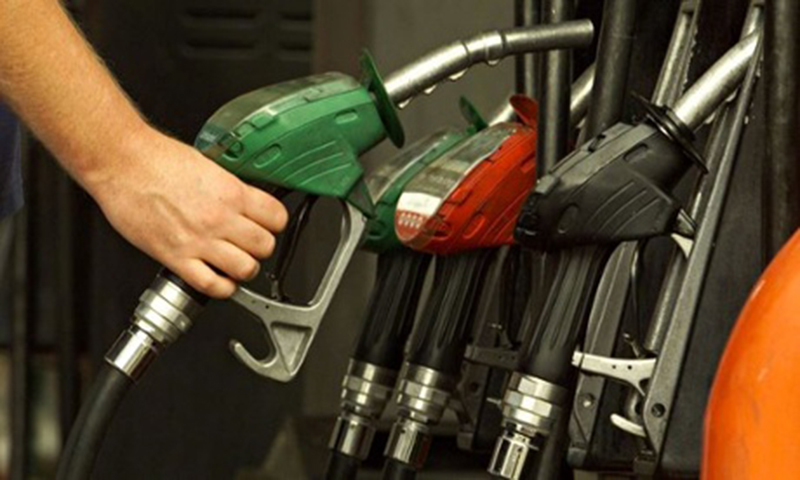
ISLAMABAD: Pakistan lowered petrol and diesel prices for Tuesday, passing on part of a slump in global crude that followed signs the US and Iran may return to talks, while the government said refiners would absorb about 15 billion rupees a month to keep pump costs in check.
The government cut petrol by 3.40 rupees a liter to 374.51 rupees and high-speed diesel by 7.76 rupees to 395.20 rupees, according to a notification from the Oil and Gas Regulatory Authority. The prices apply from Nov. 3.
Taxes and duties still account for 114 rupees a liter of the petrol price and 100 rupees of diesel, a burden that has become the focus of a political fight with the country’s largest religious party.
Petroleum Minister Ali Pervaiz Malik and Information Minister Attaullah Tarar said at a news conference in Islamabad earlier Monday that the refiners’ contribution would let petrol sell 15 rupees cheaper than the global market price. Malik thanked refiners for raising throughput after seeing the public in difficulty, and said they had made profits on that higher throughput over the past three months. He said the refiners had also helped the government absorb a 15-rupee increase that had been due in petrol prices on Friday, which let it hold the price.
Oil fell sharply Monday, the eve of U.S. midterm elections. Brent crude dropped 6% to $106.60 a barrel, while West Texas Intermediate lost 6.4% to $97.49. The move followed reports that Vice President JD Vance had written to Mohsen Rezaei, Iran’s national security chief, about new talks, the highest-level overture in months.
The Wall Street Journal first reported the letter last week, saying it was sent at President Donald Trump’s direction and dealt with a possible framework for negotiations rather than the terms of a deal. Axios reported that Vance wrote that any talks to head off new U.S. strikes would require discussion of the nuclear issue. Iranian media reported on Thursday that Tehran had received the letter but had not yet replied.
Iran said Monday it was ready to reopen the Strait of Hormuz within two days if the U.S. agreed to end the war on all fronts, among other conditions. President Masoud Pezeshkian later said Supreme Leader Mojtaba Khamenei had granted the government “powers” in its talks with Washington. Foreign Minister Abbas Araghchi has said Tehran is discussing with mediators how to carry out a seven-day plan to end the war and reopen the strait.
Rezaei held talks with representatives of Saudi Arabia, Turkey and Pakistan before meeting Khamenei, the first high-level contact between Iran and the three countries. Islamabad hosted the first direct U.S.-Iran talks since 1979 in April, which ended without a deal over control of the strait. Iran’s armed forces said at least four tankers caught fire after hitting mines, a day after the U.S. military said it had cleared key routes. Arne Lohmann Rasmussen, chief analyst at Global Risk Management, said the signals from Trump may be tactical ahead of the midterms, adding that attacks on shipping in Hormuz continue and that the firm maintains a “higher-for-longer” outlook for energy prices.
Democrats expect to win at least partial control of Congress on Tuesday, which would put political constraints on Trump for the first time in two years. Energy shares fell with oil and gas prices on Monday, while stocks in many other sectors rose as fuel costs eased.
The latest cut leaves Pakistani pump prices well below their peaks but far above prewar levels. Diesel has fallen from a high of 520.35 rupees recorded April 3. Before the U.S.-Iran war began on Feb. 28, it was about 281 rupees. Petrol peaked at 458.41 rupees on April 3 after starting its climb from 266 rupees in the first week of March. At today’s prices, both fuels remain about 41% above those starting points.
The government has changed how it prices fuel several times since the war began. It announced weekly revisions from early March, alongside conservation measures against possible supply disruptions, and in April added targeted relief to provide subsidized fuel. On July 17, Malik said prices would be fixed daily because of swings in international markets after renewed hostilities between Iran and the U.S. The cabinet and Prime Minister Shehbaz Sharif gave Ogra responsibility for setting prices each day based on global trends.
On Sept. 13, Sharif announced a relief scheme for riders of motorcycles and autos and drivers of vehicles up to 800cc, in place since Sept. 17. The government has also reinstated austerity measures, requiring markets to close by 9 p.m. and cutting fuel allocations for official vehicles by 50% for three months.
Petrol is used mainly in private transport, small vehicles, rickshaws and two-wheelers, so its price hits the middle and lower-middle classes. Diesel feeds heavy transport, power plants and large generators, which spreads its effect across the economy. The two fuels are the main revenue earners for the sector, with monthly sales of about 700,000 to 800,000 tonnes, against roughly 10,000 tonnes of demand for kerosene.
The tax on fuel is the main source of friction. Jamaat-i-Islami chief Hafiz Naeemur Rehman met Sharif in Islamabad on Oct. 27 to press his party’s demand for relief through abolition of the petroleum levy. The two sides agreed to form a joint committee to consider widening the fuel relief scheme. Rehman said the government had asked for another seven to 10 days and that the march on Islamabad would go ahead in mid-November. He has said the government collects 150 billion rupees a month in the levy and that the party wants it removed at once rather than in phases. The party set off from Karachi on an earlier march in September and paused it at Sharif’s request.
Copyright © 2021 Independent Pakistan | All rights reserved