By Staff Reporter
ISLAMABAD: Pakistan has locked in enough fuel to cover September and has built in a buffer against even a worst-case scenario in October, but the country’s petroleum minister said the government is now turning its attention to November, as a war that has choked off much of the Persian Gulf’s oil trade shows no sign of ending.
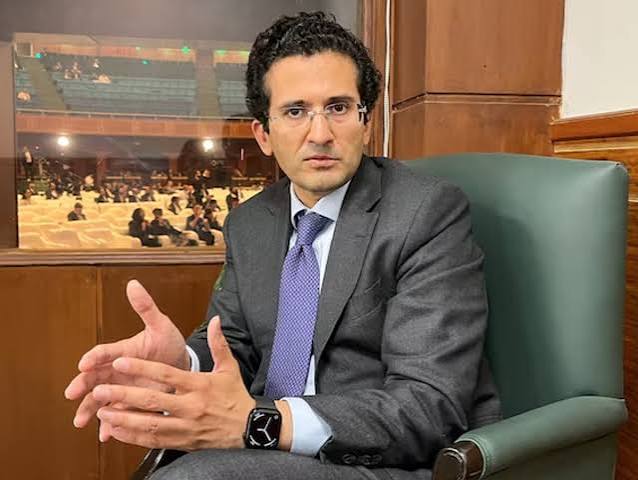
“We have adequate stocks — even in this risky environment we have September covered,” Federal Minister for Petroleum Ali Pervaiz Malik said in an interview with local media. “Even in the most adverse situation, we are okay for October also, but November I have to plan.”
The comments underscore how deeply the conflict between Iran and the US has entangled Pakistan, a country that imports roughly 80% to 85% of its oil and gas from the Gulf, almost all of it shipped through the Strait of Hormuz. The waterway, which normally carries close to a fifth of the world’s seaborne crude and a third of its liquefied natural gas, has become a recurring flashpoint since fighting broke out between Washington and Tehran earlier this year, sending Brent crude oscillating through triple digits and squeezing energy-import bills across South Asia.
Malik said his ministry is now running multiple contingency scenarios for disruptions not just to Hormuz but to the Bab el-Mandeb strait and Saudi Arabia’s own export routes, both of which have come under repeated attack from Iran-aligned Houthi forces in Yemen in recent weeks. Saudi Aramco’s Jizan refining complex was struck for a second time this month, and Houthi fighters have pushed to seize territory around the Bab el-Mandeb, a corridor Saudi Arabia has leaned on more heavily as Hormuz traffic has thinned.
That has left Pakistan searching for alternatives well beyond its traditional Gulf suppliers. Malik said the country is looking at crude from Oman and Fujairah in the UAE, and is also exploring purchases from Libya, the US, West Africa — including Nigeria — and Kazakhstan.
The most ambitious piece of that push involves chartering a very large crude carrier, or VLCC, from the US and stationing it near Hub, a coastal town in Balochistan close to Karachi’s refining hub. “We are working on bringing in a VLCC from the US and park it near Hub,” Malik said. A VLCC typically hauls around four times the cargo of a standard crude tanker, according to the minister, but Pakistan’s ports lack the water depth and infrastructure to dock vessels of that size.
The workaround, Malik said, is to anchor the tanker offshore — either at Sohar in Oman or near Hub — and move the crude onto smaller vessels through ship-to-ship transfers before it reaches Pakistani refineries. He said the stakes in keeping that supply chain intact are high: because refineries are already running at maximum throughput to meet diesel demand, any break in the chain would translate quickly into a severe diesel shortage.
The pressure has already spilt into Pakistan’s relationship with Saudi Arabia, historically one of its most reliable oil partners. Malik said Saudi supplies have effectively stopped because of Houthi strikes on the kingdom’s oil facilities, forcing Pakistan to hold one of its own tankers on standby rather than risk sending it into the affected waters. With Pakistan’s tanker fleet limited to begin with, he said that arrangement can’t last indefinitely.
“I have been talking to them that I cannot indefinitely hold this vessel in this parking position,” Malik said. “So I will have to move it one way or the other.”
The minister was blunt about how Islamabad would respond if the standoff escalates further. Pakistan has told its partners that any attack on one of its vessels would be treated as “an act of war against the state,” he said.
The disruption to Hormuz has already choked off LNG and LPG imports, and refiners and oil marketing companies have been forced onto costlier alternative routes just to keep supply flowing, according to Malik. For a country where Gulf crude and gas underpin nearly the entirety of energy imports, the search for new suppliers as far afield as West Africa and Kazakhstan reflects how little room Pakistan has left to absorb a longer war.
Copyright © 2021 Independent Pakistan | All rights reserved