By Staff Reporter
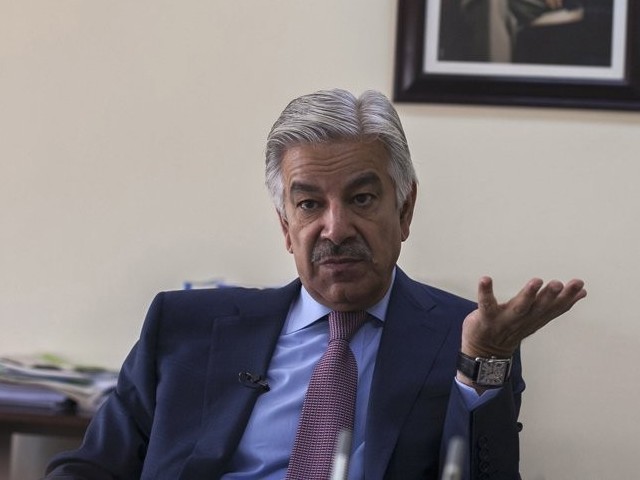
ISLAMABAD: Pakistan’s defence minister said on Wednesday that his country stands ready to back Saudi Arabia “practically and diplomatically” against Yemen’s Houthi rebels, a pointed warning issued hours after the kingdom accused the group of attempting to strike Islam’s holiest city and the rebels dismissed the claim as fabricated.
The remarks by Khawaja Asif, delivered on a private news channel, amounted to the clearest signal yet that a year-old defence pact binding Pakistan, Saudi Arabia, and Turkey could soon be tested for the first time — a prospect that has suddenly moved from theoretical to plausible as fighting between Saudi forces and the Iran-aligned Houthis intensifies along the kingdom’s southern border and across the Red Sea.
“If the situation escalates, we will stand with Saudi Arabia, both practically and diplomatically,” Asif said. He added that even setting aside the formal agreement, Pakistan considered the defence of Islam’s holy sites a religious obligation that required no treaty to activate. “There is no need to activate any agreement,” he said.
The disclosure capped a tense 24 hours in the region. Saudi authorities said on Wednesday that their air defences had intercepted and destroyed a Houthi drone roughly 6:50 p.m. Tuesday local time south of Mecca, before the drone could breach restricted airspace over the city, which draws millions of Muslim pilgrims each year. Maj. Gen. Turki al-Malki, spokesman for the Saudi-led coalition fighting in Yemen, called it the second such attempt on the holy city — the first came in 2017, when a ballistic missile was shot down over Taif province — and said the security of Mecca and Medina represented “a red line” for the kingdom.
The Houthis rejected the accusation almost immediately. Hezam al-Asad, a senior official on the group’s Supreme Political Council, described the claim as “a nauseating lie that has been consumed before and no longer fools anyone.” A separate Houthi spokesman, Yahya Saree, said the group’s operations were aimed at Saudi oil facilities and military installations “far removed from the sacred sites.” Neither side has offered independent evidence to support its account, and the competing claims could not be immediately reconciled.
A pact born of instability
The episode is the sharpest flashpoint yet for the Makkah Defence Alliance, signed August 7 in the holy city by Saudi Crown Prince Mohammed bin Salman and Pakistani Prime Minister Shehbaz Sharif, with Turkey joining as the third signatory. The agreement holds that an attack on any one member’s territorial integrity will be treated as an attack on all three — language modeled, analysts have noted, on the mutual-defence clause at the heart of NATO.
The pact emerged from a region reordering itself after a punishing stretch of conflict. It followed a February war in which the United States and Israel launched joint strikes against Iran, and arrived as Gulf states increasingly moved to hedge their own security rather than rely solely on Washington. Pakistan, a nuclear-armed state with one of the world’s largest standing armies, brought manpower to the arrangement; Turkey, a NATO member with an expanding drone and artillery industry, brought hardware; Saudi Arabia brought financing and a deep regional intelligence network.
Since its signing, Pakistani officials have taken pains to describe the alliance as defensive rather than expansionist. Lt. Gen. Ahmed Sharif Chaudhry, the military’s spokesman, said in an interview broadcast Wednesday on Al Arabiya English that the pact carried “no regional aspirations” and was intended purely for what he called collective deterrence. “It is defensive. There’s nothing aggressive,” he told host Tom Burges Watson, adding that the arrangement formalized “Pakistan’s decades-old relationship” with both Saudi Arabia and Turkey. He also pushed back on the notion that the pact was a specifically Muslim security bloc, saying any country sharing its commitment to “non-aggression, non-interference and collective deterrence” could eventually be considered for membership — though he stressed that decision rested solely with the leaders of the three founding states.
Turkey has floated Egypt as a possible future member, though Cairo has not confirmed any interest, and Pakistan’s Foreign Office said last week that formal expansion was not currently under consideration. The alliance’s inaugural leadership meeting was held in Istanbul on August 31, where it was agreed that Pakistan would chair the alliance’s secretariat for an initial three-year term.
Threading a needle with Tehran
Asif’s comments on Wednesday also revealed the delicate diplomatic balance Islamabad is attempting to strike. Pakistan shares a long border and complicated history with Iran, which backs the Houthis, and Asif said Pakistan had personally relayed a message from Saudi Arabia to Tehran amid the kingdom’s mounting alarm over the rebel attacks.
He said he did not believe Iran, as a state, would risk its standing with other nations by formally backing the Houthis in a widening confrontation with Saudi Arabia, even accounting for ideological sympathies. “I don’t think Iran as a state will open another front,” he said, noting that Tehran remains occupied with fallout from its own recent war. He drew a distinction, however, between government policy and the independent latitude often exercised by non-state armed groups aligned with Iran, suggesting such groups could act without Tehran’s explicit direction. Taking sides in the Yemen conflict, he added, “would be a diplomatic error,” even if he judged the odds of that happening to be low.
Asif was more circumspect when pressed on what military or strategic coordination might already be underway between the three allied nations, saying such planning was not the kind of thing governments discuss in public. But he insisted the treaty language left no room for interpretation. “There is absolutely no ambiguity,” he said, adding later: “The situation has arrived.”
A widening war, and an economic toll
The Houthi campaign has escalated sharply from what had been, for several years, an uneasy calm following a 2022 truce with the internationally recognized Yemeni government. The coalition said Monday that 13 civilians were wounded and seven homes and two vehicles damaged when Houthi missiles and drones struck Khamis Mushait, Abha, and Taif; Saudi officials said more than 70 people were hurt in a similar wave of attacks the week before. In turn, the Houthis claimed to have shot down a Saudi F-15 fighter jet over Marib province using a locally produced air-to-air missile, and said the coalition has carried out 450 strikes against Yemeni territory.
The rebels have also declared a maritime blockade against the kingdom and seized effective control of Yemen’s Red Sea coastline and the Bab al-Mandab Strait — a chokepoint essential to Saudi oil exports — compounding disruptions already rattling the Strait of Hormuz because of the broader regional war. Asif said the economic consequences of that squeeze were a growing preoccupation for Pakistani officials, given how directly disrupted shipping lanes affect the country’s own economy, and said further breakdowns in maritime security could push regional states toward new, still-undefined security cooperation aimed at countering non-state armed actors.
Prime Minister Sharif, in a statement issued separately on Wednesday, condemned what he called a “dastardly and heinous attempted drone attack” on Mecca and said Pakistan stood “shoulder to shoulder” with Saudi Arabia. He called on all parties to exercise restraint, arguing that the region had already absorbed enormous damage from war and that dialogue remained the only durable route to peace — a message that, for now, sits uneasily alongside his government’s simultaneous warnings that a mutual-defence pact stands ready to be invoked.
Copyright © 2021 Independent Pakistan | All rights reserved