By Staff Reporter
ISLAMABAD: The Taliban have warned Pakistan of a “crushing response” to any military action on Afghan territory, while at the same time appealing for Saudi Arabia to help resolve the bitter dispute between the two neighbours.
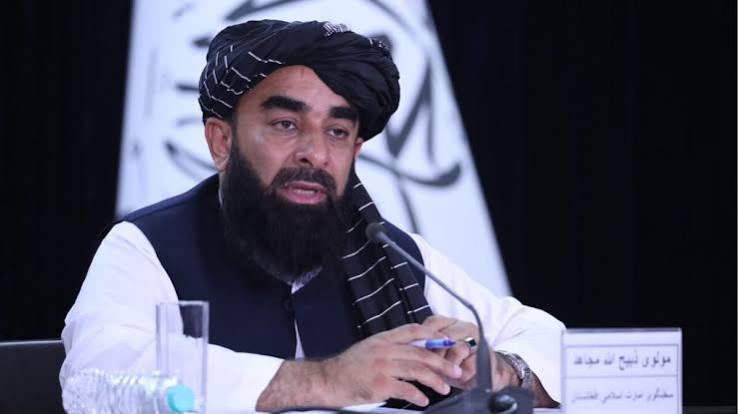
Zabihullah Mujahid, the spokesman for the Taliban government, said Afghanistan would defend itself if Islamabad attempted to justify strikes across the border by citing its right to self-defence.
“If Pakistan invokes Article 51 to violate the sanctity of Afghan territory, Afghanistan has the right to defend its country, and we will do so,” he told Al Arabiya English in an interview.
His remarks were a direct reply to Lt Gen Ahmed Sharif Chaudhry, the director general of Pakistan’s Inter-Services Public Relations (ISPR), who told the same broadcaster this week that militants were being recruited, trained, armed and dispatched from Afghanistan to carry out attacks in Pakistan and elsewhere in the region.
Mujahid said Kabul does not allow the Tehreek-e-Taliban Pakistan (TTP) to operate on Afghan territory and “does not support” armed groups that target other countries.
He argued that unrest involving the TTP and Baloch groups predated the Taliban’s return to power in August 2021, and said Pakistan should address its security problems internally rather than attribute them to Afghanistan.
Yet the spokesman struck a markedly more conciliatory note when he turned to diplomacy. Afghanistan, he said, wanted to continue dialogue and cooperation with Pakistan, and hoped the outstanding issues between the two countries could be resolved.
He said Kabul supported stronger mechanisms for intelligence-sharing and cooperation between the two sides.
Mujahid welcomed efforts by Saudi Arabia and other countries to narrow the differences between Islamabad and Kabul. “Saudi Arabia can play a positive role in this matter,” he said, describing the kingdom as a friend to both countries.
He added that the Afghan people held Saudi Arabia and the two Holy Mosques in high regard, and that Kabul respected Riyadh’s decisions on how it sought to facilitate talks.
The interview lands in a region that has seen little but escalation this year. Pakistan has seen a sharp rise in cross-border militant attacks, particularly in Khyber Pakhtunkhwa and Balochistan, since the Taliban returned to power. Islamabad has repeatedly urged Kabul to stop militant groups using its territory, and says the Taliban authorities have failed to act against those responsible for attacks on Pakistani security forces and civilians. Kabul disputes that position.
Speaking on Wednesday, Lt Gen Chaudhry cited a recent United Nations report which, he said, showed dozens of terrorist groups operating from Afghanistan. “Afghanistan should not become the terrorist centre of the world,” he said.
He said Pakistan reserved the right to self-defence under Article 51 of the UN Charter, and would continue to take the measures needed to protect the lives, honour and property of its citizens. Counter-terrorism operations, which he said had been under way for two decades, would continue.
The two countries have already come close to open war this year. Following a series of clashes along the border in October 2025, Pakistan and Afghanistan agreed a ceasefire in Doha in a deal brokered by Qatar and Turkey, with Saudi Arabia welcoming the agreement.
The truce did not hold. In February, Pakistan launched airstrikes on what it said were militant camps in Afghanistan, prompting the Taliban to attack Pakistani border positions on 26 February. Islamabad then declared “open war” and launched Operation Ghazab lil-Haq, a campaign of air and ground strikes that reached targets in Kabul, Kandahar and elsewhere. The Taliban condemned the initial strikes as a violation of Afghan sovereignty and said civilians had been killed.
Multiple rounds of talks since then have failed to settle the dispute, with the question of militant groups operating from Afghan soil remaining the central sticking point.
Saudi Arabia has been involved in earlier efforts to defuse the crisis. In February it helped secure the release of three Pakistani soldiers captured by Afghan forces, and its foreign minister spoke to his Afghan counterpart, Amir Khan Muttaqi, by telephone as fighting flared.
Riyadh’s position is a delicate one. It signed a mutual defence pact with Pakistan in September 2025, and Pakistan’s military spokesman said last week that a wider arrangement between Pakistan, Saudi Arabia and Turkey, known as the Makkah Defence Alliance, was purely defensive in nature.
Mujahid, who has served as the Taliban’s principal spokesman since the group returned to power, has previously called for dialogue with Islamabad while denying that Kabul harbours militants. Pakistan has said that dialogue and the presence of armed groups on Afghan soil cannot go together.
Copyright © 2021 Independent Pakistan | All rights reserved