By Staff Reporter
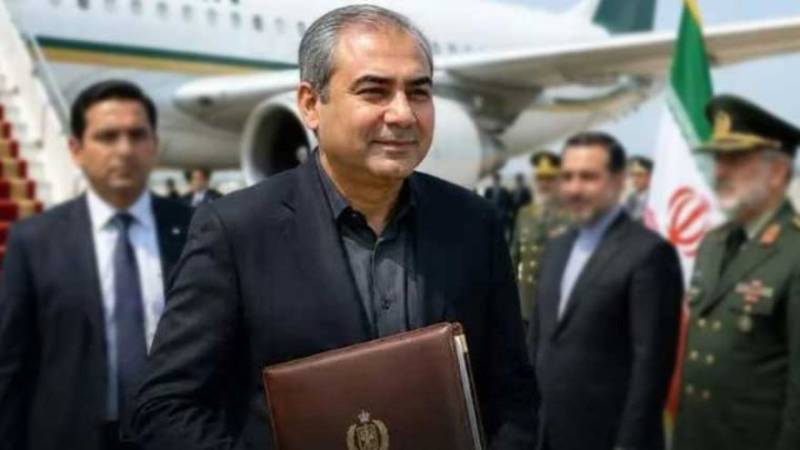
ISLAMABAD: The interior minister was due in Tehran on Sunday for what Iran called a purely bilateral visit, as Islamabad struggled to keep its role as go-between in the Iran-US war while being pulled ever closer to a new front in Yemen.
Esmaeil Baghaei, the Iranian foreign ministry spokesperson, confirmed on Saturday that Mohsin Naqvi would travel to the Iranian capital, and moved quickly to dampen speculation that he was bringing a proposal from Washington.
“The visit of Pakistan’s interior minister is entirely within the framework of bilateral discussions,” he told the state broadcaster’s Khabar network, according to the IRIB news agency. He added that one of Pakistan’s economic ministers might accompany him.
Asked directly whether Naqvi was carrying a US message, Baghaei said: “So far, there has been no discussion of him carrying any specific message or proposal from the United States.” The main purpose, he said, was to follow up on earlier understandings between the two countries, particularly decisions taken at leadership level.
He acknowledged, however, that Pakistan’s part in mediation gave it a natural opening to raise regional matters. Iran’s relations with its neighbour had “particularly improved in recent months”, he said.
Naqvi has become Islamabad’s most frequent envoy to Tehran since the war began with US and Israeli strikes on Iran at the end of February. Pakistani media reported his most recent visit, in August, as his sixth. On earlier trips, he met President Masoud Pezeshkian, the parliament speaker Mohammad Baqer Qalibaf, foreign minister Abbas Araghchi and the IRGC commander, Gen Ahmad Vahidi.
A process in limbo
Pakistan’s standing as mediator rests on the Islamabad talks of April, when Vice-President JD Vance and Qalibaf met face to face. Those talks failed, and Donald Trump ordered a naval blockade of Iranian ports days later. A memorandum of understanding was eventually signed remotely on 17 June by Trump and Pezeshkian, intended to open a 60-day window for negotiating a final settlement.
That process never got going. Disagreements had stopped it from starting, and talks had stalled. Fighting resumed in July, and most traffic through the Strait of Hormuz remains blocked.
Tehran now says it wants the agreement revived. Ali Zeynivand, a spokesperson for the interior ministry, said “efforts and international diplomatic mediations to resolve issues and return to the Islamabad agreement are ongoing”, and demanded that “the other party adhere to its commitments”, according to the semi-official Tasnim agency.
Mohsen Rezaei, Iran’s security chief, told Al Jazeera that Tehran had passed its conditions for re-engaging with mediators. They include ending the war on all fronts, unfreezing Iranian funds and lifting the naval blockade. He said consultations were continuing with Qatari and Pakistani intermediaries and that Iran was awaiting a response from Trump.
Riyadh under fire
The diplomatic effort is taking place against a sharp deterioration on Saudi Arabia’s southern flank. The Iran-aligned Houthis, who have been fighting Saudi Arabia since declaring a maritime blockade on Riyadh in July, escalated on Saturday with what appeared to be their first attack on the capital since the current round of fighting began.
Reuters footage showed a large column of black smoke rising near King Khalid International Airport, with flames visible behind what appeared to be fuel tanks. Saudi civil defence had sent phone alerts overnight warning of a possible aerial attack on Riyadh and Al-Kharj, and a Reuters journalist heard explosions before an all-clear was issued.
The Saudi-led coalition said the Houthis fired a ballistic missile at Riyadh at dawn, which was intercepted and destroyed. Its spokesperson said the group had also tried to hit civilian targets in Bisha, Taif, Farasan and Yanbu, and that Saudi air defences thwarted the attempts. The Associated Press reported no casualties or damage.
The Houthis, who did not provide evidence, claimed to have struck “sensitive sites” in the capital and Aramco facilities in Yanbu with ballistic and cruise missiles and drones, causing what they called “massive fires”. Aramco did not respond to a request for comment, and neither claim has been independently verified.
The UN Security Council on Friday condemned “in the strongest terms” continued Houthi attacks on Saudi Arabia, including strikes on civilian and energy infrastructure that have injured civilians, among them women and children.
The Makkah pact
For Pakistan, the timing is awkward. In August it signed a defence agreement with Saudi Arabia and Türkiye, known as the Makkah alliance, under which an attack on one signatory is treated as an attack on all.
Hakan Fidan, the Turkish foreign minister, said on Saturday that the pact was at an advanced stage, with a headquarters and the deployment of personnel the only steps left to institutionalise it. He called it a potentially “game-changing platform”.
Speaking to NTV, Mr Fidan said Saudi Arabia “may need military-level support” and that Ankara would raise the matter with Pakistan and “can provide the necessary technical support”. He said any assistance would probably focus on specific technical areas. He also insisted Riyadh must not be dragged into the US-Iran conflict: “We won’t allow this to be made part of the ongoing conflict between Iran and the US. Saudi Arabia should be kept out of this.”
The Houthis have answered with a threat. Mohammed al-Bukhaiti, a member of the group’s political bureau, told an Iraqi television programme: “By God, if Türkiye and Pakistan become involved, we will strike them with an iron fist.” He said the warning was aimed at the governments, not the peoples, of both countries, whom he described as sympathetic to Yemen.
Pakistan’s own rhetoric has hardened. Defence minister Khawaja Asif said Pakistan would defend Makkah and Madinah, calling their protection an “eternal agreement” and a religious duty. Lt Gen Ahmed Sharif Chaudhry, the military’s chief spokesman, said Pakistan’s commitment to Saudi Arabia was “unconditional” and that it would “go to any extent” required.
Yet Islamabad has also said publicly that no military response under the pact is being discussed, a distinction that reflects the balance it is trying to strike.
The Financial Times reported that Field Marshal Asim Munir, Pakistan’s army chief, relayed Islamabad’s concerns about the Houthi attacks to Iranian officials and urged Tehran to restrain the group, warning of implications for Pakistan’s obligations to Riyadh. Mr Araghchi spoke to the field marshal by telephone on Saturday while in Beijing, Iranian media said.
Diplomacy at the UN
Ishaq Dar, Pakistan’s deputy prime minister and foreign minister, also spoke to Araghchi on Saturday, stressing uninterrupted energy supplies and the “safe and expeditious passage of ships”, which he said carried particular consequences for developing countries and global supply chains. Dialogue and diplomacy, he said, were “the only viable means” of securing regional peace.
The two agreed to meet on the sidelines of the 81st UN General Assembly in New York. Dar also spoke to Malaysia’s foreign minister, Mohamad Hasan, and agreed to meet him there.
Araghchi, addressing a forum, denounced what he called US and Israeli aggression against Iran and the assassination of Iranian officials, warning that unanswered violations would erode the boundaries of international law. Sustainable security, he said, could only come through dialogue among regional states and without the involvement of foreign military powers.
Copyright © 2021 Independent Pakistan | All rights reserved