By Staff Reporter
ISLAMABAD: The government moved to broaden and tidy up Prime Minister Shehbaz Sharif’s fuel relief program on Saturday, ordering that every operating fuel station be brought onto the system, allowing token redemption by text message where there is no internet, and loosening the rules for motorcycle, rickshaw and Qingqi riders who make up the bulk of enrollees.
Deputy Prime Minister and Foreign Minister Ishaq Dar chaired a meeting of the National Steering Committee on Fuel Subsidy to review how the Prime Minister’s Special Relief Scheme is working on the ground. The committee approved redemption of fuel tokens through SMS at stations in areas without internet connectivity. Azad Jammu and Kashmir, Gilgit-Baltistan and the provinces have been asked to submit lists of such stations so they can be enrolled without delay.
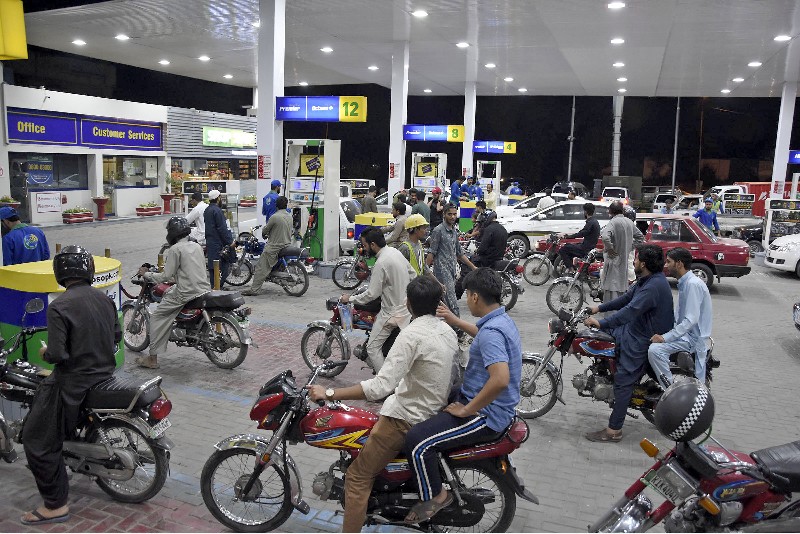
Dar directed that every fuel station that is open and operating be brought onto the system, while outlets found to be permanently closed or dealing exclusively in diesel should be identified and struck from the list, so that the scheme’s coverage reflects the situation on the ground. The committee was told that an overwhelming majority of stations nationwide are now operating on the system and that motorists are redeeming tokens. Registration continues across the country by SMS to 9771.
The State Bank of Pakistan told the committee that all payment claims received over the past three days had been settled in full, with each day’s claims processed the same day. Dar praised the provincial administrations and thanked the central bank for its cooperation, saying the relief “must continue to reach the intended beneficiaries without hindrance.”
The meeting was attended by the ministers for petroleum, economic affairs, information and broadcasting, and IT and telecommunication; the State Bank’s deputy governor; the chairmen of the Oil and Gas Regulatory Authority and the Pakistan Digital Authority; the petroleum secretary; the chief commissioner for Islamabad; the additional chief secretaries of Punjab and Khyber Pakhtunkhwa; and senior officials from Azad Kashmir, Gilgit-Baltistan, Balochistan and other federal and provincial departments.
Three changes
Later on Saturday, Information Technology Minister Shaza Fatima Khawaja announced three changes at a media briefing, aimed mainly at motorcycle, rickshaw and Qingqi users.
First, eligibility has been extended to motorcycles registered from Jan. 1, 2006, replacing the earlier cutoff of 2011. She said the decision followed feedback from citizens and journalists about older machines. The prime minister had earlier directed that 20-year-old motorcycles, rickshaws and Qingqis be included, and that decision has now been implemented.
Second, the five-litre limit per token for two- and three-wheelers has been abolished, allowing eligible users to buy as much fuel as they need. Eligible riders can obtain four tokens a month, one a week, each worth 500 rupees. Khawaja gave an example: if two litres of petrol cost 780 rupees, the buyer would pay 280 rupees after applying the 500-rupee token. The Prime Minister’s Office said in a statement that motorcyclists and owners of Qingqis and rickshaws who buy less than five litres will also be entitled to the 500-rupee discount against a single token within a week.
Third, SMS charges have been scrapped for everyone under the scheme. “SMS has been made free for everyone, whether they own an 800cc vehicle or a two or three-wheeler,” she said.
Users of vehicles up to 800cc will continue to get a discount of 100 rupees per litre on 10 litres of petrol every 10 days, under the earlier decision, which works out to three 10-litre tokens a month. Petrol under the scheme is being provided at a subsidized rate of 100 rupees per litre, according to the statement.
Uptake
Khawaja said more than 1.75 million registrations had been completed by 3 p.m., with about 1.5 million tokens generated and more than 680,000 redeemed at petrol stations. Later figures she cited put tokens issued at 1,493,848 and citizens who had already received fuel at 655,067; the discrepancy reflects the different times at which the numbers were compiled. Two- and three-wheelers accounted for 91.6% of registrations, while vehicles of up to 800cc made up 8.4%.
Sharif is personally monitoring implementation and has directed that the subsidy be delivered “with dignity, convenience and without any hurdles,” according to the statement. Khawaja said a steering committee under the deputy prime minister and a separate implementation committee are working with ministries, the oil regulator, the State Bank and other bodies to resolve problems, and that the government is reviewing public feedback continuously and will make further changes where needed.
How it works
Applicants register by sending an SMS to 9771 containing their national identity card number, vehicle registration number without spaces, province code and vehicle registration date. The date was added as a check against unauthorized registration of vehicles, Khawaja said. Ownership is not mandatory for motorcycles, Qingqis or rickshaws as long as the user has the relevant documents and custody of the vehicle. Eligible riders can then text “TOK” to 9771 once a week to get a token, while car owners receive tokens on the prescribed schedule.
Khawaja said the entire registration and complaints process was kept on ordinary SMS so people without smartphones or internet access could take part. A 24-hour control room has been set up at the IT ministry to handle complaints, and beneficiaries and station operators using the token-validation application can report problems by calling 9771. Banners explaining the process have been put up at petrol stations, with district and provincial administrations supporting the rollout.
She warned the public against fraud, stressing that registration, SMS and token issuance carry no charge. “No one should pay anyone for registration, tokens or information about the scheme,” she said, urging people not to share national ID numbers, vehicle details or other personal information with unauthorized persons.
Copyright © 2021 Independent Pakistan | All rights reserved