By Staff Reporter
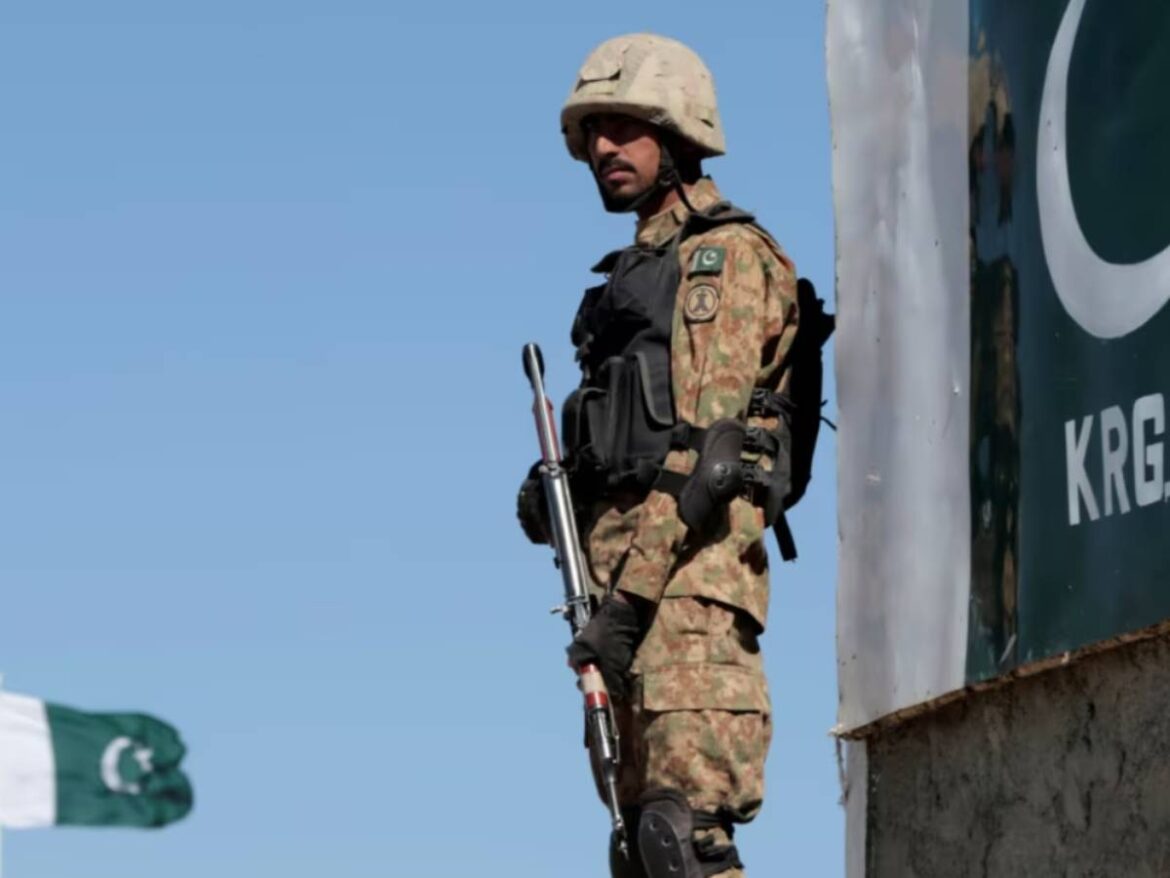
ISLAMABAD: Pakistan has categorically denied any involvement in violence in eastern Afghanistan after the Taliban regime accused Islamabad’s security forces and intelligence agencies of recruiting former Afghan soldiers and funnelling Islamic State-linked fighters across the border — allegations that surfaced hours before a rival account emerged suggesting the casualties in question came from an unrelated battle against an anti-Taliban resistance group.
The Afghan defence ministry said on Saturday that its forces had killed 28 fighters and captured 32 others in Kamdesh, a mountainous district of Nuristan province close to the frontier with Pakistan, after the group crossed the Durand Line with what Kabul described as Pakistani backing. It claimed most of those involved were former members of the Afghan National Army who served under the government toppled when the Taliban swept back to power in August 2021, and alleged that Pakistani intelligence had lured them with promises of asylum and high wages before training them at camps run by the military and the ISI and sending them back across the border to sow unrest.
Pakistan’s information ministry moved swiftly to reject the claims. In a statement posted to its “fact-check” account on X on Sunday, it said the allegations were “frivolous, baseless and devoid of any truth” and that Islamabad “categorically rejects the fabricated claims of involvement by its security forces or intelligence agencies in any internal clashes in Nuristan or elsewhere in Afghanistan, including allegations of recruiting or training former Afghan security personnel or facilitating Daesh or any other terrorist group operating in Afghanistan”.
The ministry said Kabul had produced nothing to substantiate its case. “Not a shred of evidence has been produced to substantiate Pakistan’s involvement; no identities, documents, communications, forensic evidence or independent verification,” it said. It also dismissed footage circulating on social media that purported to show captured fighters, describing it as showing only “a few unarmed individuals who are not even properly dressed or equipped” and suggesting the clip amounted to “a pre-planned video shoot” by a regime it accused of being “well known for lies and fabricated claims”.
A murkier picture on the ground
The Afghanistan Freedom Front, an armed anti-Taliban faction that has fought a low-level insurgency against the Kabul administration since 2021, said the fighting in Kamdesh on Saturday was in fact between its own commandos and Taliban forces — not an infiltration from Pakistan at all.
In a statement, the front said Taliban units had attacked its positions in Kamdesh using ground troops and drones, only to be repelled after sustaining heavy losses. It claimed its fighters had gone on to capture several Taliban checkpoints and seize territory in Kamdesh and the neighbouring Nari district of Kunar province, killing five Taliban members and wounding around ten more, while destroying or disabling a number of Taliban-operated drones. Local reports from Kamdesh described roads closed for hours and residents hearing sustained gunfire through the day, with the security situation remaining tense into Sunday.
Crucially, the Taliban’s own casualty figures for its clashes with the Freedom Front — 28 killed and 32 captured — mirror precisely the numbers its defence ministry separately attributed to the alleged Pakistani-backed infiltration. A Taliban police spokesman in Nuristan offered yet another version, saying the clashes began when a group of roughly 400 armed men attempted to cross into Afghanistan from Pakistan, without clarifying how that account related to the Freedom Front’s version of an assault on its own positions.
By Sunday, Taliban officials were maintaining that the fighting in Kamdesh had ended and that the district remained under their control, a claim the Freedom Front rejected, saying it continued to monitor Taliban movements in Kamdesh, Nari and parts of Badakhshan province further north.
A pattern of accusations
Pakistan’s information ministry used its statement to turn the accusation back on Kabul, arguing that the presence of numerous militant groups on Afghan soil was “well documented” by the United Nations and other international bodies, and that the Taliban administration was deflecting from its own failures. “Attempts to manufacture a Pakistani connection cannot obscure the reality that these terrorist groups continue to find sanctuary and a permissive environment for growth in Afghan territory,” it said, adding that it was “particularly ironic for the Afghan Taliban regime to accuse Pakistan of supporting terrorism while terrorist organisations operating from Afghanistan continue to pose a direct threat to Pakistan and regional security”.
The ministry went further, suggesting the Taliban’s claims were “reflective of lies to externalise internal dissent and oppression of women, children and minorities” under a “non-inclusive, non-representative” government. It called on Kabul to take “credible and verifiable action” against militant groups operating from its territory rather than “attempting to deflect responsibility through fabricated accusations”, and said this was not the first time the Taliban had accused Pakistan of facilitating infiltration, carrying out unauthorised strikes or smuggling weapons into the country — allegations Islamabad has consistently denied.
Pakistani security officials, speaking more broadly about the militant threat they say emanates from Afghanistan, said that as much as 70 percent of militants from the umbrella group Pakistan calls Fitna al-Khawarij — its official designation for the Pakistani Taliban — were of Afghan origin, and alleged that Taliban authorities had allowed weapons left behind by departing American and Nato forces to reach militant groups including Fitna al-Khawarij and a separatist faction it refers to as Fitna al-Hindustan. Pakistani authorities say terrorism originating from Afghan soil killed 1,327 people and injured 2,484 others across the country in 2026 alone.
A United Nations Security Council-mandated monitoring team, in a report covering mid-December 2025 to early June this year, found that continued Taliban support for the Tehreek-e-Taliban Pakistan had contributed to a rise in the frequency and lethality of attacks inside Pakistan, even as Kabul had taken some limited steps to restrain the group. The same monitoring found growing operational ties between the TTP, al-Qaeda, Islamic State-Khorasan and the Baloch Liberation Army. A separate UN report earlier this year estimated the TTP’s strength inside Afghanistan at between 6,000 and 6,500 fighters and said no member state backed the Taliban’s assertion that no militant groups operated on its territory, describing the TTP as among the largest such groups, enjoying comparatively greater freedom and support from the de facto authorities. Pakistani security officials say the group has established training facilities in Kunar, Nangarhar, Khost and Paktika provinces.
Weeks of escalating confrontation
Sunday’s exchange is the latest flashpoint in a relationship that has deteriorated sharply since October last year, when Pakistani and Afghan forces fought their deadliest border clashes since the Taliban’s return to power, and has worsened further through a violent September.
On 21 September, Pakistan carried out a “calibrated” airstrikes against militant hideouts along the Afghan border in response to a string of major attacks in Khyber Pakhtunkhwa, saying more than 28 terrorists were killed. Information minister Attaullah Tarar described the strikes as part of Operation Ghazab lil Haq, launched in February in response to an unprovoked Taliban firing across the border.
Days later, Pakistan said its air defences had detected and shot down eight drones launched from Afghan territory near the Torkham crossing and Kohat, and reported separate unprovoked firing overnight near Kurram as security forces stopped an attempted border crossing by militants. In response to the drone incursions, Pakistan said it had struck ten locations across Afghanistan being used to launch and store drones. On Friday, Pakistan’s information ministry had also dismissed a separate Afghan claim that a Pakistani military post had been destroyed near Spin Boldak, on the frontier between Balochistan and Kandahar province.
The exchanges have unfolded against a backdrop of intensifying militant violence inside Pakistan’s north-west. A gun-and-bomb assault on a police compound in Kohat on 18 September killed 23 people, including 17 police officers, an attack claimed by a faction led by Hafiz Gul Bahadur. On Saturday, the TTP claimed responsibility for a separate attack near the Aman Mela checkpoint in Dera Ismail Khan district that killed at least twelve people and wounded more than thirty.
A ceasefire agreed after last October’s border clashes, along with subsequent mediation efforts, has failed to resolve the underlying dispute over alleged militant sanctuaries, and sporadic fighting and Pakistani strikes inside Afghanistan have continued in the months since.
Copyright © 2021 Independent Pakistan | All rights reserved