By Staff Reporter
KARACHI: Pakistan’s navy has carried out the first live missile firing from its newly delivered Chinese-built submarine, a test the military says confirms the vessel’s combat readiness at a moment of heightened friction with India at sea.
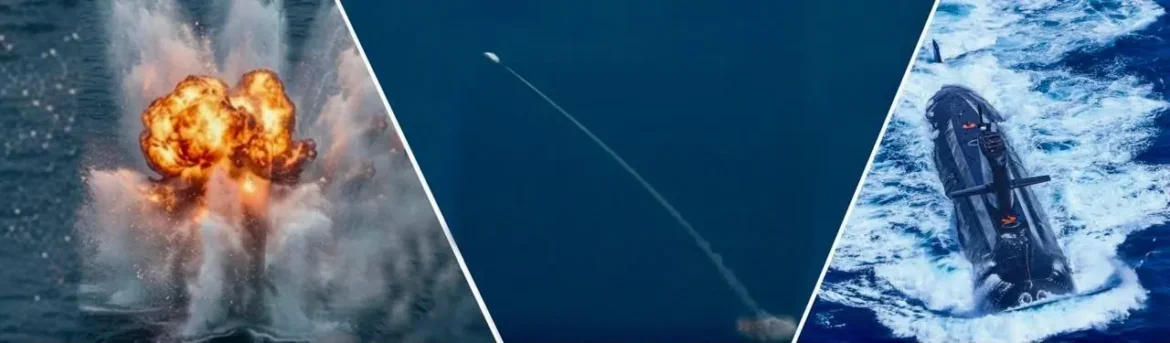
The submarine, PNS/M Hangor, launched an anti-ship cruise missile in the northern Arabian Sea on Sunday and struck a designated long-range target, according to the Inter-Services Public Relations (ISPR), the Pakistani military’s media wing. It was the first time weapons had been fired from the vessel since it entered service, and the navy described the test as a “major demonstration of operational readiness”.
Admiral Naveed Ashraf, the chief of naval staff, observed the firing in person. He praised the submarine’s “combat power” and pointed to the importance of building up Pakistan’s underwater capabilities as a check on rival naval forces in the region. The navy separately said the vessel had “engaged the designated target with precision, validating its weapon systems, combat readiness and operational effectiveness”, calling the firing a significant step in bringing Hangor into full operational use.
The submarine arrived at Karachi Port in June, having been handed over during a ceremony in the Chinese city of Sanya in April, which was attended by President Asif Ali Zardari and Admiral Ashraf. Its delivery marked a further step in defence ties between Islamabad and Beijing, which has become Pakistan’s principal supplier of major weapons systems over the past decade.
Hangor is the lead vessel in a new class of eight submarines being built for Pakistan under an agreement with China, of which four have now been launched. The first entered the water in China in April 2024, with three more following in March, August and December of last year. The remaining boats are expected to be delivered over the coming years, a build-out that would roughly double the size of Pakistan’s submarine fleet and represents one of the country’s largest defence procurement programmes.
The vessels are fitted with air-independent propulsion, a technology that allows a conventionally powered submarine to remain submerged for far longer than older diesel-electric designs by generating power without surfacing to draw in air. The navy said the boats also carry modern sensors, upgraded stealth features and improved combat systems, upgrades it expects will substantially widen its reach beneath the surface.
The name carries particular weight in Pakistani naval history. The original PNS Hangor sank the Indian frigate INS Khukri during the 1971 war between the two countries, the first submarine to sink a warship in combat since the Second World War.
Prime Minister Shehbaz Sharif congratulated the navy and its leadership over the firing, according to a statement from his office, saying the missile’s accurate strike on a long-range target reflected the “operational readiness, professional expertise and combat capability” of the submarine force. He reaffirmed the government’s commitment to keeping the armed forces prepared for national security challenges and praised both Admiral Ashraf and the personnel who had overseen the submarine’s induction.
The test comes against a tense backdrop at sea. Less than two weeks earlier, on 15 September, a Pakistani naval vessel and an Indian warship made contact in the northern Arabian Sea, an incident that prompted both governments to summon the other’s senior diplomat in protest. Islamabad said the contact occurred while its navy was carrying out its biennial Seaspark-26 exercise, and accused an Indian vessel of manoeuvring aggressively close to a Pakistani ship. It was the first publicly reported physical encounter between the two navies since the brief but intense conflict the nuclear-armed neighbours fought in May last year, when Indian air strikes and Pakistani retaliatory action raised fears of a broader war before a ceasefire took hold.
Sunday’s missile test also follows a string of other weapons trials Pakistan’s navy has carried out this year as it works through the induction of new hardware. In April, it tested an indigenously developed anti-ship weapon system named Taimoor, and separately fired a locally built anti-ship ballistic missile at an extended range, which ISPR at the time said a “resolute display of preparedness and precision-strike capability”.
Pakistan’s navy has framed the submarine’s debut firing as part of a broader effort to modernise its fleet at a time of persistent regional tension. “The milestone underscores the Pakistan Navy’s commitment to maintaining a modern, combat-ready force to safeguard national maritime frontiers and regional peace,” the service said in its statement.
Copyright © 2021 Independent Pakistan | All rights reserved