By Staff Reporter
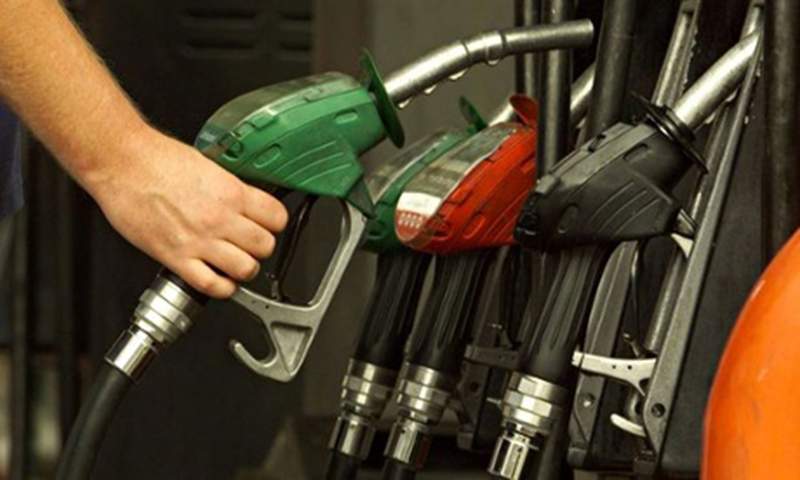
ISLAMABAD: Pakistan cut petrol and diesel prices on Tuesday, extending the daily adjustments the government adopted in July to pass through swings in crude markets unsettled by the war with Iran.
The government lowered petrol by 1.49 rupees to 387.54 rupees a liter and high-speed diesel by 2.73 rupees to 402.24 rupees, according to a Petroleum Division notification. The new rates apply to Wednesday, Sept. 30. The Oil and Gas Regulatory Authority set the prices under the federal government’s pricing mechanism. The division said global developments, including changes in Platts rates, premiums and incidentals, made the revision necessary.
The move follows Monday’s review, when petrol fell by 2.27 rupees to 389.03 rupees and diesel by 3.56 rupees to 404.97 rupees. Across the two reviews, petrol has come down by a combined 3.76 rupees a liter and diesel by 6.29 rupees. The path has not been a straight line. On Friday the government raised petrol by 2.02 rupees while cutting diesel by 3.59 rupees. Local price tallies show petrol opened September at 342.79 rupees and climbed to a monthly high of 393.75 rupees on Sept. 22.
Diesel is now about 23% below its record of 520.35 rupees, set April 3. It began climbing from 281 rupees a liter after the U.S.-Iran war broke out Feb. 28. Petrol peaked at 458.41 rupees the same day, having started its rise from 266 rupees in the first week of March, and is about 15% below that high. Even after the recent cuts, diesel remains about 43% above its pre-war price and petrol about 46% above.
Taxes and duties account for a sizable part of the pump price. The government continues to levy 114 rupees a liter on petrol and 100 rupees on diesel, roughly 29% and 25% of the respective retail prices.
The price of crude, the main driver of the revisions, remains volatile. Oil fell Tuesday as investors focused on signs that crude exports from the Middle East are recovering, even as concern lingered over possible supply disruptions stemming from the U.S.-Israeli war on Iran. Brent futures dropped $1.96, or 1.86%, to $103.32 a barrel at 1306 GMT, while West Texas Intermediate fell $1.95, or 2.11%, to $90.65. Both benchmarks were on course for monthly gains, of about 14% for Brent and 5.6% for WTI.
Prices turned higher Wednesday. Brent rose 0.8% to $103.4 a barrel and WTI gained 0.3% to $89.6 after President Donald Trump denied reports that Iran would receive sanctions relief. Supply has been improving, though: crude exports from Middle Eastern producers rose to 16.328 million barrels a day in September, the highest since the war began in late February. Wednesday’s move in crude will feed into the next Pakistani revision.
Pakistan moved to daily price-setting on July 17, when Petroleum Minister Ali Pervaiz Malik said the change was needed because of fluctuations in international prices after renewed hostilities between Iran and the U.S. He said the cabinet and the prime minister had given the regulator, Ogra, responsibility for setting prices each day based on global market trends. Before that, the government had announced weekly revisions since early March, alongside fuel-conservation measures meant to guard against possible oil supply disruptions. In April, it also announced targeted relief to provide subsidized fuel.
The government has since reintroduced a set of austerity measures in response to higher fuel prices and the continuing Middle East conflict. Markets are required to close by 9 p.m., and fuel allocations for official vehicles have been cut by 50% for three months.
On Sept. 13, Prime Minister Shehbaz Sharif announced a relief scheme for users of motorcycles, autos and vehicles of up to 800cc, intended to ease the burden of higher global oil prices. Deputy Prime Minister and Foreign Minister Ishaq Dar praised the program Tuesday, saying it reflected a “whole of government” approach. He was chairing a meeting of the National Steering Committee on Fuel Subsidy, which reviewed implementation of the scheme. Dar said the information, IT and petroleum ministries, Ogra, the State Bank of Pakistan and all the provinces had made “concerted” efforts. The committee was told about 7.60 million registrations had been completed and that token redemption had entered its second week, with 7.71 million tokens redeemed so far.
Fuel prices reach far into the economy. Petrol is used mainly in private transport, small vehicles, rickshaws and two-wheelers, so changes in its price fall mostly on the middle and lower-middle classes. Diesel is the main fuel for heavy transport, power plants and large generators, so its price feeds more broadly into what the public pays. The two fuels are also the biggest revenue earners in the sector, with monthly sales of about 700,000 to 800,000 tonnes, compared with only about 10,000 tonnes of monthly demand for kerosene.
Copyright © 2021 Independent Pakistan | All rights reserved