By Staff Reporter
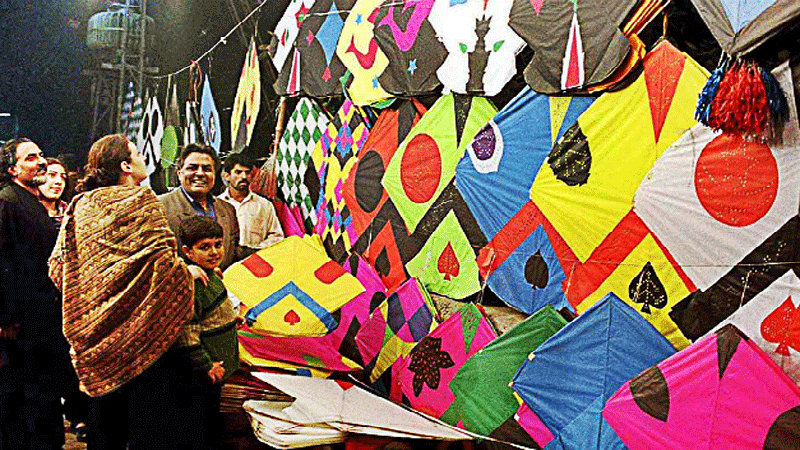
LAHORE: Lahore’s kite festival Basant will run for 10 days next year, a sharp extension of the revival held in February, after Punjab’s chief minister approved a new schedule on Wednesday.
Celebrations in the Punjab capital will begin on 29 January and continue until 7 February, with a one-day pause on 5 February to observe Kashmir Day, under the plan signed off by Maryam Nawaz. The dates fall on a Friday and a Sunday respectively, so the festival will cover two weekends.
The break for Kashmir Day, observed in Pakistan each year in solidarity with Kashmiris, means kite-flying will in practice be permitted on nine of the 10 days.
The new timetable overrides one announced only six weeks ago. In August, Nawaz said Basant Lahore 2027 would be held over three days, from 12 to 14 March. The schedule has now been moved forward by six weeks and lengthened by a week.
According to a government statement, CM Nawaz described the festival as a gift to the people of Lahore to mark the arrival of 2027, and as a way of promoting Punjab’s cultural heritage and the historic traditions of its capital. “Ten-day Basant will promote Punjab’s cultural colours and Lahore’s centuries-old traditions across the world,” she was quoted as saying.
The chief minister told officials to make better arrangements for public safety and convenience than those made for the previous festival, and to begin preparations well in advance so the longer programme did not compromise safety. She also appealed to citizens to celebrate responsibly, saying the authorities and the public should set a new example through a sense of duty and a commitment to protecting human lives. The success of the 10-day event, she said, would depend on strict adherence to safety rules.
That emphasis reflects the festival’s history. Basant was banned in 2007 because of a growing number of deaths and serious injuries caused by sharp kite strings, particularly to motorcyclists and pillion riders, and by celebratory gunfire. Lahore celebrated it again this year from 6 to 8 February, after an 18-year hiatus.
The revival drew crowds and diplomatic attention. Envoys from the UK and the US joined residents in flying kites. It was also marked by fatalities. The Punjab Home Department told the Lahore High Court that 17 people died during the three days: 12 in falls from rooftops, three from electrocution and two in falls from trees. Provincial official records showed 160 injuries.
The government has given a different account of the event’s safety. Nawaz said afterwards that the festival had passed without a single death from injuries caused by kite string. In court, the petitioners’ lawyer argued that the Home Department’s report did not say how many people had died after being hurt by kite strings, and that no data on injuries had been provided. The court had been hearing petitions seeking details of damages and government spending on the festival.
The festival was also touched by wider events. On the second day, Nawaz cancelled her own Basant-related activities, including a large show planned for Liberty Square, after a suicide bombing at an imambargah in Islamabad.
Ahead of next year’s festival, the Punjab government has tightened its rules. Regulations announced in May require kite-flying to take place only on strong, secure rooftops with boundary walls at least three and a half feet high, ban overcrowding, and make building owners and event organisers responsible for accidents or violations. They also ban loud music and DJ systems, and require first aid kits to be kept at every location. The government set 30 December as the deadline for full implementation.
The Home Department gave further detail earlier this month, when it reviewed arrangements for the earlier March dates. Officials said the city traffic police would fit safety rods to more than two million motorcycles free of charge, and that the deputy commissioner would inspect old buildings and issue permits for making and selling kites and string. The department also said kite-flying would remain banned across Punjab before and after the festival dates. Wednesday’s statement did not say whether the new schedule changes those arrangements. The tighter rooftop and equipment deadlines will now come under more pressure.
Manufacturers had already raised concerns about timing. In August, the kite trade said buyers had struggled to find kites and string during the 2026 festival because producers had too little time to make stock, and it asked for early licensing to avoid a repeat. Earlier that month, local media reported that the government had proposed holding Basant in the last week of January, with kite and string production to be allowed from October. The government’s statement on Wednesday did not address production or licensing.
Copyright © 2021 Independent Pakistan | All rights reserved